Men’s Grooming
ManCave Meta Advertising Campaign
A Meta advertising campaign built around natural grooming education, lifestyle positioning, and targeted social acquisition for men’s skincare buyers.

What needed to change
The brand needed to differentiate natural grooming products in a crowded market while building awareness and eCommerce traffic from social channels.
How we improved it
We developed audience targeting, lifestyle messaging, testimonial-led creative angles, and multi-format Facebook/Instagram campaign execution.
Business impact
The campaign helped clarify brand positioning, increase awareness, and create a stronger paid-social framework for traffic and community growth.
Project Process
How the work moved from strategy to launch
Market positioning research
A focused delivery step that kept the project practical and measurable.
Content strategy and campaign angles
A focused delivery step that kept the project practical and measurable.
Meta campaign launch and optimization
A focused delivery step that kept the project practical and measurable.
Community growth and scale review
A focused delivery step that kept the project practical and measurable.
Project Gallery
Visual proof and project context
The project visual is kept inspectable, with supporting gallery items that show adjacent portfolio quality and presentation depth.
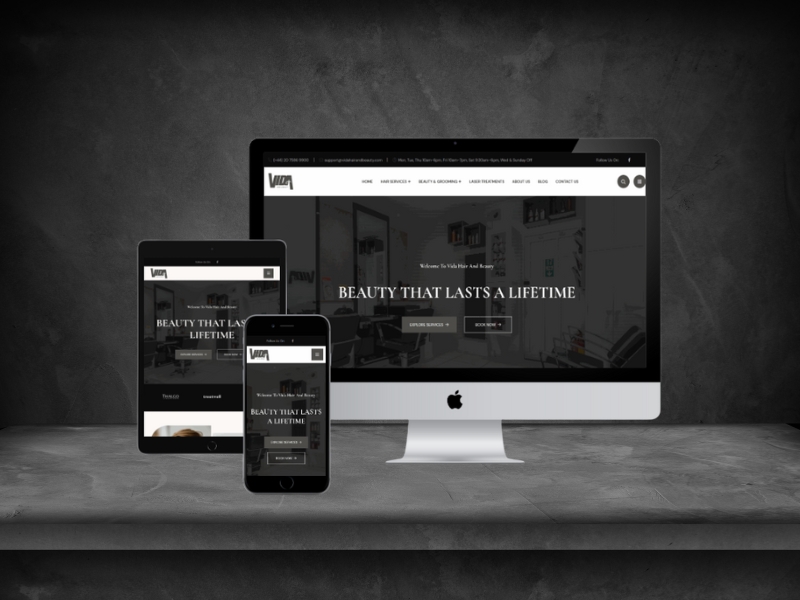

A meta advertising campaign for a natural grooming brand has to build recognition before it asks for a sale. This project developed lifestyle positioning and testimonial-led creative for men's skincare buyers.
Selling natural grooming in a crowded feed
Men's grooming is a category where the buyer often has not decided they have a problem yet. That makes direct-response tactics inefficient on their own - there is no existing intent to capture, so the campaign has to create the interest first.
Meta reach is not the constraint. 3.60 billion people use at least one Meta app on an average day (Meta, Q2 2026). The constraint is relevance: reaching the wrong men efficiently is still waste.
Natural positioning also needs substance. Shoppers have seen the claim often enough to discount it, so the campaign had to show what natural actually meant for this brand rather than assert it.
How the campaign was built
We started with positioning rather than creative. Defining who the product is for and what it replaces gives every later ad something specific to say.
Creative angles were then developed in parallel rather than sequentially - lifestyle, testimonial, product demonstration - so the account could learn which argument worked instead of iterating on one guess.
Testimonial-led creative carried most of the weight. In a category where buyers discount claims, another buyer describing the change is more persuasive than the brand describing the product.
What the campaign included
Positioning work defining the audience and what the product replaces
Multiple creative angles tested in parallel, not sequentially
Testimonial-led creative for a claim-weary category
Lifestyle messaging that shows the routine, not only the product
Multi-format execution across Facebook and Instagram placements
A structure that separates awareness spend from conversion spend
What changed
The campaign helped clarify brand positioning, increased awareness, and created a stronger paid-social framework for traffic and community growth.
The framework is the lasting part. Awareness and conversion are now measured separately, so growth spend can be judged on what it is actually for.
Meta advertising questions
Why separate awareness from conversion spend?
Because judging them by the same metric kills the awareness work first, and with it the demand the conversion campaigns depend on.
How many creative angles should be tested?
Enough to test different arguments, not different colours. Three genuinely distinct angles teach more than ten variations of one.
Does testimonial creative outperform product creative?
In categories where buyers discount claims it usually does. Another buyer is more credible than the brand about the same point.
How long before results are readable?
Long enough for each angle to gather meaningful conversion data. Judging a creative test too early is the most common way to discard the winner.
What another brand should take from this
Do the positioning before the creative. Ads written without a clear view of who the product is for and what it replaces end up describing features to nobody in particular.
Test arguments, not variations. Three genuinely different angles teach you something; ten versions of one angle teach you which colour performed slightly better.
Separate awareness from conversion in the account structure. Judged by the same metric, awareness always looks like the failure - right up until you switch it off and conversion follows.
Where this work fits
OVELITHUB delivered this project as part of our digital marketing work. You can also read how we approached Maylin Regenerative Medicine Clinic Website and Modern Website Transformation for a Healthcare Provider. Tell us what you are trying to solve and we will recommend a practical next step.