

Healthcare & specialist
What a Remote Billing Assistant Does
Claims get submitted and then forgotten. See how a remote billing assistant works eligibility, denials and AR follow-up to protect practice revenue.

Submitting a claim is the midpoint, not the finish. Revenue stalls when eligibility was not verified before service, a clearinghouse rejection is mistaken for a payer denial, a denial enters no owned worklist, or an account ages beyond the payer’s filing or appeal rule while everyone assumes the billing company is handling it.
A remote medical billing assistant earns their place by maintaining the follow-up discipline around those events. Data entry matters, but the valuable work is finding the claim that did not progress, identifying why, taking the permitted corrective action and returning the cause to the front end.
This is the operational answer to what does a remote medical billing assistant do. The role can support eligibility, rejection and denial work, payment reconciliation and accounts-receivable follow-up. It does not replace a qualified coder, provider documentation, payer-contract expertise or the practice’s HIPAA responsibilities.
The revenue does not leak where practices look for it
A submission-focused workflow celebrates batch acceptance but gives weak ownership to what follows. Three queues deserve daily visibility:
- Front-end preventable issues: coverage inactive on date of service, wrong member identifier, demographic mismatch, missing referral or authorization, or an estimate built from incomplete benefits information.
- Rejected and denied claims: transactions rejected before payer adjudication, or claims adjudicated and denied for eligibility, coding, authorization, documentation, duplication, medical necessity or another stated reason.
- Unresolved AR: claims with no useful status, underpayments, secondary claims not submitted, patient balances awaiting the next authorised step, and appeals approaching their deadline.
The practice should be able to see owner, payer, balance, age, last action, next action, response due date and filing or appeal constraint for every open item. “Called payer” is not a result. Record the reference, information received, promised action and next follow-up date.
Timely-filing, reconsideration and appeal windows vary by program, payer, plan, contract, claim type and reason. Maintain a current payer-rule matrix linked to authoritative portal or contract evidence. Do not copy one payer’s window across the worklist.
What the assistant should do before the visit
Front-end work prevents downstream rework. The assistant can run eligibility and benefits verification using the payer’s approved channel and the practice’s date window. Confirm the patient and subscriber identifiers, plan status on the expected date of service, product or network indicators, relevant benefit details, deductible or out-of-pocket information returned, referral or prior-authorization status, and payer contact or transaction reference.
Eligibility is not a guarantee of payment. The response may not establish medical necessity, correct coding, provider participation, coordination of benefits, authorization validity or the final amount owed. Patient responsibility estimates must use the practice’s approved method and carry appropriate limitations. Escalate discrepancies rather than representing an estimate as a final bill.
The assistant can also:
- compare registration data with the patient-supplied card and payer response;
- flag name, birth date, subscriber relationship and identifier mismatches;
- check whether the planned service needs an authorisation workflow under the verified plan;
- record reference numbers, date, source and scope of the check;
- route missing clinical, referral or provider information to the authorised owner;
- send approved patient requests without exposing unnecessary information.
Do not allow the assistant to decide a clinical service is covered or medically necessary. Their job is to capture what the payer channel states, apply the written workflow and escalate uncertainty. The deeper front-end process belongs in insurance verification support for healthcare.

What the assistant should do after the claim goes out
Clearinghouse rejection triage: identify whether the transaction failed syntax, subscriber, provider, payer, code-set or another edit before adjudication. Correct only fields supported by source evidence, then resubmit and confirm acceptance. A rejected transaction may not have entered the payer’s claim system, so it cannot wait in the same queue as an adjudicated denial.
Payer denial work: read the remittance advice and payer detail, map the stated reason and remark information to the practice taxonomy, inspect the original claim and source documentation, and route coding or clinical questions to the qualified owner. Take the authorised correction, reconsideration or appeal action and retain proof of timely submission.
Secondary billing: confirm primary adjudication information, other coverage order and secondary requirements, then submit or correct through the approved route. Coordination-of-benefits questions require payer and patient follow-up under the written process.
Payment posting reconciliation: compare the electronic or paper remittance with the posted payment, contractual adjustment, patient responsibility, denial and deposit evidence. Exceptions go to a controlled reconciliation queue. The assistant should not invent an adjustment code to make the batch balance.
Patient statements and follow-up: issue statements and approved communications after payer processing and internal checks. Apply the practice’s financial-assistance, dispute, collection, communication-consent and escalation policies. Sensitive complaints and unusual balances stay with authorised staff.
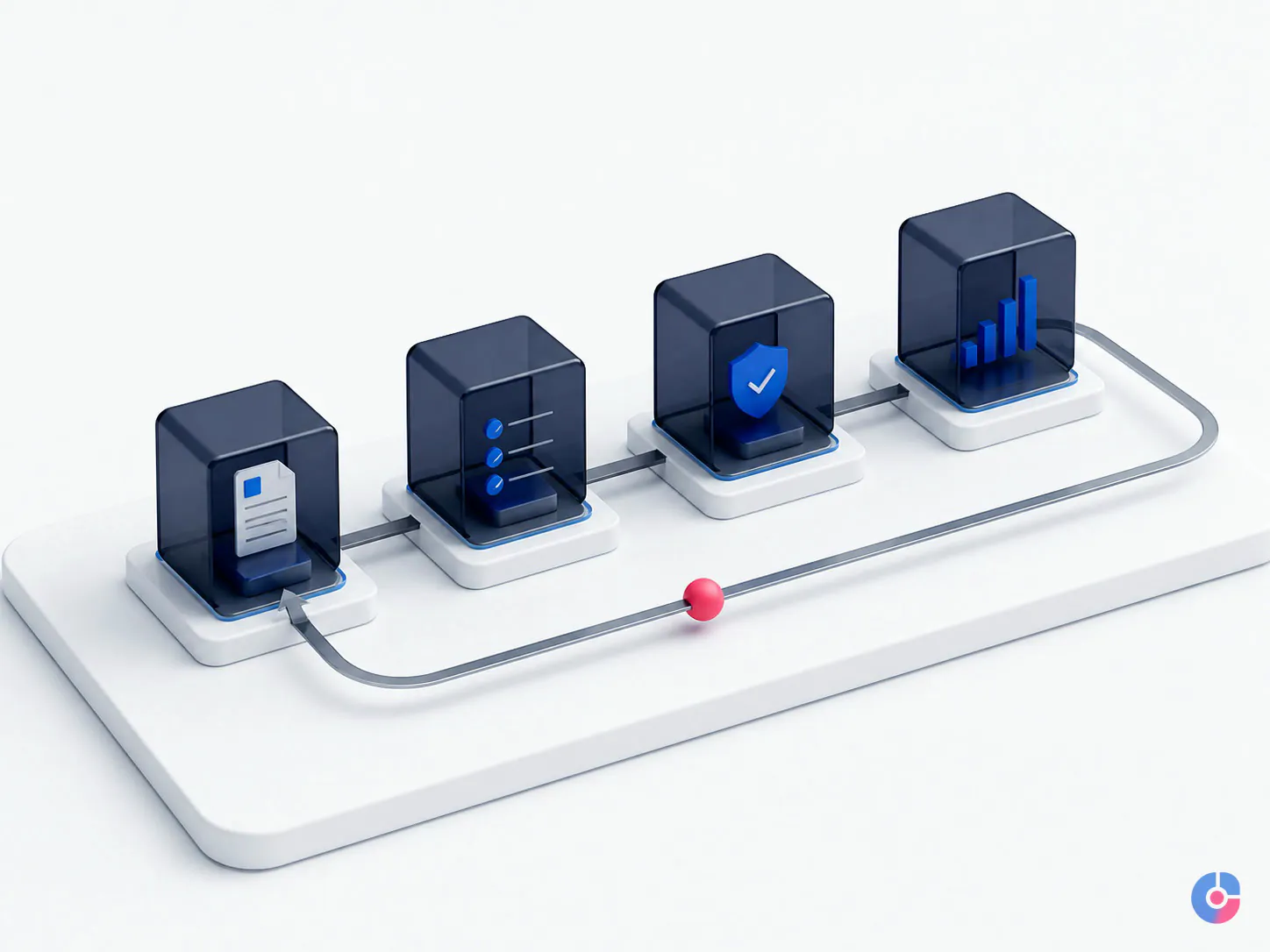
Working a denial properly
- Read: capture claim, payer, date, remittance reason and remark information, amount, appeal or correction route and evidence source.
- Diagnose: determine whether the underlying cause is registration, eligibility, authorization, coding, documentation, duplicate logic, filing, payer processing, contract or another controlled category.
- Validate: compare the claim with source records. Do not change a code, modifier, provider, date or diagnosis without authorised evidence and qualified review where required.
- Act: correct and resubmit, request payer correction, prepare reconsideration or assemble appeal documentation through the approved workflow.
- Prove: retain submission confirmation, portal reference, call reference, attachments, date and next expected event.
- Prevent: log root cause and return it to front desk, eligibility, authorization, coding, documentation or configuration owner.
An appeal is not a generic letter. Use the payer’s current route, required form, policy, contract, deadline and supporting evidence. The assistant can assemble and track the package; clinical and coding arguments require the appropriate provider or certified professional.

The numbers a practice should run the function on
Publish definitions with every report. Similar labels can use different numerators, denominators and periods.
Days in accounts receivable
A common operational calculation divides ending gross AR by average daily gross charges for a consistent recent period. State the charge period, number of days, whether credit balances are excluded and how unusual volume affects interpretation. It estimates how many charge-days remain outstanding; it is not the literal age of each claim.
Percentage of AR over 90 days
Divide gross AR aged over 90 days by total gross AR under the same ageing basis. Report patient and insurance balances separately, and consider payer and reason. The 90-day view shows concentration in older accounts; it does not identify whether each account is collectible.
Clean-claim rate
Define a clean claim as one that passes the practice’s complete and accurate submission rules and is accepted without correction. Divide clean first submissions by eligible initial claims submitted. State whether clearinghouse acceptance alone qualifies; many teams require a definition that reaches payer acceptance.
First-pass resolution rate
Define this separately from clean-claim rate. It may mean eligible claims paid or otherwise correctly adjudicated after the first submission without rework. State how zero-pay valid adjudications, capitated services, secondary claims and patient responsibility are treated.
Denial rate by payer and reason
Divide denied adjudications by the defined set of adjudicated claims or claim lines, and use the same unit consistently. Separate clearinghouse rejections. Break denial counts and value by payer, reason, location, provider or service where useful. Track overturn, correction and unresolved outcome without rewriting the original reason.
Net collection rate
Measure collected allowed revenue against the amount contractually collectable for a matched service period, excluding approved contractual adjustments under a documented formula. Timing matters: charges and payments from different cohorts distort a simple monthly ratio. Reconcile the definition with the practice’s finance and billing advisers.
Do not copy a national target into the contract. Baseline the practice’s own system, validate data and set goals by payer and cause. Track open balance, age, appeals due, response cycle and prevented recurrence. Claims keyed per day is a capacity measure, not a revenue-cycle outcome.
For a focused ageing workflow, review AR follow-up services for medical billing. OVELITHUB can also provide AR follow up support services as a defined queue.
Book a free consultation to review the current ageing buckets, denial taxonomy and evidence before scoping the role.
HIPAA is not a checkbox on a sales page
A practice must determine whether it is a HIPAA covered entity and whether the provider is acting as a business associate. HHS explains that covered entities may allow a business associate to handle PHI when satisfactory assurances are documented in a business associate agreement. The agreement must define permitted and required use, safeguards, reporting, subcontractors and other obligations. A website badge does not establish compliance.
Before access, put these controls into operation:
- a signed BAA with the responsible entity and suitable downstream terms;
- role-based, minimum-necessary access to the practice management system, clearinghouse and payer portals;
- unique user identification—never a shared biller login—and promptly reviewed access lists;
- workforce privacy and security training tied to the actual workflow;
- audit controls and review of access, exports, changes and unusual activity;
- approved devices, locations, storage and communications, with appropriate encryption in transit and at rest under the entity’s risk-based security program;
- no PHI copied into unapproved ordinary email, consumer chat, local downloads or personal drives;
- incident and breach escalation fast enough for the covered entity to investigate and meet its duties;
- documented retention, return or destruction and immediate offboarding.
HHS’s minimum-necessary guidance says covered entities generally must take reasonable steps to limit uses, disclosures and requests for PHI to what is needed for the purpose. Do not give the whole clinical chart to a worker whose task needs registration and remittance fields.
HHS’s current Security Rule summary addresses risk analysis, access, audit and business-associate requirements. The Breach Notification Rule requires covered entities and business associates to make applicable notifications following a breach of unsecured PHI; a business associate must notify the covered entity under the rule. Contract for a prompt internal report rather than treating the outer legal deadline as an operating target.
HIPAA is a federal baseline and does not replace stricter state privacy, medical-record, consumer, communication or sector rules. The practice remains responsible for selecting the vendor, limiting disclosure, responding to known problems and fulfilling its own obligations. Obtain qualified legal and security advice.
Onshore, offshore and the questions that matter more than location
Offshore location is not, by itself, proof of compliance or noncompliance. Ask:
- Which entity signs the BAA and employs or controls the workforce?
- From which country, facility, device and network is ePHI accessed?
- Does any record leave the client system, and can download, print, copy or removable media be restricted?
- Which subprocessors, cloud services and communication tools receive data?
- How are people screened, trained, supervised and sanctioned?
- Can the practice inspect unique-user logs, access changes and incident evidence?
- Who covers absence, and does the cover person have pre-authorised access?
- How are sessions revoked, devices secured and data returned at exit?
Then assess whether cross-border access creates additional contractual, state-law, payer, program or patient-notice issues. Keep PHI in the approved systems where feasible. The practice must understand and authorise the access model; vendor assurances do not transfer accountability.
How the assistant fits beside an existing biller
Follow-up capacity: the in-house biller retains coding, submission and complex payer decisions while the assistant owns status, rejected-claim routing, standard denial worklists and documented AR follow-up.
Front-end prevention: the assistant handles eligibility and benefits checks, registration discrepancies and authorization-status follow-up; the biller codes and submits. Weekly denial reasons return to the front desk and scheduling leads.
Small supervised pod: a lead distributes eligibility, rejection, posting and AR queues across trained people, while the practice retains coding, documentation and compliance ownership. Roles and segregation of duties must remain explicit.
Do not replace a functioning billing company merely because older AR exists. First ask for worklist evidence: denial inventory, percentage worked by reason and age, next actions, open appeals, payer response and balance over 90 days. The problem may be missing documentation, contract configuration or practice-side decisions. A supplemental assistant can clear a defined queue without disrupting claim submission.
The 60-day ramp
Days 1–10: execute the BAA and security review, issue named least-privilege accounts, document payer portals and rules, train on the practice management system and clearinghouse, and sample controlled historical cases. Verify screen handling, notes and escalation.
Days 11–30: start with a bounded list such as the oldest eligible insurance AR that remains inside actionable filing or appeal rules. Exclude coding, clinical and legal judgement. Review every early action. Run a weekly denial meeting with payer, reason, dollars, age, cause, owner and prevention action.
Days 31–45: add current rejections or eligibility work after quality is demonstrated. Sample notes against payer references and remittances. Review access logs, exceptions, repeat causes and response windows.
Days 46–60: produce the first monthly report with defined metrics, reconciled denominators and an open-item appendix. Decide whether the function should remain supplemental, expand to a pod or narrow to the best-performing queue.
At no point should the target be “work down AR quickly” without record-level evidence. Some balances require documentation, coding, payer escalation, contract analysis, patient action or write-off approval. No responsible provider can promise a recovery percentage or deadline before reviewing the accounts.
When the boundary is clear, OVELITHUB’s remote medical billing assistant service can be scoped around the actual worklist.
What this role cannot fix
Coding accuracy problems need an appropriately qualified coder and current official guidance. Clinical documentation gaps need the provider and the practice’s compliant documentation process. Payer contract rates and terms require authorised negotiation and analysis. A broken front desk needs corrected registration, eligibility and authorization workflows.
An assistant also cannot make an uncollectible balance collectible, override a filing deadline, create missing medical necessity or turn a payer statement into legal advice. They can make the problem visible early, assemble the evidence, route it to the right owner and track the decision to completion.
Next step
Open the ageing report and denial-reason view. If the practice cannot name the owner, last evidence and next action for the material balances, that is the first support scope.
Keep reading
Related insights

How to Improve Patient Scheduling
Unanswered calls and no-shows quietly cut clinic revenue. See how to redesign scheduling and add remote support that fills the diary without…

Prior Authorization Support Services Guide
Prior authorisation delays treatment and stalls revenue. See how to run auth as a tracked queue with owners, deadlines and clean clinical…

Where Practices Lose Billing Revenue
Denials, aged claims and unbilled encounters quietly drain practice revenue. See where billing breaks down and how outsourced support closes the gaps.