

Support & sales
Appointment Setting Services That Show Up
Outsourced appointment setting judged on held meetings, not booked ones. Qualification rules, reminder sequences and honest reporting on every call.

A no-show-heavy diary damages more than one time slot. Closers protect time that produces no conversation. Managers forecast from meetings that never reach discovery. After enough weak handovers, the sales team quietly stops treating the appointment provider’s bookings as real pipeline. The calendar still looks busy; confidence in it has gone.
OVELITHUB delivers managed appointment setting services built around meetings held and accepted against a written qualification standard. We help define who should be contacted, what must be true before a meeting is offered, how the appointment is framed, and what happens between booking and the scheduled time. Calling matters, but the economics of the programme live in the entire path from conversation to held meeting.
We do not quote an appointment volume before understanding the market, list, offer, disqualifiers and closer capacity. A lower number of well-matched meetings can be the correct target when it protects sales time and creates a more credible opportunity pipeline. No provider can guarantee that a prospect will attend or buy; the programme can make the conditions for attendance visible and manageable.
Booked, held and qualified: only two are worth optimising
These three states are often compressed into one “appointments” number. We separate them because each answers a different commercial question.
| Funnel state | Precise meaning | Management question |
|---|---|---|
| Booked | A time was placed on the calendar and the prospect received the required invitation. | Did the process create an agreed next step? |
| Held | The prospect and the designated seller joined and conducted the intended conversation. | Did protected sales time produce a live meeting? |
| Qualified | The held meeting met the written acceptance standard, including any required fit, need, authority, timing or other account-specific criteria. | Was this a meeting the sales team had agreed to accept? |
A programme optimised only for booked appointments encourages weak behaviour: ambiguous interest becomes a booking, inconvenient times are accepted, disqualifiers are ignored and the agenda is left vague. The booked number rises while held rate and closer trust fall. Our commercial rule is straightforward: measure held and qualified meetings, report booked as an intermediate state, and let the acceptable booked volume follow from those downstream outcomes.
This page is for clients who want OVELITHUB to manage qualification, contact sequencing, confirmation and reporting as one programme. If you already own the process and need a named person to operate it inside your team, see appointment setter staffing. That service supplies a seat; this one manages an outcome-oriented programme.

Qualification is written before anyone dials
Any provider willing to promise a meeting count without asking what should disqualify a prospect is optimising the wrong number. Before outreach begins, OVELITHUB holds a working session with the commercial owner and documents the acceptance standard the closer will use.
The programme brief includes:
- the ideal customer profile in observable terms such as location, organisation type, use case, buyer role or service need;
- three or four hard qualifiers that must be established before a meeting is offered;
- hard disqualifiers that trigger a polite exit rather than pressure to book;
- signals worth recording without treating them as mandatory, such as timing, budget context or an existing provider;
- the approved promise for the meeting, including who will attend, its length and expected agenda;
- calendar restrictions, routing rules and capacity by closer; and
- the exact CRM fields and evidence required for a meeting to count as accepted.
A strong disqualification list often improves the programme more than another script edit. It prevents a caller from stretching a weak fit into a calendar event and gives the prospect a respectful, clear exit. The list can include out-of-area contacts, excluded industries, needs outside the offer, unavailable timelines, required credentials the company does not possess or buyers who explicitly decline the next step.
The closer must agree to the definition. If sales rejects meetings using criteria that were never given to the programme team, the reporting cannot be fair. Conversely, if a meeting clearly violates the written disqualifier, it should not be presented as a qualified success. We record the rule, example and owner so that disagreements produce a precise revision rather than blame.
Where the conversations come from
The contact source changes the operating plan. A recent enquiry has already expressed interest and may require rapid routing. A dormant lead has history that should inform the opening. A cold account needs a relevant reason for contact, clean data and a permitted sequence. We report these sources separately so that a warm response programme is never credited as if it created demand from scratch.
Working inbound and dormant lists
New enquiries are assigned against an agreed response target, business-hours rule and fallback path. Speed matters, but the target must reflect staffing, source quality and the buyer’s context. The often-cited Harvard Business Review lead-response study was published in 2011, so we treat it as foundational rather than current market proof. A later 2021 InsideSales study examined 5.7 million inbound leads and more than 55 million sales activities across over 400 companies, reporting materially higher conversion for first attempts made in its earliest response window. Neither source establishes the right SLA for every business; both support measuring and reducing avoidable delay.
Dormant-lead work begins with source, prior consent or contact status, last interaction, reason for loss and any existing suppression. The message acknowledges relevant history instead of pretending the contact is new. Reactivation is useful when the offer is still appropriate and the record may lawfully be used; it is not permission to call an old database indefinitely.
Targeted outbound
For outbound work, the agreed ideal-customer profile becomes the acceptance rule for the list. Calling may be combined with a limited sequence across approved email or professional-network touches, but each channel has its own data, consent, identity and platform requirements. This page does not attempt to reproduce a complete prospecting operation. If your primary problem is finding and researching suitable accounts, review our B2B lead generation services. For dedicated sending operations and deliverability controls, use cold email support services.
Brand protection is written into the programme: approved identity, truthful claims, reasonable contact frequency, accurate disposition, prompt opt-out handling and no pressure after a clear refusal. The client approves the offer and market-specific compliance direction; OVELITHUB trains and samples execution.
The confirmation sequence that protects held rate
The period between booking and the meeting is part of appointment setting, not an administrative afterthought. A prospect may forget why they agreed, miss an invitation, choose the wrong time zone or encounter a conflict. A clear, proportionate sequence reduces ambiguity and gives the prospect an easy way to confirm or reschedule.
- Immediate calendar invitation. The invitation names the participants, time zone, duration, joining method and a short agenda that matches the conversation. It avoids inflated promises and gives a direct rescheduling route.
- Same-day confirmation. An approved message confirms that the invitation arrived and restates the specific reason the prospect agreed to meet. The setter checks for obvious errors in the email address, phone number or calendar entry.
- A useful pre-meeting touch. When appropriate, the programme sends a relevant client-approved resource or one preparation question. This touch should help the conversation; it should not restart the pitch or bury the prospect in material.
- Reminder on the meeting day. A concise reminder provides the time, joining link and reschedule path. Timing and channel are adapted to the market, consent status, meeting lead time and client policy.
- Human no-show response. If the prospect does not join, the setter checks with the closer, sends the approved reschedule note and attempts contact within the agreed operational window. The message is courteous and records the outcome rather than treating absence as consent to an endless chase.
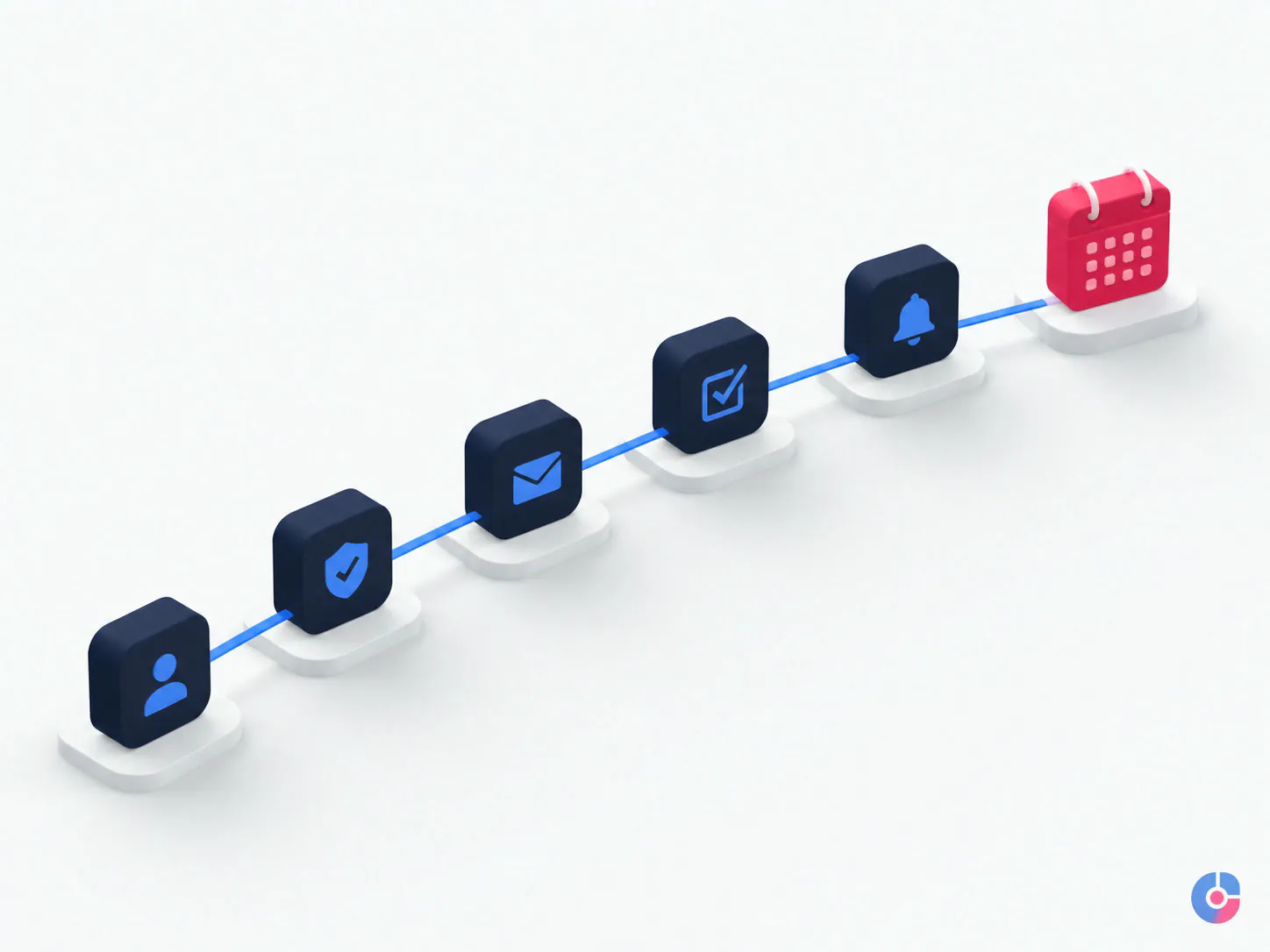
The sequence is not identical for every booking. A meeting scheduled for the same afternoon does not need five crowded touches. A meeting two weeks away needs more protection than one scheduled tomorrow. Consumer and business outreach may have different permitted channels, and a prospect’s opt-out always overrides the sequence.
No-show reasons are captured in the CRM when known: calendar mistake, unavailable closer, prospect conflict, lost urgency, wrong person, technical problem, qualification mismatch or no response. We do not invent a reason or publish a universal B2B show-rate benchmark. The client’s source-by-source history becomes the defensible baseline.

What gets handed to your closer
A calendar title is not a sales handover. Before the meeting, the closer should be able to understand the prospect, the reason for contact, what was established and what remains uncertain. OVELITHUB creates a meeting brief in the approved CRM or handover system.
The brief records the prospect’s words, not a more flattering rewrite. It can include role, organisation, source, problem, qualifier answers, disqualifier check, timing or budget signals, existing approach, stakeholders, reason for agreeing and promised agenda. It distinguishes a direct statement from an inference.
After the meeting, the closer supplies a simple disposition within the agreed turnaround: held or not held, accepted or rejected against the written standard, opportunity stage if created, and the reason. That feedback calibrates qualification and gives the programme a downstream quality signal. Without it, setters can only optimise the top of the funnel.
Reporting you can argue with
A credible weekly pack makes losses as visible as wins. It reports contacts worked, completed attempts, live conversations, meetings booked, meetings held, qualified meetings accepted, disqualifications by reason, no-shows by known reason and outstanding closer feedback. Source and campaign segments remain separate.
The core ratios are defined:
- held rate equals held meetings divided by booked meetings eligible to occur in the period;
- qualification acceptance equals held meetings accepted by sales divided by held meetings reviewed;
- conversation-to-held rate connects live conversations to meetings that actually occurred; and
- opportunity conversion uses the client’s CRM stage definition and agreed attribution window.
Cancellations, client-side conflicts and meetings still scheduled for a future week are not silently counted as no-shows or successes. The pack includes definitions and an exception list so the client can challenge individual records. Call examples, objection language and closer feedback then explain why the numbers moved.
A review ends with decisions: narrow a segment, clarify a qualifier, change a calendar rule, revise a reminder or pause a weak source.
Industries where this works—and where it does not
Managed appointment setting can work well for service businesses with a clear offer, an identifiable buyer, repeatable qualification and sales capacity. OVELITHUB has delivered more than 130 projects and has experience across industries including healthcare, real estate, construction and finance. That experience does not remove the need for client-approved claims, market rules or domain specialists.
Examples of appropriate programme shapes include an established B2B service seeking conversations with defined decision-makers, a construction provider following up quote requests, a real-estate business re-engaging permitted enquiries, or a practice arranging a non-clinical business-development discussion. Healthcare patient booking itself is a different workflow; organisations seeking that operational support should use our patient scheduling support page.
The model works poorly when the buyer is not reachable through the chosen channels, contact data is unreliable, or the first conversation requires technical, clinical, legal or licensed advice the programme cannot provide. It also struggles when the offer and target buyer change every week. In that case, resolve the offer and conduct founder-led learning before scaling outreach.
Complex sales can work when the opening conversation is bounded safely. The setter may establish role, problem and willingness to meet, then hand technical discovery to a qualified specialist. If that boundary cannot be written, the specialist should own first contact.
How an appointment-setting programme starts
| Phase | Work completed | Decision gate |
|---|---|---|
| Week 1 | Define the accepted meeting, disqualifiers, sources, CRM stages, calendar capacity, compliance controls and baseline. | Client approves the programme brief and evidence required for a meeting to count. |
| Week 2 | Build the approved call flow, touch sequence, meeting brief, dispositions and reporting view; test a small batch. | Review call quality and data before expanding volume. |
| Weeks 3–4 | Run controlled outreach and confirmation; collect closer feedback on held meetings. | Adjust qualification, source segments and handover details from real evidence. |
| Scale phase | Increase eligible volume only after execution and feedback are stable. | Confirm closer capacity, data supply, quality trend and operating controls. |
The first weeks are a calibration loop, not a race to a headline count. Early meetings test whether written criteria behave as expected in real conversations. A rejected meeting should produce a specific lesson. A held, accepted meeting should show which source, framing and qualifier combination deserves more attention.
Readers still comparing vendors can review how to choose an appointment setting service. The key questions concern definitions, artefact ownership, no-show handling, closer feedback and the behaviour created by pricing—not merely the number in a proposal.
Why pure pay-per-appointment can distort the programme
A price for every calendar booking appears aligned but can reward the easiest record to create. Payment at “booked” encourages stretched qualification and weak commitment before attendance is known. The client then disputes quality record by record.
A responsible commercial model reflects the work required to source or process eligible records, conduct conversations, manage confirmation, document handovers and report outcomes. The exact structure may use a programme fee, capacity element, milestone or agreed performance component. Definitions, exclusions, attribution, client dependencies and dispute handling are written before activity begins.
We still report held and qualified outcomes and review cost per accepted result. A pay-on-booking rule does not transfer control of attendance, lead supply, closer availability or offer quality.
Cold-contact compliance and brand control
Outreach rules depend on the recipient, jurisdiction, contact source and technology used. The client remains responsible for identifying the lawful basis, permitted list and approved claims, with qualified advice where needed. For US consumer telemarketing, the FTC’s business guidance covers matters such as disclosures, calling times, Do Not Call controls and recordkeeping. For EU personal data used in direct marketing, the European Commission explains notice and objection requirements. These references do not replace market-specific legal review.
OVELITHUB implements the approved rules through named system access, scripts with mandatory disclosures where specified, suppression controls, disposition review and sampled quality checks. We do not conceal caller identity, fabricate a relationship, continue after a valid opt-out or use client lists for another purpose. If the permitted route is uncertain, the record is paused and escalated.
Define your qualified meeting with us
The next step is not a volume quote. It is a working definition your sales team will accept. OVELITHUB will review your offer, list sources, disqualifiers, calendar capacity and existing outcomes, then propose the qualification and reporting framework for a managed programme.
Book a free consultation, email support@ovelit.com, or call +880 1707-510532. You can also review our broader digital services for related sales and operational support.
Keep reading
Related insights

How to Triage Support Tickets
Backlogs are a queue design problem, not an effort problem. See how ticket triage, priority rules and SLA discipline keep customer support…

Sales Admin Tasks to Hand Off First
Reps lose selling hours to quotes, CRM updates and scheduling. See which sales admin tasks to hand off, in what order, and…

Outsourced SDR vs In-House Hiring
Outbound stalls when nobody owns it full time. Compare outsourced sales development with hiring an SDR, and see what each option really…
Next step
Want this done rather than explained?
Tell us what needs doing and by when. You get a scope, a price range and an honest view of whether this is the right work for you at all.
- You send the brief A few lines is enough. No form fields you have to guess at.
- We reply in one business day With questions if we have them, and a range if we do not.
- You decide, not us No retainer to talk. If it is not our work, we say so.
Ask about BPO Services
We use what you send to answer you. We do not sell it, and we do not add you to a list.