

Marketing & creative
Guerrilla Marketing Strategy That Drives Sales
Low-budget marketing stunts fail when nobody can act on them. Plan guerrilla campaigns with a trackable next step, real costs and honest risk limits.

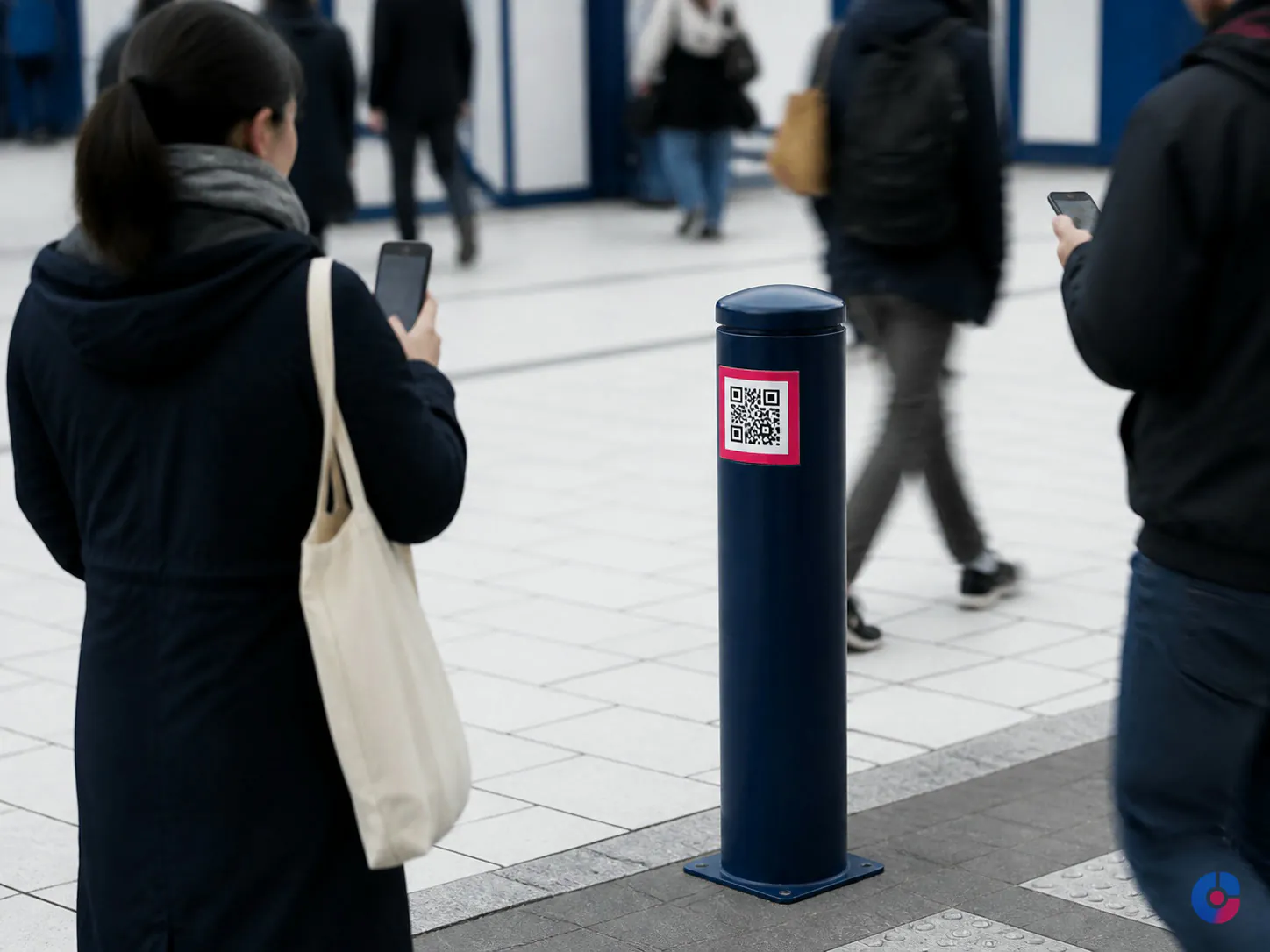
A striking installation stops people on a busy pavement. Phones come out. A few photographs appear online. Yet the installation does not identify a useful next step, no one can attribute visits to it, and nobody planned what to do with the footage. By the end of the day, the materials are gone and the business has attention it cannot connect to a customer.
That is the central weakness in much guerrilla marketing: the stunt is treated as the strategy. It is not. Surprise can earn a moment of attention, but the campaign still needs an audience, message, offer, action, distribution plan, permissions and measurement.
The honest trade-off is low media cost in exchange for high creative and coordination cost, plus non-zero legal, safety and reputational risk. A small business can use that trade well. It cannot pretend those costs do not exist.
Why most guerrilla campaigns produce attention and no customers
A crowd is not a conversion. Neither is a photograph, mention or high view count. Those can be valuable intermediate signals, but only when the campaign defines what should happen next. Otherwise, the team may celebrate visible activity while learning nothing about demand.
Three gaps usually explain the failure. First, the encounter is not connected to a specific audience problem; it is merely unusual. Second, the viewer has no immediate, memorable route to the business. Third, the team expects passers-by to distribute the campaign but has no crew, shot list, edit, release plan or channel owner of its own.
Design backward from a commercial action. For a restaurant, that might be a reservation for a specific opening period. For a local home service, it might be a postcode-qualified estimate. For a software company at an industry event, it might be an assessment booked by a defined buyer. The creative device earns attention for that action; it does not replace it.
What guerrilla marketing actually is
Guerrilla marketing is a category of unconventional tactics that trades some paid-media reach for creativity, surprise and the context in which a person encounters the message. Jay Conrad Levinson popularized the term in his 1984 book Guerrilla Marketing, written for small-business owners with more limited resources than large advertisers.
The strategic idea is resource asymmetry: a smaller company may not outspend an established brand, but it can choose a specific place, time, community or behaviour where a relevant intervention is noticed. The tactic might be physical, experiential, community-led or designed to become content. It does not have to look rebellious, obstruct public space or provoke controversy.
Separate the strategy from its surface style. Stickers are not inherently guerrilla strategy. Neither are murals, costumes, projections or flash mobs. A conventional-looking object placed in exactly the right context with a trackable response may be stronger than an elaborate spectacle with no commercial connection.
The famous examples are misleading, and here is why
Campaigns that survive in marketing roundups are selected because they became famous. That sample excludes the installations nobody noticed, the videos that did not travel, the concepts refused permission, the activity removed early and the attention that produced no demand. It also tends to hide agency fees, fabrication, insurance, security, legal review, public relations and paid amplification.
Many celebrated examples came from brands people already recognized. Existing awareness helped viewers decode a logo or visual cue, while press teams and media relationships helped distribute the story. The stunt amplified familiarity; it did not introduce an unknown business from zero.
A smaller company should borrow the mechanic, not the scale or outcome. Ask what made the encounter relevant to the location, what behaviour it invited, how quickly the brand and offer were understood, what made the image easy to capture, and how the campaign moved beyond the people physically present. Then rebuild those elements around a narrow audience and affordable execution.
The six formats and which business each suits
Ambient and street placement
Ambient work uses an existing surface, object, route or behaviour as part of the idea: a window, floor, shelter, counter, vehicle, package or authorized public display. It suits location-dependent retail, hospitality, events and services when the setting makes the benefit instantly understandable. Effort goes into site selection, permission, fabrication, installation, maintenance and removal. The common failure is a clever visual that people remember without the brand or offer.
Experiential and pop-up
An experience lets people try, compare, create or participate. It suits products that benefit from demonstration and services that can turn expertise into a short useful interaction. Cost is driven by venue, staff, equipment, accessibility, insurance, queue handling and follow-up, even if media spend is low. It fails when the activity is entertaining but attracts people who will never buy, or when staff collect details without clear consent and a credible follow-up reason.
Ambush and event-adjacent activity
Event-adjacent work tries to reach a concentrated audience without being an official sponsor. It may suit a business-to-business company whose buyers gather at a conference, but it carries serious permission, sponsorship and intellectual-property questions. A useful alternative is an independently branded breakfast, guide, shuttle, mailed kit or off-site demonstration that does not imply official affiliation. Do not use event marks, restricted areas or misleading language without rights and advice.
Stealth or native placement
Stealth activity embeds a product or message in a setting where it feels discovered rather than announced. It can suit samples, entertainment, retail or creator collaboration, but undisclosed commercial influence can mislead people and breach advertising rules. The effort lies in casting, disclosure, scripts, supervision and moderation. If the concept depends on hiding that a person is being paid or that an interaction is staged, reconsider it.
Grassroots and community seeding
Grassroots work starts with a real community, association, venue or group rather than a broad audience. It suits local services, membership products and mission-aligned brands prepared to contribute something useful. Effort goes into relationship building and delivery, not simply distributing flyers. It fails when the business treats a community as a channel to exploit or sends representatives without local context and permission.
Social-first and content-led stunts
A social-first idea is designed around the frame, opening seconds, reveal and share context of the final content. It may have a small physical audience but a deliberate production and distribution plan. It suits a product whose value can be demonstrated visually and a team capable of filming, editing, moderating and repurposing. It fails when everyone assumes a platform will distribute the footage organically. Build a realistic owned, partner, press and paid-seeding plan; do not promise virality.
Meet four preconditions before planning the concept
- One next step: decide what an interested person should do immediately. Make it proportionate to the encounter: view, redeem, book, visit, request or subscribe with informed consent.
- Immediate fulfilment: confirm that the page, stock, booking calendar, service area and response team can handle the action. Attention aimed at an unavailable offer damages trust.
- Owned capture and distribution: name who films, what angles and releases are required, who edits, where the content appears, who contacts partners and how comments are handled.
- Downside response: write the stop rule and response plan before launch. Decide who can pause the activity, remove materials, address safety, answer criticism and notify relevant parties.
If any answer is “we will work it out on the day,” the campaign is not ready. A guerrilla format compresses the public feedback cycle, which makes pre-agreed authority more important, not less.
Make the campaign measurable
Start with a decision and target. For example: “If the pilot produces enough qualified estimate requests at an acceptable total acquisition cost, we will test two more locations.” Define qualified, the cost included and the observation period before execution. This prevents the team from changing success to impressions after bookings disappoint.
Use a dedicated, memorable short path or code destination for each placement; test it on different devices and from the expected viewing distance. Add a unique offer code where redemption makes sense. Build a focused campaign page that preserves the same message and visual cue, loads quickly, explains eligibility and presents one primary action.
For physical locations, compare a defined test area or period with a reasonable control while acknowledging differences in footfall, weather, events and existing customer mix. Track direct traffic and branded search as supporting indicators rather than claiming causation. Manually log inbound calls, direct messages, press mentions and sales conversations using a consistent campaign field.
Illustrative local-service pilot
Suppose a bicycle-repair business gets permission from three cafés near commuting routes to place a small display of worn bicycle components beside a free pre-ride safety checklist. This is an invented illustration, not an OVELITHUB client result. Each café has its own short path leading to a mobile page where riders can check service-area eligibility and book a fixed inspection slot. The team photographs the installation with permission and publishes a short maintenance series during the week.
The business records total campaign cost, scans and unique page visits by café, eligible booking starts, completed bookings, no-shows and revenue from the defined inspection offer. It also records staff time, café fees or reciprocal value, fabrication and content production. If one café produces activity but no eligible bookings, the team changes the audience or offer rather than declaring success from scans.
This method does not need a large analytics stack. It needs unique routes, consistent booking fields, a cost ledger and a pre-agreed decision. Respect applicable privacy, cookie, promotional and consent requirements; collect only what the action needs.

The risks the case studies leave out
Property and permits. Obtain written permission from the owner or relevant public authority before attaching, painting, projecting, placing or distributing anything. Rules differ by jurisdiction, material and site. In the UK, for example, the government describes fly-posting as putting posters, stickers or bills up without the property owner’s permission. That definition is not a global rule, but it shows why “temporary” does not mean authorized. Check the municipality, venue and property owner where the activity will occur.
Safety and access. Assess trip, fire, electrical, traffic, crowd, weather, accessibility and emergency risks. Do not block footways, exits, tactile paving or sight lines. Use competent fabricators and installers, appropriate barriers and supervision, and insurance agreed with the venue and broker. Have a removal plan and named safety lead.
Privacy and filming. A public setting does not eliminate privacy, publicity, child-safeguarding or commercial-use questions. Plan camera positions, notices, releases, exclusion zones and deletion requests with local advice. Do not make an unsuspecting person the subject of an advertisement merely because they walked past.
Advertising disclosures. Paid actors, creators, seeded endorsements and staged “discoveries” may require clear disclosure. Claims in unconventional media remain advertising claims: substantiate them and present conditions clearly. Get jurisdiction-specific review for regulated products, prizes, sampling or data capture.
Events and trademarks. The World Intellectual Property Organization’s overview of sports sponsorship notes that ambush marketing can include unauthorized marks or publicity stunts intended for event broadcasts, and that organizers take measures to protect sponsorship rights. Laws, event terms and protected zones vary. If an idea relies on association with an event, athlete, team or broadcast, obtain legal advice before production.
Reputation. Test the concept with people outside the creative team. Ask who could reasonably feel deceived, mocked, frightened, inconvenienced or excluded; what the installation resembles without context; and how current events could change its meaning. Monitoring is not a substitute for judgement, but it lets the team detect a problem and stop quickly.
Plan a guerrilla campaign in four weeks
Week one: audience, message and action
Select a narrow audience and moment. Write one sentence each for the problem, promise and next step. Inspect the physical or social context and baseline demand. Define conversion, qualified response, total cost boundary, stop rules and the decision the pilot will inform.
Week two: concept, feasibility and permissions
Develop several mechanics within the same strategic brief, then test comprehension without explaining them. Conduct site visits. Identify property ownership, permits, venue terms, sponsorship restrictions, insurance, accessibility, privacy, advertising and intellectual-property review. A concept without a feasible approval path does not advance.
Week three: production, crew and capture
Prototype at true scale. Build the landing page and unique measurement routes. Confirm fabricator, installer, crew, equipment, run sheet, weather alternative, safety plan, contact sheet, filming permissions, shot list, edit plan, content calendar and removal. Test every scan, form, booking and offer condition.
Week four: execute, amplify and learn
Brief the crew and venue, document the approved installation, monitor safety and response, and remove it as agreed. Publish the owned edit, distribute partner versions, handle enquiries and record costs and outcomes. Hold a post-campaign review that separates creative response, distribution and commercial action.
A two-person crew and a designer can produce a modest campaign when the concept is simple and permissions are contained: one person manages the site and public interaction, the other captures planned footage, while the designer prepares the installation and digital follow-through. More complex fabrication, crowds, public land or regulated claims need specialist help. To connect concept, production, launch and reporting, plan a campaign with a team that can produce it.

When not to use guerrilla marketing
Avoid it when a regulated claim cannot be responsibly simplified in the encounter; when the business is already facing a trust or safety problem; when the concept depends on misleading people; or when a demand spike would exceed stock, staffing, service area or customer support.
It is also a weak primary channel for many high-consideration business purchases with long committees and procurement cycles. A conference-adjacent physical mailer, useful field guide or small expert session can still create a memorable opening, but account research, sales follow-up and proof must carry the opportunity.
If the audience is actively searching for a defined need, search content or paid search may be more direct and controllable. If the goal requires precise scale and targeting, use paid media. Guerrilla marketing should earn its place against those alternatives, not receive a special budget because it sounds creative.
Bring the audience, location or community, commercial action, total budget and hard risk limits. We will pressure-test whether guerrilla marketing fits, then map concept, permissions, production, capture, amplification and measurement. For the operational layer, review what campaign operations covers, or book a campaign planning conversation.
Keep reading
Related insights

WordPress vs Custom CMS Development
A custom CMS buys control and a permanent maintenance bill. Compare both against your content model, team and five-year plan before you…

BPO Services for Digital Marketing: Benefits
Marketing teams stall on execution, not ideas. See which marketing functions a BPO model absorbs, what it returns in hours, and where…

What SEO Services Actually Deliver
SEO is four separate disciplines sold as one word. See what each part does, what results it can produce, and how to…