

Healthcare & specialist
Healthcare BPO Services for Medical Practices
Admin work is eating clinical time and slowing payments. See which practice functions are safe to outsource, what a BAA must cover, and how to pilot one.

A clinician finishes notes after the last appointment. The front desk cannot answer every call while checking in patients. Eligibility work waits until the next morning, records requests sit in a shared inbox, and the claims queue grows during the same weeks the practice is busiest. Administrative work is not happening around care; it is constraining access, cash flow and staff capacity.
The useful decision is not “outsource or do everything inside.” It is which defined administrative function can move without weakening privacy, security, clinical control or the patient experience. That decision should pass through the applicable contract and access model before cost is discussed.
For a US practice subject to HIPAA, the business associate analysis and agreement are central. For a European practice, GDPR, national health-data rules, processor terms and transfer requirements may apply instead. The labels and obligations are not interchangeable. Confirm the actual entities, data flows and jurisdiction with primary sources and qualified counsel.
The admin load is not a side issue; it is the constraint
Administrative delay becomes operational debt. Unanswered calls create repeat calls, late benefit checks shift financial conversations to check-in, incomplete referrals delay scheduling, and claims held for missing items delay payment. Staff compensate with overtime, context switching and workarounds.
Do not estimate the burden from anecdotes alone. For four weeks, measure the work arriving, completed, pending and returned by function. Record clinician and manager interruptions caused by missing administrative steps. Track overtime, vacancies and aged work queues without converting them into a dramatic percentage unless a defensible source and matching definition exist.
A queue view distinguishes capacity from process failure. If most eligibility items are missing insurance images, an intake fix may matter more than another processor. If complete records requests wait because nobody owns them, defined capacity may help. If coding depends on incomplete documentation, administrative outsourcing does not solve the clinical documentation issue.
What healthcare BPO covers in a practice
Healthcare business process outsourcing can support non-clinical, administrative work under the practice’s policies and applicable agreements. The precise scope depends on jurisdiction, professional rules, payer contracts, technology permissions and vendor capability. OVELITHUB provides administrative and back-office support, not diagnosis, treatment, clinical triage, prescribing or licensed professional services.
Front office and patient access
- routine scheduling and rescheduling within approved appointment rules;
- appointment confirmations, reminders and authorized recall workflows;
- inbound administrative call handling and documented routing;
- referral intake, document completeness checks and status follow-up;
- waitlist management under defined priority and contact rules;
- registration and demographic or coverage updates with patient confirmation.
The team must never improvise clinical urgency. Calls involving symptoms, medication, test interpretation, clinical advice, safeguarding or emergency concerns go immediately to the practice’s approved clinical pathway. Scheduling rules should state what staff may book, what requires authorization and what they must never infer.
Revenue cycle administration
- eligibility and benefit verification using approved payer sources;
- prior-authorization document coordination without clinical judgement;
- charge-entry preparation from complete, approved source material;
- claim-submission support and clearinghouse work-queue monitoring;
- administrative denial research and follow-up;
- payment and remittance posting under controlled rules;
- patient balance statements and approved follow-up communications.
The practice retains responsibility defined by law, contract and professional role. Final coding, claim certification, write-offs, refunds, payment plans, payer disputes and clinical-documentation questions require named internal authority or appropriately qualified specialists. A separate medical billing guide covers those mechanics in more depth.
Records and documentation support
- preparing charts by confirming expected administrative documents are present;
- indexing incoming documents into approved categories;
- tracking records requests and approved release workflows;
- identifying duplicates, missing fields and migration exceptions;
- preparing administrative work queues for authorized review.
Records release is not “send the file.” Identity, authority, scope, applicable deadline, fee, exclusion, legal hold and sensitive-record rules may need assessment. The external team should prepare and track the request; the practice defines who approves release and how exceptions are handled. Detailed record accuracy work belongs in the dedicated healthcare data-entry process.
Practice administration
- collecting and tracking credentialing or recredentialing paperwork;
- maintaining provider, payer and location administrative records;
- vendor, supply and purchase-order administration under approved authority;
- rota, meeting, policy-acknowledgement and training-record support;
- producing defined operational reports from approved systems.
Credentialing decisions, attestations, signatures and representations stay with authorized professionals and the practice. The support team may assemble evidence and monitor status, but it must not certify facts it cannot verify.
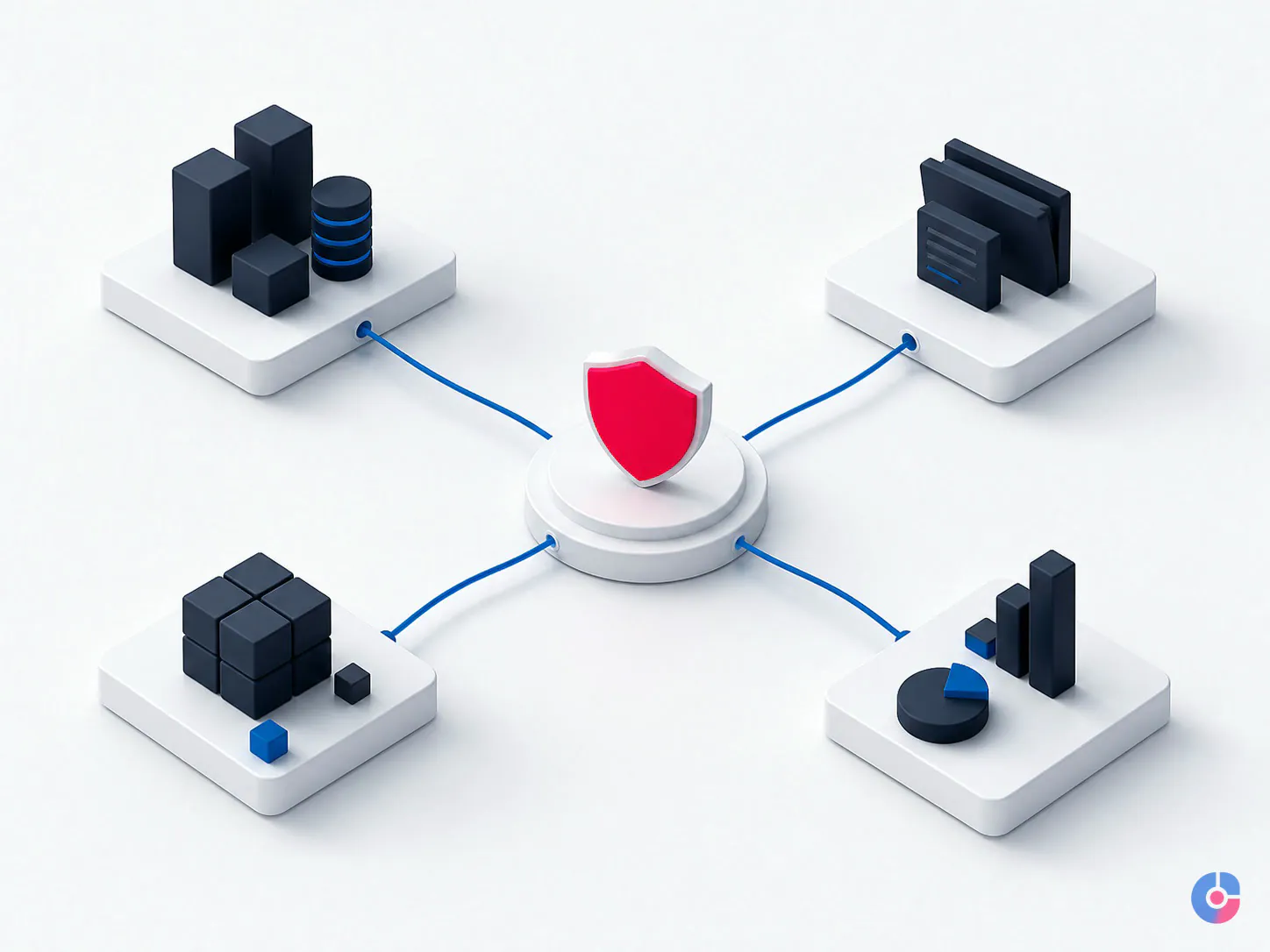
The compliance gate every function passes through
In the United States, determine first whether the practice is a HIPAA covered entity and whether the provider would be its business associate for the work. Current HHS business-associate guidance explains that covered entities may disclose protected health information to a business associate when they obtain required assurances through a contract or other written arrangement. The agreement must describe permitted and required uses and disclosures and cannot authorize uses that would violate the Privacy Rule if performed by the covered entity, subject to stated exceptions.
A Business Associate Agreement is not a badge or generic certificate. HHS’s sample contract provisions describe subjects including safeguards, incident reporting, subcontractors, individual-rights support, HHS access, termination, and return or destruction of protected health information where feasible. Sample wording alone may not create a sufficient contract under state law. The practice and counsel must match the agreement to the real service and data flow.
The BAA is necessary where required, but it does not make unsafe operations safe. Map every system, channel, location, person and subcontractor that will handle protected health information. Confirm cross-border access and relevant payer, EHR, health and privacy requirements.
Apply minimum necessary to access design
HHS states that, when the HIPAA minimum necessary requirement applies, covered entities generally must take reasonable steps to limit uses, disclosures and requests for protected health information to what is needed for the intended purpose. HHS also lists circumstances where that standard does not apply, including certain treatment disclosures. The practice should have qualified people determine applicability; a vendor should not use the phrase as a vague promise.
Turn the approved scope into named-user, role-based access. An eligibility worker may need demographics, payer details, appointment information and the payer portal—not unrestricted access to psychotherapy notes, all clinical records, user administration or bulk exports. A records worker may need a request queue and designated record view but no prescription, order or billing-edit authority.
- Use one named account per person; prohibit shared credentials.
- Require strong authentication and device controls supported by the system.
- Limit roles, patient populations, queues, exports and hours where technically and operationally appropriate.
- Log access, changes, downloads and administrative events; define who reviews them.
- Approve location, network, screen privacy, printing, local storage and removable-media rules.
- Provision from an authorized request and revoke promptly after role change or exit.
- Test the role with sample cases before production; a role name alone does not prove its permissions.
Make incident reporting faster than the outer legal limit
HHS’s Breach Notification Rule guidance says a business associate that discovers a breach of unsecured protected health information must notify the covered entity without unreasonable delay and no later than 60 calendar days after discovery. That is an outer rule, not a sensible operational target. The agreement and incident plan can require much faster initial notice so the practice can investigate, mitigate and meet its own obligations. Counsel should determine the applicable trigger, contents, recipients and deadlines, including stricter state or other laws.
For European operations, a HIPAA BAA is not a substitute for a controller-processor assessment. The agreement may need Article 28 terms, health-data safeguards, subprocessor controls, transfer mechanisms and national requirements. The UK ICO’s contract guidance is a UK GDPR starting point; practices elsewhere must use the relevant regulator and counsel.

Use a function-by-function risk map
| Function | PHI exposure | Error tolerance | Quality measurability | Pilot view |
|---|---|---|---|---|
| Routine eligibility check for scheduled visits | Moderate: identity, coverage and appointment data | Low: errors affect access and financial conversations | High: completion, source, fields and exceptions can be sampled | Reasonable start when rules and escalation are mature |
| Appointment reminders and routine rescheduling | Moderate: contact and appointment data | Low to moderate; clinical calls must be diverted | High: delivery, outcome and exception logs | Suitable with careful scripting and routing |
| Referral intake completeness | High: clinical and demographic documents | Low: missing or misrouted information can delay care | High for checklist completeness; clinical suitability stays inside | Pilot after clear acceptance and urgency rules |
| Records-request preparation | High: potentially broad record access | Very low: identity, authority and scope matter | High for turnaround and checklist; approval stays authorized | Good only with mature release controls |
| Payment posting | Moderate to high: financial and patient data | Low: allocation errors distort balances | High through batch reconciliation and sampling | Suitable when source and reconciliation are controlled |
| Denial follow-up | High: claim and clinical-document references | Low; errors may affect appeal and revenue | Moderate to high by reason, action and outcome | Start with administrative categories, not clinical appeals |
| Live symptom calls or clinical triage | High | Near zero; patient-safety consequences | Not reducible to an admin checklist | Keep in the licensed clinical pathway |
Exposure labels are relative planning prompts, not legal classifications. A low-volume task can still expose highly sensitive information. Assess data category, breadth, system capability, patient consequence, reversibility, professional judgement and exception rate.
For many practices, a controlled eligibility pilot for already scheduled, non-urgent visits is a defensible starting point. It has a bounded queue, visible source evidence and clear completion fields. The practice can retain complex benefit interpretation, prior-authorization clinical input, patient financial counselling and every urgent exception. If eligibility rules are unstable or payer access cannot be scoped, choose a different function rather than weakening controls.
Keep clinical authority and sensitive relationships inside
Do not place these within an administrative BPO scope:
- diagnosis, treatment, clinical advice or care-plan decisions;
- symptom assessment, urgency determination or clinical triage;
- prescribing, medication advice, result interpretation or consent discussions;
- anything requiring a licence or professional credential the provider does not hold;
- final clinical documentation, attestation or coding sign-off where responsibility remains with the practice or qualified professional;
- complaints, safeguarding, serious incidents or high-risk patient relationships that require local accountable judgement;
- legal conclusions about access, disclosure, privacy rights or record retention.
Patient preference also matters. Route routine administrative calls to the external team only where communication is clear and the team can identify the practice accurately. Keep sensitive, complex and relationship-dependent calls with named local staff. Patients should not be misled about who they are speaking with or forced through a remote queue when the issue needs the practice.
Run one single-function pilot
- Choose a bounded function. Select repeatable work with a clean input, output and exception route—not the biggest or angriest queue.
- Baseline four weeks. Measure volume, age, completion, errors, rework, escalations and internal handling time with stable definitions.
- Map reality. Observe the actual workflow, including workarounds, payer portals, phone calls, missing inputs and unofficial approvals.
- Complete compliance and security gates. Approve agreements, data-flow assessment, roles, devices, training, incident path, continuity and exit before live access.
- Define the pass mark. Set safety and privacy as mandatory gates, then specify completion, accuracy, cycle time and escalation targets based on baseline.
- Run in parallel for two weeks. Process a controlled queue while the internal owner verifies source evidence and output. Reconcile every case.
- Transfer with weekly review. Move only stable categories; retain sampling, exceptions, audit-log review and clinical oversight.
If the pilot fails, stop or reduce scope, secure access, reconcile affected items, correct patient or payer impact and identify the cause. Do not hide poor results by expanding volume or changing definitions. Report incidents through the approved pathway immediately.
To select and control a first queue, book a practice workflow review. The output should be a pilot specification the physician owner, practice manager, privacy or security owner and counsel can challenge—not an open-ended staffing proposal.
Read the operational numbers in context
- Days in accounts receivable: define the formula and segment by payer, service and age. It changes with charge lag, payment timing, write-offs and sales mix, not just follow-up quality.
- Clean-claim rate: define a clean claim and the denominator. Clearinghouse acceptance is not the same as payer adjudication or payment.
- Call answer and abandonment: read with offered volume, wait threshold, time of day, callback availability and repeat calls. Fast answers are not valuable if routing is unsafe.
- Third next available appointment: use a consistent appointment type and provider group. Scheduling rules, template changes and cancellations can move it independently of demand.
- No-show rate: define eligible appointments and separate cancellations. Patient mix, access barriers, season and reminder policy affect it.
- Records-request turnaround: segment complete routine requests from identity, authority, legal or sensitive-record exceptions. Speed must not override valid release checks.
Do not import a generic industry benchmark and call it a target. Baseline the practice, define each metric, set safety and quality floors, and compare like periods and case mix. Review samples and patient complaints beside the dashboard.

Questions to ask any healthcare BPO provider
- Which legal entity signs the service agreement and, where required, the BAA or processor contract?
- Which staff, locations, devices, systems, subprocessors and cross-border transfers touch our information?
- Will you sign terms matched to this scope rather than provide a self-described compliance certificate?
- How are named accounts requested, approved, tested, reviewed and revoked?
- What role-specific PHI, security, patient-communication and incident training occurs, and how is completion evidenced?
- How do you prohibit local storage, shared credentials, unapproved channels, printing and copying?
- Which logs are available to us, and who reviews anomalies?
- How is quality sampled by function, and can we inspect underlying cases?
- What is the clinical, privacy, payer and operational escalation path during our hours?
- What initial incident notice time will the contract require?
- Are staff dedicated or shared, and what happens during absence or replacement?
- How are data returned, retained, deleted or made inaccessible at exit, including backups and subprocessor copies?
- How do continuity and disaster-recovery tests cover this exact service?
If an EHR does not allow safe external access, do not share credentials or export a shadow database. Ask the EHR vendor about supported named users, task or queue restrictions, remote access, audit logs and contractual limitations. Redesign the work or keep it internal if suitable access cannot be created.
Cost shifts; management does not disappear
Outsourcing can shift some fixed staffing need toward contracted capacity. Pricing may be per person, hour, transaction or outcome. Compare management, onboarding, tools, telecoms, security, legal review, quality assurance, rework, coverage, change requests, tax and exit.
The practice still owns policy, clinical boundaries, vendor oversight, access approval, patient relationships and many compliance duties. A provider manager does not remove the need for an internal accountable owner. Include that person’s review time in the business case.
Not acting also has a cost: overtime, vacancy pressure, missed calls, delayed claims, aged requests and clinician interruption. Measure those locally rather than presenting an industry average as the practice’s outcome. The pilot should show which cost moves and whether quality remains acceptable.
Bring one four-week queue baseline, the current workflow, system-role documentation, exception types, patient communication rules and applicable agreement requirements. We will map a bounded administrative pilot for your internal privacy, security, clinical and legal owners to evaluate. For a single day-to-day role, compare healthcare virtual assistant services; for billing-specific work, review medical billing support services; or book a free consultation.
Keep reading
Related insights

What a Remote Billing Assistant Does
Claims get submitted and then forgotten. See how a remote billing assistant works eligibility, denials and AR follow-up to protect practice revenue.

How to Improve Patient Scheduling
Unanswered calls and no-shows quietly cut clinic revenue. See how to redesign scheduling and add remote support that fills the diary without…

Prior Authorization Support Services Guide
Prior authorisation delays treatment and stalls revenue. See how to run auth as a tracked queue with owners, deadlines and clean clinical…