

BPO & back office
How to Research a Prospect Before a Call
Reps skip research because it is slow, then open with nothing. See how to standardise account research so every conversation starts from real evidence.

Unresearched: “We help growing companies improve efficiency. I wanted to learn about your priorities.” The same sentence could be read to every account in the CRM. Researched: “Your careers page added three implementation roles in Germany this month. When a services team enters a new market, handoffs between sales, onboarding and local delivery often become visible. How are you assigning ownership today?”
The second opening does not claim to know the company’s problem. It uses a dated public signal to earn a relevant question. A serious buyer can correct the hypothesis, explain the priority or say it is unrelated. In every case, the conversation reaches substance faster.
Why prospect research disappears before the call
Reps do not necessarily skip research because they reject its value. They skip it because the task is unbounded. “Learn about this account” has no finish line, standard output or time limit. Ten open browser tabs can still leave the seller unsure what to say. As the next meeting approaches, research collapses into a quick homepage scan.
The fix is simple to state: define a fixed brief, give it a time budget, require sources and assign an owner. This turns curiosity into a manufacturing step in the pipeline. The seller remains responsible for understanding the account and testing the hypothesis; they no longer have to rediscover where to look and how to record it every time.
Research also needs an eligibility rule. A generic volume lead does not merit an hour. A booked first meeting deserves current context. A named strategic account may justify a deeper account plan. Without tiers, teams either over-research low-value outreach or under-prepare for consequential conversations.
The one-page account brief
A standard first-meeting brief should fit on one screen or page and show evidence before interpretation:
- Identity: legal and trading name, domain, headquarters, operating markets, ownership or group structure and concise business model.
- Current context: relevant products, customer groups, locations, approximate organisational shape where verifiable and account status in the CRM.
- Recent developments: two or three dated trigger events with direct source links and a short explanation of why each may matter.
- Likely buying group: relevant functions and role holders verified from current first-party or official sources, with confidence and last-checked date.
- Visible operating signals: hiring, procurement, integration, technology, review, expansion or process evidence that connects to the seller’s offer.
- Hypothesis: one probable priority or pressure, explicitly labelled as inference rather than company fact.
- Offer connection: the part of the seller’s capability that could be relevant and the reason—not a pasted service list.
- Openings: two evidence-led questions, including one safer operational angle and one more strategic angle.
- Risks and unknowns: contradictions, stale facts, missing stakeholder, prior objections and what the rep must confirm.
For the standard tier, cap research at 15 minutes after the source set and template are established. This is an operating constraint, not an industry benchmark. A researcher should stop when the required fields are supported, not when the internet runs out. If a critical unknown remains, mark it; do not fill the page with weak material.
Every factual claim needs a source URL, source title, publication or filing date, retrieval date and a short excerpt or note sufficient for verification. Record inferences separately. “Opened a Dubai office on 12 August” can be a fact from the company announcement. “May need multilingual onboarding support” is a hypothesis to test.
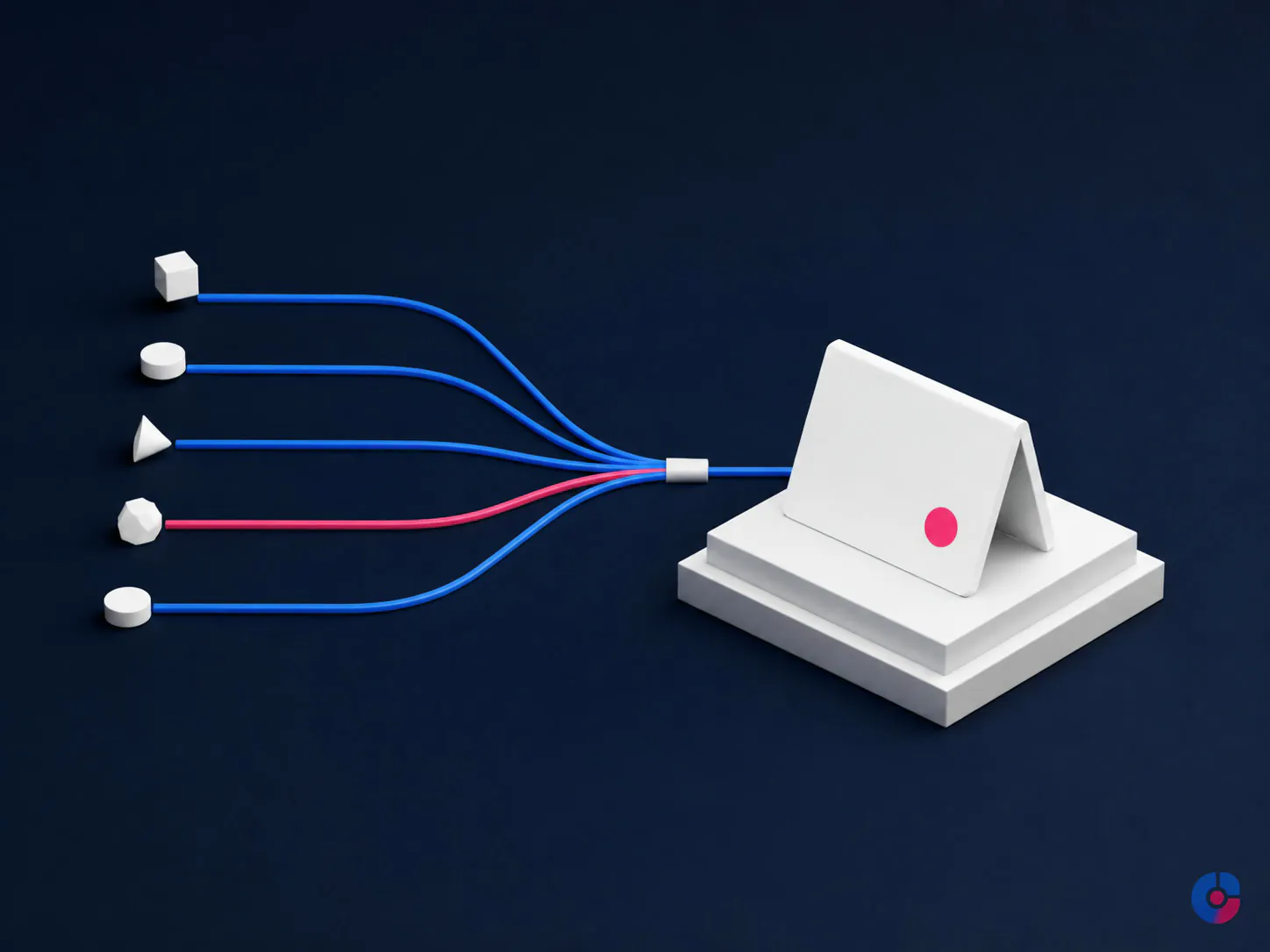
Where useful signals come from
Public company and regulatory sources
Official filings can reveal structure, risks, segments, material events, strategy language, directors and financial context. For US public companies, use the SEC’s live EDGAR filing search. For UK incorporated companies, use the official Companies House register. Other markets have their own official registries and securities regulators.
Read the relevant filing section rather than rely on a search-result summary. Note the reporting period: a filing submitted today may describe a quarter that ended months earlier. Company registers establish legal facts; they do not necessarily describe the current commercial priority.
Hiring, tender and expansion signals
The company’s own careers page can show which functions, markets and systems are receiving investment. A cluster of implementation roles may suggest delivery growth; it does not prove the team is understaffed. Capture role, location, posting date if visible and source.
Public procurement notices reveal defined demand, language, scope and timing. US federal opportunities are searchable in the official SAM.gov Contract Opportunities service. UK public contracts use services such as Contracts Finder and Find a Tender according to value and jurisdiction; EU notices use the official Tenders Electronic Daily service. Confirm that a notice is current, relevant and open before treating it as a trigger.
Expansion announcements, planning documents, permits and local economic-development releases can indicate a new operating footprint. Use the primary announcement and record the date. Syndicated press releases may repeat old news without making the age obvious.
Executive commentary and published talks
Earnings calls, company podcasts, webinars, conference sessions and executive interviews show how leaders frame a problem. Capture the speaker, role, event, date and exact context. A quote from a prior employer or a personal opinion should not be presented as the current company’s policy.
Listen or read around the relevant passage. A clipped sentence can reverse meaning. Paraphrase in the brief and link to the original. Use a short compliant excerpt only when the precise wording matters.
Product, technology and review footprints
Product documentation, integration directories, status pages, developer docs, job descriptions and site technologies can reveal visible workflows or compatibility. Treat third-party technology-detection tools as leads to verify, not facts. A script on the website may be dormant, agency-managed or unrelated to the buying team.
Customer and employee review sites can reveal recurring themes, but the sample is self-selected and individual accounts may be unverifiable. Summarise patterns cautiously, record the platform and dates, and never repeat sensitive allegations as company facts. A better use is to form a neutral question.
The team’s own CRM
Prior meetings, closed-lost reasons, stakeholder changes, support history, contract notes and past objections often matter more than a new press release. Check consent, suppression and contact restrictions before any action. Separate the current account record from duplicate or similarly named companies.
A brief should surface existing relationship context near the top. Asking a question answered in the last meeting signals that the sales team does not listen. Broader list building belongs in lead-generation research; account research begins after the target is already selected.
Use three depth tiers

Tier 1: light qualification
Budget: three to five minutes. Use: volume outreach or routing. Confirm company identity, basic fit, market, one recent or structural signal, relevant role and disqualifiers. Output a few fields, not a narrative. Stop if the account fails the ideal-customer criteria.
Tier 2: standard pre-call brief
Budget: about 15 minutes. Use: a booked discovery meeting or high-value first conversation. Complete the one-page template, verify two current signals, connect them to one hypothesis and provide two questions. Refresh immediately before the meeting if the brief was prepared earlier.
Tier 3: strategic account plan
Budget: 45 to 90 minutes initially, with continuing monitoring. Use: named accounts where potential value and multi-stakeholder complexity justify the cost. Add group structure, initiatives, stakeholder map, prior relationship, competitive context, relevant filings, account risks and a coordinated engagement plan. This is not appropriate for every cold contact.
These budgets are starting service designs. Pilot the template and measure accepted output. Highly regulated, multilingual or privately held accounts may need more verification. A sparse but supported brief is better than a full page of recycled profile data.
Translate a fact into a useful question
Use a three-step chain:
Verified fact → bounded hypothesis → open question.
Professional-services example: Fact: the firm announced a new sector practice and published two related job openings this quarter. Hypothesis: winning sector work may require reusable expertise and coordinated proposal support. Question: “As the new practice starts building its pipeline, which parts of research and proposal preparation are you standardising, and which still sit with senior consultants?”
Ecommerce example: Fact: the brand’s site now serves two additional countries and its careers page lists a marketplace operations role. Hypothesis: catalogue and support variation may be increasing. Question: “When you added the new markets, where did operational complexity show first—product data, fulfilment exceptions or customer contact?”
Weak translation: “Congratulations on opening in Germany; we provide outsourcing.” It recites a fact and jumps to a pitch. Stronger translation: “You announced the Germany opening last week. When a team adds a market, customer and back-office handoffs often need new ownership. Which workflow has needed the most redesign so far?”
The seller should not read the brief aloud. Research earns a better question, not a longer monologue. One relevant signal is enough to begin; the prospect’s answer should shape the rest.
Recency determines whether a trigger matters
Record both event date and publication date. A news article published today may describe a launch from last year. Classify triggers as immediate, active or background based on the team’s sales motion, not a universal calendar. A tender deadline next week may be immediate; a strategy announced six months ago may still be active if hiring and investment continue.
For strategic accounts, monitor a small source set: filings or register alerts, company newsroom, selected role pages, tender searches, executive channels and CRM activity. Assign one owner to review alerts, remove duplicates and update only material changes. An alert routed to an unread inbox is not account intelligence.
Timestamp the brief and show what changed. Refresh identity, stakeholder, meeting context and current trigger before use. Do not present a former executive as a current buyer or an expired tender as live demand.
Research must not become surveillance
Avoid personal family details, home information, health, political views, protected characteristics and material unrelated to the professional role. Public availability does not make a detail appropriate for a sales conversation. Do not use an executive’s holiday photo or private interest to simulate familiarity. It creates distrust and rarely improves the business question.
Minimise personal data. Prefer role, business contact information and professional statements necessary for the defined purpose. Record sources, retention and access. Correct inaccurate data, respect objections and do not enrich profiles with inferred sensitive traits. Apply the law governing the organisation, researcher, contact and outreach channel.
For UK contacts, the ICO says business-to-business marketing involving personal data remains subject to the UK GDPR; public data does not remove the need for a lawful basis, fairness, transparency or respect for objections, and PECR rules vary by contact method and subscriber type. Review the current ICO B2B marketing guidance. EU GDPR and US state laws require separate analysis. A research brief is not legal permission to contact someone.
Make research an operating service
Create a request queue tied to CRM account ID. Required fields include meeting time, research tier, seller, offer, target role, known context and deadline. Use service levels by tier: the standard brief must arrive early enough for the seller to read and question it, while same-hour emergency requests should be exceptions.
Store the brief on the account record, not a private document link. Version it, date it and retain source links. When the rep finishes the call, capture compact feedback:
- Were identity and stakeholders accurate?
- Which signal or question was useful?
- Which hypothesis was wrong?
- What new account fact belongs in the CRM?
- Should the source or template change?
Review monthly by source type and outcome. Do not reward researchers for page length. Reward source accuracy, useful signal rate, on-time delivery, seller adoption and correction rate. Expire stale facts deliberately.
Teams ready to delegate the function can review prospect research services. A remote sales support team can connect research to CRM preparation and meeting follow-up, but outbound execution should remain a separately governed workflow.
Choose the ownership model from economics
Rep-owned research preserves first-hand learning and works for low meeting volume or complex accounts where investigation itself shapes the sales strategy. The cost is seller time and inconsistent depth. Reps should still review every delegated brief and add judgement.
An in-house researcher creates closer product and team context when volume supports a dedicated role. It requires management, coverage and a clear queue; otherwise the researcher becomes an ad hoc analyst for unrelated requests.
A dedicated support team can provide coverage, templated consistency and variable capacity. It needs a precise ICP, source policy, data controls, sample approval and seller feedback. The support team gathers and verifies evidence; sales leadership owns positioning and account strategy.

Calculate cost per accepted brief:
Research cost per brief = loaded research cost + tools allocated + QA and management cost, divided by accepted briefs.
For rep-owned work:
Opportunity cost = research minutes ÷ 60 × loaded seller cost per productive hour.
Research pays only when the value of recovered selling time and improved outcomes exceeds the fixed cost. Use expected contribution, not headline contract value, and include brief waste when meetings cancel. Low-value, high-volume offers may justify only Tier 1. Considered sales with weeks-long cycles can justify deeper work, but the reader’s own economics must decide.
Measure with a fair test
Do not judge three memorable calls. Randomly or systematically assign comparable accounts or meetings to researched and normal-preparation groups. Stratify by seller, segment, source and meeting type. Freeze the research template during the test and record cancellations and no-shows.
Measure:
- meeting acceptance or held rate for outbound use, with the denominator defined;
- held meeting to qualified opportunity conversion;
- time to disqualify poor-fit opportunities;
- seller minutes recovered and brief reading time;
- source accuracy, correction rate and brief utilisation;
- pipeline contribution over a period long enough for the sales cycle.
Qualitative feedback explains the mechanism; it does not replace outcome data. If briefs are accurate but unused, fix delivery and manager reinforcement. If sellers use them but outcomes do not change, simplify the template or change the signal-to-question translation. If only one segment benefits, restrict the service to it.
Keep reading
Related insights

How to Reduce Operational Cycle Time
Most operational delay is queue time, not work time. See how remote operations support cuts the waiting, the rework and the chasing…

Setting a Data Entry Accuracy Rate
Buy an error rate and a turnaround time, not a headcount. How to specify, staff and audit a remote data entry team…

Remote Employees for Non-Technical Roles
Admin, support, research and coordination move remote easily. See which non-technical roles transfer well, which resist it, and how to tell them…