

Back office and data
Outsourced Data Entry Services
Outsourced data entry with agreed accuracy standards, double-key checks on critical fields and clear turnaround times. Send a sample batch for a test run.
Bought under BPO Services From $350 per agent · live in 1 weeks

An account coordinator opens a PDF, finds the reference number, copies it into a system, checks the date, selects a category and repeats. Two hours later, the backlog is smaller, but the supplier call, exception review or customer work the coordinator was hired to handle has moved to tomorrow.
That is the operational cost of repetitive entry: qualified capacity is tied to transcription. Moving the work outside the team only helps if the handoff, accuracy method and correction responsibility are stronger than the improvised process it replaces.
OveliTHub provides outsourced data entry services for steady document flows and defined backlogs. We agree the field rules before production, double-key selected critical fields, validate formats, review a measured sample and log every ambiguity. The client keeps ownership of the standards and output; we carry the controlled production work.
Ask every data entry provider these three questions
A headline accuracy percentage is meaningless without a unit, denominator, test method and response to failure. Before comparing prices, ask how the provider produces and demonstrates the quality you need.
1. Which fields are double-keyed?
Double-key entry means two operators independently enter the same source field without seeing each other’s value. Software compares the two results, and a mismatch goes to controlled resolution against the source. OveliTHub applies this method to agreed critical fields where a transcription error has a disproportionate consequence—for example, a reference identifier, amount, account code or date used for routing.
Double-keying everything can double production effort without adding equal value. We identify critical fields during scoping, use format and cross-field validation where rules are reliable, and apply sampled second-pass review to the rest. The statement of work records the exact field-level control.
2. What is reviewed, how is the sample selected and who checks it?
A sample must be defined before results are interpreted. OveliTHub records the population—such as records, documents or fields—the sampling method, sample size, field groups, reviewer independence, acceptance rule and treatment of corrected items. A random sample can be combined with risk-based review of poor scans, new layouts, new operators or high-consequence fields. The reviewer works from the source and specification, not only from the operator’s completed row.
3. What happens when a batch fails?
The answer should not be “we fix the errors you find.” Our correction path pauses release when the agreed acceptance rule is missed, contains the affected batch, identifies whether the issue is isolated or systematic, reworks the affected scope, repeats the specified review and documents the cause and preventive change. The client receives the status and evidence; it does not become the unpaid quality-control team.
These answers make suppliers comparable. They also let the buyer choose a standard based on consequence instead of paying for the same control on every field.
What we key, and where the records go
Source formats
Inputs can include searchable or scanned PDFs, photographed forms, legible handwritten sheets, supplied spreadsheets, email attachments, printed invoices and approved web sources. Every source type receives an intake check for completeness, orientation, legibility, duplicate pages, stable identifiers, layout variation and sensitive content before a turnaround is agreed.
A photographed form with glare, a handwritten digit that could be a one or seven, or an invoice missing its second page is not silently interpreted. The record receives an exception reason and, where agreed, a source image reference so the client can clarify it. We do not invent a value to keep completion statistics high.
Destination systems
Outputs can be entered into a controlled spreadsheet, CSV, CRM, ERP, accounting platform, content management system or custom internal application. Work inside a client system uses a named account, the minimum permissions needed, the approved interface and a recorded test. Bulk import is used when the platform, data structure and validation rules make it safer than manual screen entry.
The mapping defines source label, destination object and field, data type, allowed values, date and number format, required status, transformation rule, duplicate behaviour, error message and exception owner. If the destination rejects a record, that rejection is reconciled; it is not counted as a delivered record merely because it appeared in the upload file.
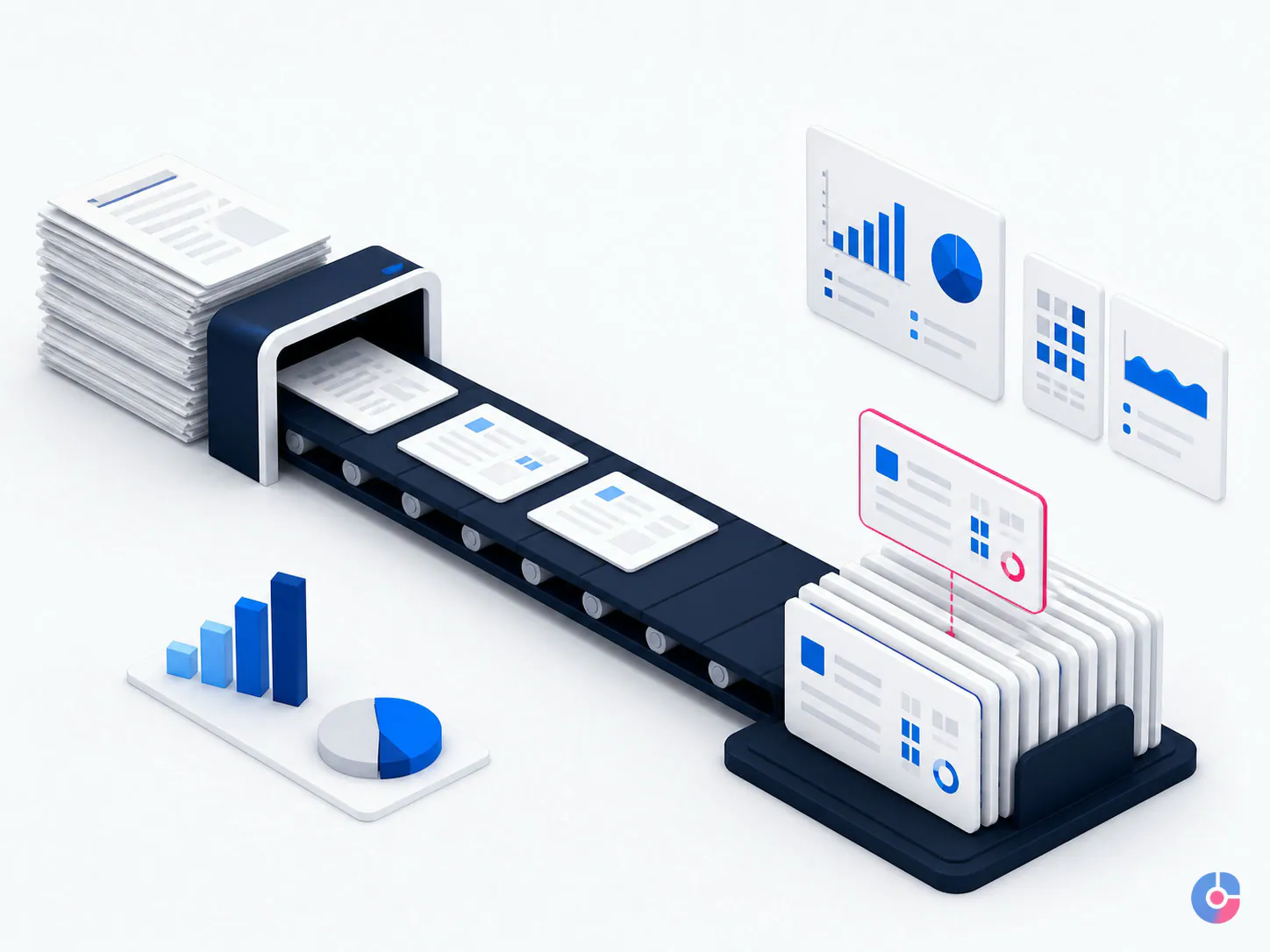
Accuracy is produced one control at a time
- Preserve the source. Intake assigns a stable batch and document identifier, confirms page count and records the authorised transfer so output can always be reconciled to input.
- Write the field specification. Each field receives a definition, location or source rule, data type, allowed values, format, required status, examples, exclusions and ambiguity path. Layout variants are identified.
- Run a representative pilot. Operators process ordinary, difficult and high-consequence examples. The pilot tests the instructions and platform, not merely the fastest documents.
- Enter under controlled access. A named, trained operator works in the approved environment. Critical fields follow the agreed independent double-key method.
- Validate rules automatically. Suitable checks catch impossible dates, unexpected length, disallowed codes, missing required values, broken relationships and duplicates. A format-valid value can still be incorrectly transcribed, so validation does not replace source review.
- Escalate ambiguity. Illegible, incomplete, conflicting or out-of-spec sources enter an exception log with document, field, reason and requested decision. Operators do not resolve uncertainty by assumption.
- Review the defined sample. A second person checks selected records or fields against the source. Results use the agreed denominator and distinguish original errors, caught exceptions and corrections.
- Release or rework. A passing batch is reconciled and delivered. A rejected batch follows the containment and re-review path agreed in the service definition.

The quality record can show total source documents, accepted inputs, records created, exceptions, system rejections, sampled units, findings by field, corrected units and release decision. It never hides corrected errors by changing the denominator after review.

Daily volume and backlog clearance need different operating plans
Steady-state processing
A recurring queue is scoped around arrival pattern, daily and peak volume, cut-off time, service days, priority classes, system availability, exceptions and required response. Capacity includes production and quality review rather than assuming every paid hour creates records. The handoff states what happens to items received after cut-off, malformed inputs and work delayed by a client-system outage.
Turnaround starts at an agreed readiness point—for example, when a complete, readable batch arrives in the approved location—not when an incomplete email is first sent. The status report separates received, ready, in progress, exception, quality review, released and rejected items.
One-off backlogs
A backlog begins with inventory. We count source units, sample layouts and legibility, identify duplicates, estimate field effort, define priority and test the destination. Production then ramps in waves. A small first wave establishes pace and error patterns; later waves expand only after the specification and review capacity are stable.
Adding operators faster than reviewers can calibrate them can create a larger rework queue. Backlog plans therefore include training examples, daily throughput ranges based on the pilot, reviewer capacity, exception ageing, batch gates and a completion forecast that is updated from actual evidence. No client volume is assumed before sampling.
Confidential documents need a defined processing boundary
Discovery identifies the data categories, individuals represented, purpose, location, systems, client instructions, retention, onward transfer and incident contacts. The approved design can include encrypted transfer, access-controlled storage, named user accounts, least privilege, multi-factor authentication where supported, restricted export, logging, clean-desk rules, controlled devices and deletion or return at the end of the retention period. Exact controls depend on risk and contract; we do not claim that one generic setup satisfies every regulated use.
Production material is not stored on an operator’s personal device or moved to personal email or consumer file-sharing accounts. Screenshots and local downloads are disabled or restricted where the platform allows. Access is reviewed when roles change and removed through an offboarding checklist covering client applications, shared workspaces, credentials, retained files and equipment.
When OveliTHub acts as a processor of UK personal data, the relationship requires appropriate written terms. The ICO’s current Article 28 contract guidance, checked 2 September 2026, identifies required details and minimum terms including documented instructions, confidentiality, security, sub-processors, assistance with individual rights, end-of-contract provisions, and audits. The ICO notes that its guidance is under review following the Data (Use and Access) Act. The client should obtain legal advice on applicable laws, roles, international transfers and contract terms.
Confidentiality is not answered by saying “our team is trusted.” It is supported by named responsibility, access evidence, written instructions, defined storage and deletion, incident escalation and the client’s right to receive agreed assurance.
Some data entry should be automated instead
High-volume sources with consistent layouts and machine-readable fields may be better handled by document capture, platform import or an integration, with people reviewing low-confidence extractions and exceptions. Re-keying a clean system export into another system is usually a signal to investigate mapping or automation.
Automation still needs controls. A pilot should compare extracted values to source truth, test layout changes, define confidence thresholds, route exceptions and reconcile what the destination accepted. Optical character recognition can read characters without understanding which nearby number is the invoice total or whether a page belongs to another document.
We will recommend an automated or blended route when the source is stable, volume justifies setup and expected exception handling is cheaper and safer for the client. Human entry remains suitable for variable documents, modest volumes, judgement-bound routing, difficult handwriting or temporary backlogs where building automation would cost more than the problem.
Use the specialist service when the record carries domain rules
This page is the general service hub. More specific work should be scoped where its systems, risks and field rules can be handled properly:
- CRM data entry services cover controlled sales-record population, ownership, lifecycle fields and platform validation.
- Ecommerce data entry services route store and marketplace operating work without turning this page into a catalogue specification.
- Product data entry services focus on structured item records and approved product attributes.
- Healthcare data entry services require a separately assessed administrative workflow, privacy boundary and authorised system scope.
- A remote data entry team is the better route for ongoing capacity that needs a defined staffing and supervision model.
- Data verification services check existing values against approved sources; they do not create the original record.
If you are still deciding whether an external queue is appropriate, read when to outsource data entry. It explains the operational signals and scoping questions before a purchase.
Pricing follows the unit and the uncertainty
Cost drivers include the number of source documents or records, fields per record, source consistency and legibility, handwritten content, system navigation, critical-field double-keying, validation, sample depth, exception frequency, languages, security controls, service window, turnaround and backlog duration.
- Per record or document works when the unit, field set and source quality are stable. Rules must state whether incomplete, duplicate and exception items count.
- Per productive hour suits variable research or documents where effort cannot be represented fairly by one record count. Reporting should show work categories and output, not only time.
- Dedicated capacity suits a recurring queue with enough volume for assigned operators, agreed coverage and continuing calibration. It buys available controlled capacity, not an unlimited transaction promise.
- Fixed backlog project can follow a representative pilot that establishes inventory, complexity, exception assumptions, acceptance rules and dependencies.
A low unit price can become expensive when exclusions, rejected imports, client-side checking and rework are ignored. The quote therefore states the unit, included controls, estimated or committed volume, readiness assumption, change rule and rejected-batch responsibility.
Built for teams that need clear English handoffs
OveliTHub brings experience from more than 130 delivered projects to an English-first operating model for clients across the USA, Europe and the Middle East. That experience does not replace a pilot; it informs the intake, specification, exception and reporting discipline used to make a new workflow testable.
A named contact translates status into received work, completed work, exceptions, quality findings, risks and decisions required. Operational questions are answered in the field language the client approved. A provider should reduce the coordination load that made ad hoc freelancers uneconomic, not return a file that needs line-by-line client inspection.
Send a sample batch for a test run
Choose a small batch that represents normal work, difficult sources and critical fields. OveliTHub will confirm the field specification, double-key scope, validation, sample review, exception path, output and security boundary before processing.
Send a sample batch for a free test run, email support@ovelit.com, or call +880 1707-510532. You can also browse the complete digital services portfolio.
Set at the service, not here
The terms every BPO services engagement runs on
The price, the ownership and the renewal terms are the same whichever offering you buy, which is why they are published once rather than restated on every page.
- Starting price
- From $350 per agent per month, in US dollars. 4 hours a day, 5 days a week, one channel, documented SOPs and a monthly QA report. Live in 2 weeks
- Channels
- Email, live chat, phone, social inboxes, CRM and back-office systems
- Coverage
- Hours are stated per desk and written into the agreement, including which of your working days are covered from UTC+6
- Data protection
- UK GDPR Article 28 processor agreement, Standard Contractual Clauses and the UK IDTA where data leaves the UK or EEA
- Quality
- Monthly QA scoring against a rubric you approve, with the sampled tickets attached
- Tooling
- We work inside your helpdesk and your CRM. No forced migration to a platform we own
Will accuracy drop when we outsource?
It should not be accepted on trust. Agree the field specification, critical-field double-key scope, validation, sample method, acceptance rule and failed-batch path. Then score a representative pilot against the source before approving production.
Our documents are confidential. Do operators download them?
The approved workflow should minimise downloads and prohibit personal-device and personal-account storage. Named access, controlled devices, secure transfer, retention, deletion, incident handling and written processing terms are defined from the data risk and client systems.
We tried freelancers and spent longer checking than entering. What changes?
The field rules are agreed before scale, and OveliTHub carries the defined quality review and correction path. The client scores the pilot and handles genuine business exceptions; it should not have to inspect every ordinary row to discover whether instructions were followed.
Do you publish a standard accuracy percentage?
No. A percentage without its population, unit, fields, sample and acceptance method cannot describe your workflow. We define the contractual measurement for the batch and report its evidence.
How fast can you clear our backlog?
Inventory and a representative pilot determine a responsible forecast. Source quality, fields, system speed, exceptions and review effort matter as much as document count. Capacity expands in controlled waves after the first batch stabilises.
Can the test batch be free?
A small, bounded test can be offered after a scope check. We agree the sample size, fields, source type, output, security boundary and evaluation method first. Complex system setup or regulated processing may require a paid discovery instead.
What do we need to send?
Provide representative sources, required fields, output template or system, examples, known exceptions, priority, target turnaround and data-handling constraints. Include difficult documents so the test reflects production rather than only the cleanest cases.
Bought together
Also in back office and data
Property Management Support Services
Maintenance chasing and tenant messages eat a manager's day. We run the coordination behind your doors so leases, repairs and owner reports…
What it coversBack Office Outsourcing Services
Outsource back office operations in the correct order, with SOPs written before handover. Lower operating cost without importing chaos into a new…
What it coversProduct Data Entry Services for Ecommerce
Thin product records lose sales to filters and site search. We build complete, consistent attribute data across every SKU so shoppers find…
What it coversNext step
Tell us what you need from Outsourced Data Entry Services
Volume, hours and the systems it has to run in. The first reply carries a scope and a figure rather than a request for the basics.
- You send the brief A few lines is enough. No form fields you have to guess at.
- We reply in one business day With questions if we have them, and a range if we do not.
- You decide, not us No retainer to talk. If it is not our work, we say so.
Ask about Outsourced Data Entry Services
Priced per agent per month. The written procedure comes before the first agent is hired, so say what the work actually is.
We use what you send to answer you. We do not sell it, and we do not add you to a list.