

Support & sales
When to Outsource Customer Support
Outsourcing support can protect retention or quietly damage it. See the decision criteria, the knowledge transfer that matters, and a safe structure.

The familiar outsourcing failure does not begin with an external representative saying the wrong greeting. It begins when a growing company moves ticket volume to a new team without transferring the decisions behind the work. The dashboard soon shows shorter waits and more closed tickets. Meanwhile, customers repeat their history, exceptions receive generic replies, promised follow-ups disappear and cancellations begin to rise. A quarter passes before anyone connects the retention problem to support because the dashboard measured speed, not whether the issue stayed solved.
The mechanism is precise: undocumented knowledge remains inside a few experienced people while first-line contacts move outside their reach. Representatives can follow a script but cannot see context, exercise defined authority or recognize an exception. They close the interaction that is in front of them and create the next one.
That is why the useful question is not whether outsourced agents can be good. It is whether someone outside the founding or long-tenured team can become good using the information, access and decisions you have documented. If the answer is no, procurement is not the first project. Documentation is.
The readiness test: can someone outside your team be good at this?
Before evaluating providers, test the operating system that any provider would inherit. Pull the previous eight to twelve weeks of contacts and group them by reason rather than channel. For each of the top 30 reasons, ask:
- Is there an approved answer that explains the resolution and the customer-facing language?
- Is there a decision rule for refunds, credits, replacements, account changes and other exceptions?
- Does the rule state what the representative may decide and when an internal owner must approve?
- Can the representative see the relevant order, account and prior-contact history in one supported workflow?
- Is there a named escalation route with a response expectation?
- Does someone own the document and update it when product, policy or process changes?
If several answers are no, do not outsource the affected contact reasons yet. Document them with the people who currently resolve them. Record real exceptions, not just the happy path. A complex product does not make outsourcing impossible; it makes segmentation and knowledge ownership more important.
The same test improves an internal team. Outsourcing merely exposes how much the operation has depended on memory, side conversations and the founder being available. A provider cannot transfer knowledge that the client has never made explicit.
What customers actually notice
Customers rarely have reliable information about where a representative sits or which company employs them. They do notice four failures immediately:
- They must repeat themselves. The representative cannot see the earlier conversation, order notes or failed steps.
- No one can make a decision. Simple remedies wait for approval because authority limits are missing or unrealistically narrow.
- A promise is not followed up. Ownership changes at transfer or shift end, with no durable task and due date.
- The tone does not fit the situation. A generic upbeat script appears during a serious complaint, billing problem or service failure.
These are not cosmetic concerns. In Harvard Business Review’s discussion of customer-effort research, repeat contacts, repeated transfers, making customers restate information and generic treatment are identified as prominent drivers of disloyalty. The practical implication is to reduce customer work, not to chase performative delight. See HBR’s discussion of the underlying service research.
Design the engagement around continuity, authority, ownership and situational tone. Shared case history prevents repetition. Decision rules prevent unnecessary approval. Explicit follow-up ownership prevents dropped promises. A guide built from accepted and rejected real replies gives tone operational meaning.
The blended model, and why it often wins
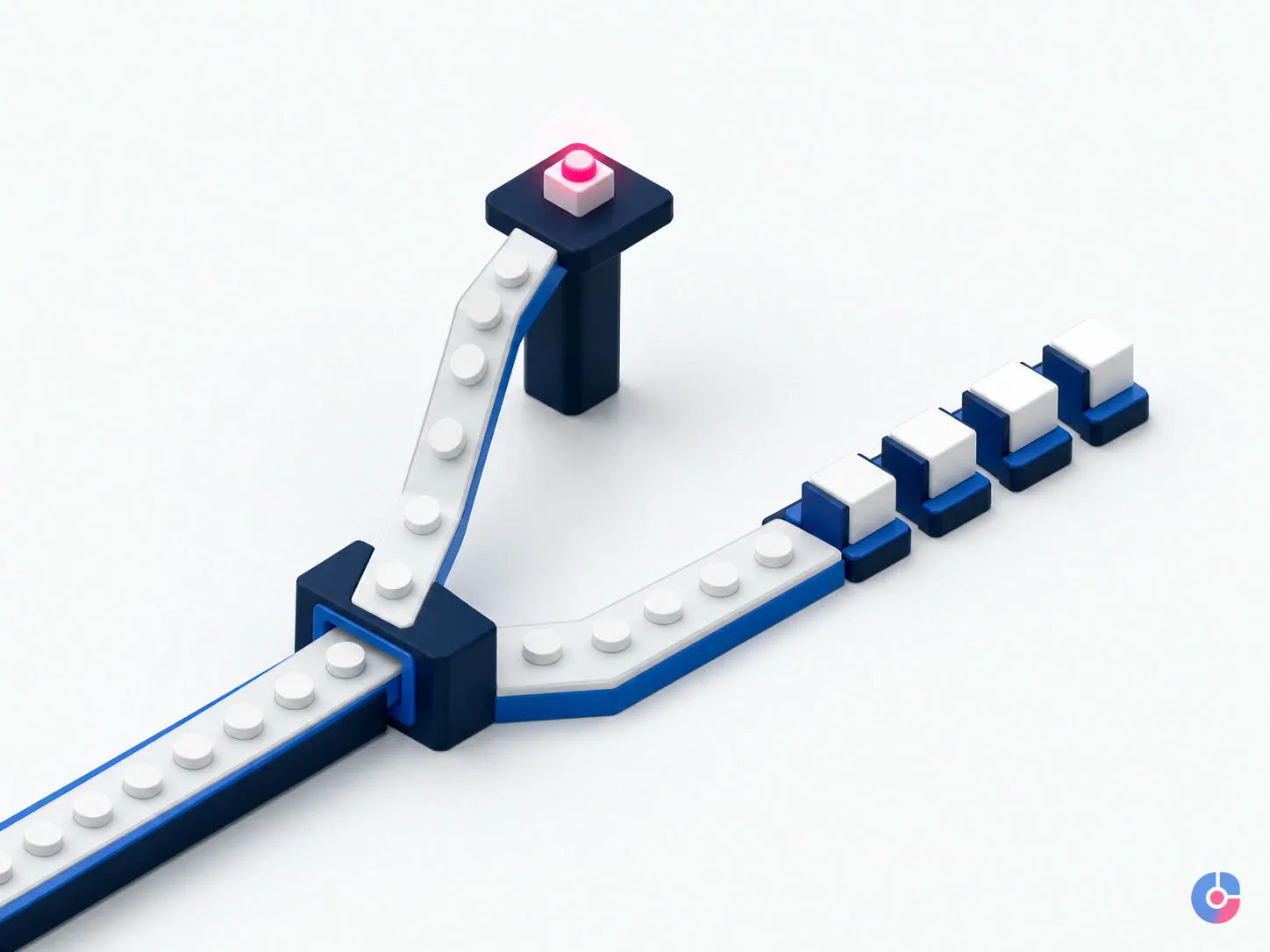
A defensible blended model gives an external team first-line ownership of documented, repeatable contact reasons. The internal team retains product knowledge ownership, brand voice, policy changes, high-risk exceptions and escalations that require specialist judgement. Both teams use the same customer history, knowledge base and quality rubric.
Split the work by contact reason, not automatically by channel. “The provider handles email” is a weak boundary because an email can be a routine address change or a threatened legal claim. A stronger boundary is “the provider owns order-status, basic returns and account-access cases within these limits; the internal team owns safety reports, regulated complaints and discretionary refunds above this threshold.” The rule remains understandable when customers change channels.
A fully internal model can be right when contact volume is stable, subject matter changes daily, most cases require close specialist collaboration or the business already has the recruiting and workforce-management capability. A fully outsourced model can be right when the service is mature, contact reasons are well documented, authority is clear and an internal owner still governs policy and quality. “Fully outsourced” should never mean ownerless.
A blended structure is particularly useful for seasonal peaks, extended hours, a new market or a queue with a clear first-line layer. It lets the business expand proven work instead of moving the whole function in one irreversible step. For the separate coverage decision, use our guide to a 24/7 customer support team. For hiring competencies and capacity inputs, see the customer care representative staffing guide.
Knowledge transfer is the project
A training week is an event. Knowledge transfer is an operating process that starts before launch and continues while the product changes. The initial package should include:
- the top contact reasons, approved resolutions and known exceptions;
- decision tables with monetary, risk and account-level authority limits;
- product walkthroughs built around customer jobs and failure points;
- role-based access to the relevant customer and transaction history;
- a question channel with a named internal responder and response expectation;
- worked examples of strong and unacceptable handling;
- a change log and a named client-side knowledge owner; and
- a method for representatives to flag missing, conflicting or outdated guidance.
For a bounded pilot, allow several weeks to analyze contacts, write and review the first knowledge set, configure access, train, practise and pass a quality gate. The exact duration depends on product complexity, available records and how many decisions are currently implicit. Refuse a ceremonial launch date if the pilot contact reasons are not documented and tested. Starting early does not shorten the project; it moves knowledge discovery into live customer interactions.
Run scenario sessions in which the external team uses only the material and systems that will be available during a shift. Every question that requires a private message to a founder exposes a gap. Capture the answer in the knowledge base, define its owner and retest it. The objective is not zero questions. It is a visible, increasingly complete decision system.

Quality, calibration and the tone problem
Both teams need one short rubric. Score accurate understanding, correct resolution, procedural compliance, clarity, ownership and appropriate escalation. Define observable anchors for each. “Sounds like us” is not scorable; “acknowledges the specific impact, avoids blame and states the next action with a time” is.
Sample contacts weekly during the pilot. Include random work and high-risk cases, not only the easiest resolved tickets. Internal and external reviewers should independently score the same small set, compare results and resolve why they disagreed. Calibration shows whether a low score came from handling or from two reviewers applying different standards.
A tone guide should contain real, sanitized examples. Pair approved and rejected replies for a late order, failed payment, cancellation request and frustrated repeat contact. Explain why one works. Avoid a long list of adjectives such as warm, human and helpful; without examples, those words produce imitation rather than judgement.
Customers may be able to tell that the team has changed if continuity or decision quality falls. Location is not the useful quality test. The better question is whether the representative understands the history, can act within sensible limits, owns the next step and writes or speaks in a way suited to the situation.
Metrics that protect retention rather than flatter the dashboard
Average response and handling time describe capacity and flow. They do not prove that customers received a durable resolution. Pair speed metrics with:
- repeat contact rate: the share of customers who return about the same reason within a defined window;
- first-contact resolution for documented reasons: measured only where the result can be observed reliably;
- escalation rate and cause: separated into expected risk escalation, missing authority, missing knowledge and avoidable handling error;
- customer satisfaction by contact reason: not one blended score that hides a failing queue;
- promise completion: whether follow-ups happened by the stated time; and
- retention after support: churn, cancellation or renewal outcomes for customers who contacted support, compared carefully by reason and customer segment.
Do not claim that one support interaction caused churn merely because it occurred first. Customers with product or billing problems may already carry greater cancellation risk. Use the data to locate patterns, review cases and run controlled improvements where feasible. Report definitions, windows and exclusions alongside the number.
A dangerous dashboard celebrates lower handling time while repeat contacts rise. Another celebrates falling escalations when representatives have simply stopped raising uncertain cases. Read measures together. Faster work is valuable only when the resolution survives and the customer does not have to restart.

Commercial structure and the exit
Pricing can be per hour, per full-time equivalent, per contact, per outcome or a blended arrangement. Each moves risk differently. Per-contact pricing may reward short contacts unless quality conditions counterbalance it. A dedicated-team model can support deeper knowledge but requires a clear capacity and shrinkage treatment. Compare the total operating model: recruitment, training, supervision, quality, workforce management, systems, cover and transition—not only the rate.
Write the ramp into the commercial plan. Define which contact reasons enter each phase, the expected training and supervised-handling period, quality gates, minimum reporting and what happens if launch inputs arrive late. State notice periods, transition support, data-return requirements and the process for moving work back or to another provider.
The client should own or have unrestricted continuing use of the knowledge base, decision tables, tone examples and improvement history created for its operation. Ticket history must remain exportable in a usable form subject to legal retention and deletion requirements. Clarify ownership before the provider improves the material; otherwise the most valuable output of the engagement may become difficult to take with you.
Data protection and access are design requirements
Map what personal data the support team can see, why it is necessary, where it is accessed, whether it can be downloaded and which subprocessors are involved. Grant least-privilege access by role. Restrict exports, use managed accounts and appropriate authentication, log sensitive actions, review permissions, and remove access promptly when a person changes role or leaves. The exact safeguards should follow the data, risk and applicable law.
For UK GDPR arrangements in which the provider acts as a processor, the Information Commissioner’s Office says a controller must have a written contract binding the processor. Its Article 28 contract guidance lists required coverage including documented instructions, confidentiality, security, subprocessors, assistance with individual rights, end-of-contract provisions, and audits or inspections. International transfers need separate analysis and safeguards where applicable.
Other markets impose their own sectoral, contractual and privacy obligations. Determine the roles and applicable rules with qualified legal and security advisers. A services agreement alone is not evidence that the data flow is lawful or appropriately secured.
A ninety-day plan that does not gamble with customers
- Days 1–30: define and prepare. Analyze contact reasons, select one low-to-moderate-risk pilot group, document approved answers and exceptions, map data access, agree the rubric and baseline current performance.
- Days 31–60: train and pilot. Practise scenarios, pass a readiness gate, start with limited live volume, maintain rapid internal escalation and calibrate reviewers weekly.
- Days 61–90: expand by evidence. Review repeat contacts, resolution, escalation causes, promise completion and customer feedback. Add one documented contact reason at a time only after quality is stable.
Set stop conditions before launch. Pause or reduce volume when critical errors recur, data access behaves unexpectedly, repeat contacts materially worsen, required internal answers miss their response window or reviewers cannot agree on the standard. Investigate the mechanism, correct documentation or authority, retrain and retest. A pause is an operating control, not a public verdict on the entire outsourcing model.
Document thirty answers first
Before speaking to a provider, list the top 30 contact reasons and write the approved resolution, evidence required, authority limit, escalation owner and customer-facing example for each. Gaps will show where the outsourcing risk really sits. The exercise also gives prospective providers something concrete to respond to instead of inviting generic claims about quality.
OVELITHUB provides customer support outsourcing and managed, English-first remote teams with named supervision for businesses serving the USA, Europe and the Middle East. We can review contact reasons, documentation, operating boundaries, access, ramp and quality controls before live volume moves. Book a free consultation or email support@ovelit.com to arrange a support model review.
Keep reading
Related insights

How to Triage Support Tickets
Backlogs are a queue design problem, not an effort problem. See how ticket triage, priority rules and SLA discipline keep customer support…

Sales Admin Tasks to Hand Off First
Reps lose selling hours to quotes, CRM updates and scheduling. See which sales admin tasks to hand off, in what order, and…

Outsourced SDR vs In-House Hiring
Outbound stalls when nobody owns it full time. Compare outsourced sales development with hiring an SDR, and see what each option really…