

BPO & back office
Which Finance Admin Tasks to Outsource
Invoicing, chasing and reconciliation eat finance hours. See which finance admin tasks to outsource, the controls to keep, and how to protect cash flow.

The management accounts are late, but the accountant is not debating a technical treatment. They are waiting for missing receipts, incomplete coding, three purchase approvals and a supplier statement nobody reconciled. Leadership is making decisions from numbers that do not yet reflect the month.
Finance strain often sits around the accounting: gathering, matching, chasing, preparing and recording. That administrative layer can be supported externally. Financial control should not move with it.
The governing rule is simple: a person who prepares a transaction must not also have uncontrolled authority to approve and release it. Outsourced finance administration should strengthen that separation by making roles visible—not weaken it for convenience.
Separate administration from financial control
Administration prepares the process. It captures an invoice, checks required fields, matches approved evidence, proposes coding, requests an approval, updates status, issues an authorized sales invoice, follows an approved credit-control sequence and prepares a reconciliation or month-end schedule.
Control authorizes and judges. It approves suppliers, purchase commitments, payments, credit limits, write-offs, accounting treatment, payroll, tax positions, filings and financial statements.
Draw the boundary at each action, not at a broad label. “Accounts payable support” can mean entering a supplier invoice or releasing cash; those are not equivalent. Build a responsibility matrix for request, preparation, verification, approval, release, recording and independent review.
The external team’s output is a complete item awaiting the next authorized step. A prepared payment batch does not mean the provider can access the bank, approve the batch or release funds. A reconciliation schedule does not mean the provider signs off the account.
Use segregation of duties as the design constraint
The US Government Accountability Office’s current Standards for Internal Control in the Federal Government state that management should segregate incompatible duties and design alternatives where separation is impractical. The framework distinguishes authority, custody and accounting. It is public-sector guidance, not tailored advice for a particular company, but the principle is directly useful when designing a finance workflow.
Copyable finance-control checklist
- The person who creates or changes a supplier cannot approve that supplier alone.
- The person who captures or codes an invoice cannot be the sole approver.
- The person who prepares a payment batch cannot release it.
- Payment approval and bank release stay with named authorized internal people.
- External administrative staff receive no bank login, payment token or approval credential.
- Supplier bank-detail changes are frozen until independently verified through a known contact and approved.
- Purchase, receipt, invoice and approval evidence are matched before payment eligibility.
- Duplicate invoice, supplier, amount and payment checks run before release.
- Refunds, credits, write-offs and manual journals require appropriate independent approval.
- Bank reconciliations and control accounts receive review by someone outside the preparation step.
- Access, role changes, master-data changes and payment actions are logged and reviewed.
- Absence cover preserves the control; it does not give one person every conflicting role.
Small teams may not be able to separate every step across different employees. Use compensating controls designed with the accountant, finance leader and advisers: dual bank approval, owner review of supplier changes, independent statement review, transaction alerts and periodic review of logs. Collusion and management override mean no checklist provides absolute assurance.
These controls protect the client and provider. The support team can refuse an instruction to bypass approval, and the audit trail shows where its responsibility ended.
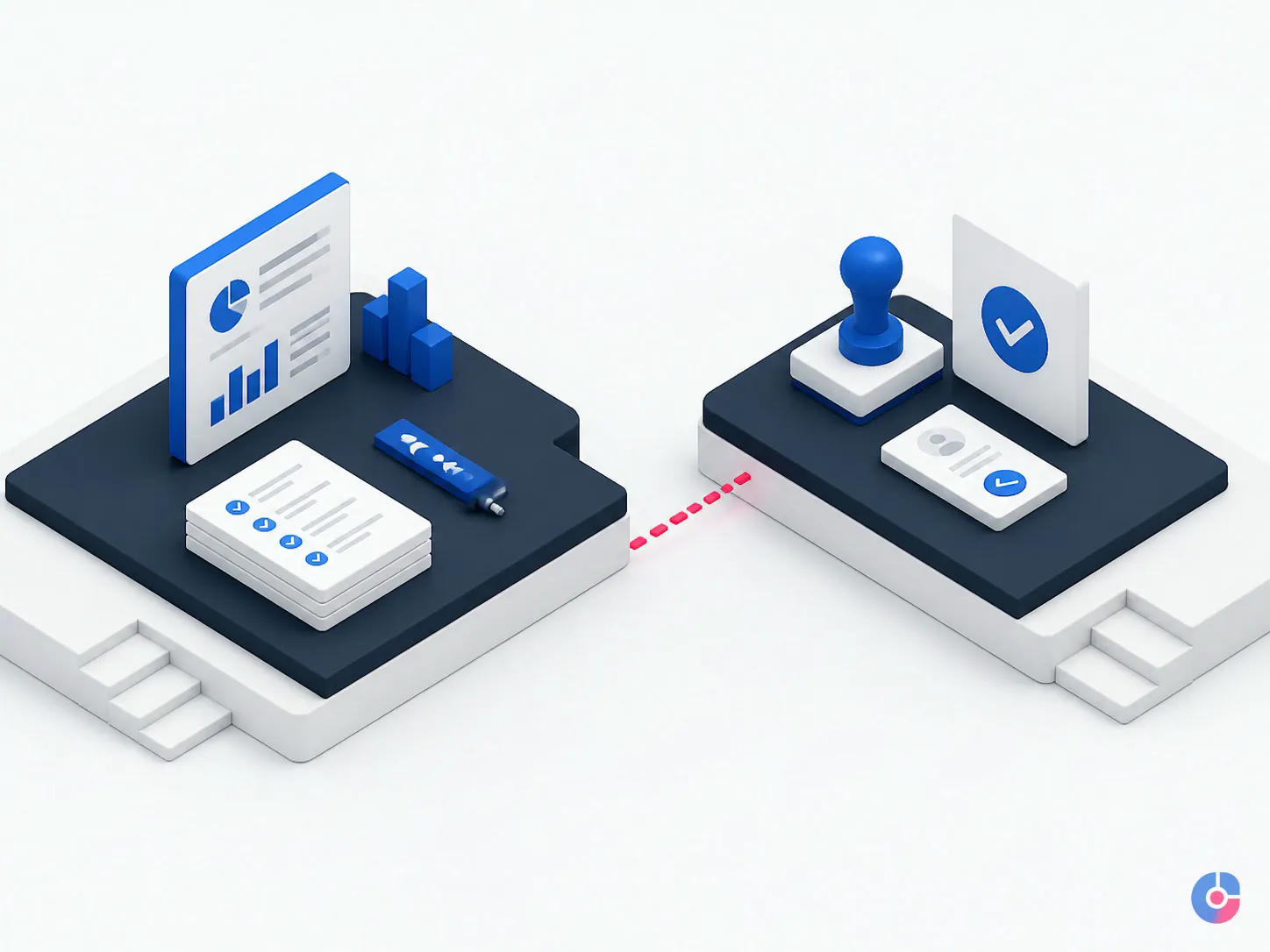
Transfer the finance admin workstreams with clear limits
Purchase invoice capture and proposed coding
Receive invoices through the approved channel, identify supplier, invoice number, date, due date, currency, tax fields and amount, check duplicates, link purchase order or receipt evidence and propose coding from the approved chart and rule. Route exceptions and approval. The accountable finance function confirms accounting and tax treatment.
Supplier statement reconciliation
Compare the supplier statement with the purchase ledger, list missing invoices, unallocated credits, disputed items and timing differences, request documents through an authorized channel and prepare a reconciled schedule. Do not alter supplier details or pay an item merely to clear the difference.
Expense and receipt matching
Match submitted receipts to claims or card transactions, check required business purpose and policy fields, identify duplicates, request missing evidence and route exceptions. The employee states the genuine purpose; the authorized reviewer approves the claim. Payroll and taxable-benefit questions go to qualified advisers.
Sales invoice preparation
Raise invoices from approved contracts, orders, milestones or delivery records; validate customer, entity, currency, tax instruction, purchase-order reference and due terms; then issue only under the approved workflow. Commercial terms and revenue or tax decisions remain internal.
Customer statements and payment allocation
Issue scheduled branded statements, allocate receipts using verified remittance, list unidentified cash and prepare exceptions. Do not guess which invoice a partial or ambiguous payment belongs to when the choice affects disputes or ageing.
Bank-reconciliation preparation
Import or access approved transaction feeds, propose matches, list timing items and prepare the reconciliation. External staff should not receive bank credentials or release authority. The internal reviewer examines old, unusual and manual items and signs off.
Credit-control follow-up
Send approved reminders from the company’s own address, confirm invoice and statement delivery, capture dispute reasons, agree only options already authorized and route commercial or hardship decisions. Record every contact in the sales ledger or approved CRM so colleagues do not duplicate or contradict it.
Purchase-order administration
Create an approved purchase order, distribute it, track acknowledgement, chase receipts and close completed lines. Budget, supplier selection, quantity, price and commitment approval stay with authorized staff.
Month-end schedule preparation
Compile aged receivables and payables, unmatched transactions, pre-approved accrual evidence, fixed-asset additions, expense exceptions and control-account schedules. The accountant or finance manager determines treatment, posts restricted entries where appropriate and signs off the close.
Bookkeeping production and accounting review are related but distinct; use the accounting back-office guide when the required scope extends beyond administration.
Start with credit control when the process is ready
Credit control is often a strong first workstream because follow-up is frequent, rule-based and tied directly to the timing of cash collection. It also tends to slip when finance focuses on close, reporting or exceptions. That does not make it automatically the highest-return task for every business; validate the aged ledger, dispute pattern and customer relationships first.
Create an approved sequence by customer segment and ageing band:
- confirm the invoice was delivered to the correct account-payable contact;
- send a polite reminder referencing invoice, due date, amount and payment route;
- request a payment date or dispute reason;
- record the promise, owner and follow-up date;
- route disputes to the correct operational or commercial owner;
- escalate according to value, age, relationship and approved policy.
The support team does not threaten, change terms, agree a settlement, extend credit or suspend service unless a specific authorized rule permits the action. Named strategic or sensitive accounts can remain with the internal relationship owner.
Measure aged receivables, promise kept rate, dispute age, contact coverage and receipts against the same customer mix. Days sales outstanding can be useful, but it is affected by sales timing and calculation choice; define the formula and analyse alongside the ledger.
Keep control and professional judgement inside
Do not outsource these to a finance administration provider:
- bank access, payment credentials and payment release;
- final payment authorization;
- supplier approval and independent bank-detail verification;
- credit limits, write-offs, payment plans and settlement decisions;
- payroll approval and release;
- accounting estimates, treatment and policy;
- tax advice, tax position, filing approval or statutory declaration;
- financial-statement, management-account or audit sign-off;
- fraud investigation or legal conclusions.
OveliTHub does not claim accounting qualifications, audit capability, regulatory registration or tax authority through this service. The client’s accountant, tax adviser and relevant authority determine obligations and filings. A provider proposing to combine uncontrolled preparation, approval and payment authority should be declined.
Work in the approved finance stack
Use named users in the accounting platform, purchase-to-pay or approval tool, expense system and document store. Avoid emailing spreadsheets of supplier bank details or building a parallel ledger outside the client’s records.
Grant only what the task needs. Current QuickBooks Online role documentation illustrates that access varies by plan and role, while supported configurations may distinguish transaction preparation, approval and payment functions. Other platforms differ. Review the exact permission list in the client’s edition; a role called “bookkeeper” or “accounts payable” may still include more authority than intended.
Test with sample transactions. Confirm whether the user can create suppliers, edit bank details, view bank feeds, approve bills, mark paid, schedule payment, delete entries, post journals, export data or manage other users. Remove every unnecessary capability.
Maintain an access register with user, role, permissions, owner, approval, review date and revocation. Review activity logs and master-data changes. Separate approval evidence from the preparer’s assertion that approval occurred.
Discuss fraud risk without euphemism
Invoice-redirection or business-email-compromise fraud. An attacker impersonates a supplier or colleague and changes payment instructions. The FBI’s 2025 IC3 Annual Report continues to identify business email compromise as a major category of reported cyber-enabled loss. Reported complaints are not a complete measure of prevalence, but the mechanism warrants specific controls.
Never rely on reply email alone for bank-detail changes. Pause the supplier, call a known number from the master record or independently obtained source, verify with an authorized contact, record evidence and require separate approval. Do not use the phone number in the change request.
Duplicate payments. Compare normalized supplier, invoice number, amount, date, purchase order and bank account before eligibility. Review credit notes and reissued invoices. Do not defeat a duplicate warning by adding punctuation or a suffix.
Fictitious or altered suppliers. Use an approved onboarding process with company, tax, address, contact and bank evidence appropriate to jurisdiction and risk. Separate master-data creation and approval. Periodically review new, inactive, one-time and employee-related suppliers.
Expense manipulation. Require itemized evidence, business purpose, policy checks and approval outside the claimant. Search duplicates across employees, cards and periods; inspect altered documents and round-value patterns without assuming an anomaly proves fraud.
Credential or insider misuse. Use named access, multi-factor authentication, least privilege, alerts, logs, leave and role-change procedures. Independent review remains necessary because a legitimate login can be abused.
Confirm crime, cyber and funds-transfer insurance conditions with the insurer or broker before changing a process. Policies may impose verification, authentication or notification requirements. This is general operational information, not insurance advice.

Turn month-end into a maintained schedule
Adapt the following relative sequence to the business, accountant and reporting deadline:
| Timing | Administrative preparation | Internal control or decision |
|---|---|---|
| Throughout month | Capture invoices and receipts, request missing evidence, reconcile supplier statements, maintain disputes | Approve purchases, suppliers and exceptions on time |
| Final working days | Confirm cut-offs, open purchase orders, unbilled delivery evidence and outstanding expenses | Finance owner defines cut-off and requested evidence |
| Working day 1 | Lock source extracts, list missing bank, sales, purchase, payroll and expense inputs | Owner confirms completeness and late-item treatment |
| Working days 2–3 | Prepare bank and control-account reconciliations, aged ledgers and exception schedules | Reviewer investigates unusual and old items |
| Working days 3–4 | Assemble approved accrual, prepayment and fixed-asset evidence; refresh reporting pack | Accountant decides and posts treatment |
| Working day 5 or agreed close | Archive schedules, unresolved list, approvals and change log | Finance lead reviews and signs off reporting |
The dates are an example, not a universal close promise. Start from the actual deadline and work backward. Give every input an owner, source, due date and escalation. Track recurring late causes and fix them during the month.
Measure preparation and control together
- Invoice processing time: receipt to complete, approved or ready-for-approval state.
- Timely coding: eligible transactions coded within the defined period, with exceptions shown.
- First-pass match rate: invoices matched without later correction, segmented by supplier or source.
- Expense turnaround: complete claim to approved or rejected outcome.
- Working days to close: source cut-off to signed-off reporting under the same definition.
- Aged receivables: value and count by ageing band, including disputed items.
- Days sales outstanding: reported with formula, period and sales basis.
- Control exceptions: duplicate warnings, supplier changes, approval breaches, unreconciled items and access issues.
Baseline before transfer. Volume, value and mix belong beside every rate. A faster close is not an improvement if reconciliations remain open or review becomes superficial. Read the exceptions and sample source evidence.

Prove one workstream over a quarter
Choose credit control or purchase-invoice preparation if it is frequent, documented and separable. Do not begin with the entire month-end close: too many sources, owners, judgements and dependencies make failure hard to diagnose.
- Map the current workflow, roles, permissions and control points.
- Baseline volume, time, age, errors and review burden.
- Write ready criteria, preparation steps, authority, approval and escalation.
- Create and test named least-privilege access.
- Run early items under full review and reconcile every batch.
- Move stable low-risk preparation to sampled quality review while retaining all approvals.
- At quarter end, compare measures, control exceptions and staff feedback; continue, revise or stop.
Name an internal finance owner and an independent control reviewer. Keep the external team on branded addresses and approved scripts so customers and suppliers receive consistent company communication. They may know they are speaking with support; the identity should not be misleading.
To define a safe first scope, scope your first finance admin workstream. If payroll production is the bottleneck, use the separate payroll support guide rather than extending finance admin informally.
Bring one quarter of volume, the current process, aged ledgers or invoice queue, role permissions, approval matrix and control exceptions. We will map a preparation-only pilot for your accountant and finance owner to review. You can also compare accounting back office support or book a free consultation.
Keep reading
Related insights

How to Reduce Operational Cycle Time
Most operational delay is queue time, not work time. See how remote operations support cuts the waiting, the rework and the chasing…

How to Research a Prospect Before a Call
Reps skip research because it is slow, then open with nothing. See how to standardise account research so every conversation starts from…

Setting a Data Entry Accuracy Rate
Buy an error rate and a turnaround time, not a headcount. How to specify, staff and audit a remote data entry team…