Web & data
Web Development Services
Custom websites and ecommerce builds planned around search, speed and conversion, with support after launch. Request a website proposal from our team.
A website exists to be found, understood and acted on. Launch is a checkpoint, not the commercial outcome. OVELITHUB’s web development services plan demand, content, paths, performance and ownership before visual polish hardens expensive assumptions into code.
For a new build, redesign or migration, we define what the site must enable and how it will be maintained. The client owns the approved code, content, design assets and accounts supplied under the agreement. A phased process makes decisions visible before they become late surprises, and an iteration window makes launch the start of evidence rather than the agency’s exit.
What a website has to do before it has to look good
A visitor arrives with a question. The site must establish relevance, explain the offer in language the visitor recognises, provide credible evidence, remove uncertainty and make the next action proportionate. Search engines and assistive technology also need a coherent structure.
A beautiful surface cannot compensate for missing service pages, vague claims or a form that asks too much. Conversely, a technically tidy build cannot rescue an offer nobody understands. We start with audience, demand and action: who needs the page, what situation brought them, what decision can the page support and how will the business respond?
Conversion paths include more than a prominent button. Phone, form, booking, purchase and email may serve different levels of intent. Each path requires clear expectations, error handling, privacy context and a responsible destination inside the business.
Credibility is decided quickly, and design carries part of it
The Stanford Web Credibility Project’s published guidelines say people quickly evaluate a site’s credibility through visual design and recommend attention to layout, typography, imagery and consistency. The same guidance also emphasises verifiable information, a real organisation, ease of use and current content. Professional appearance opens the door; proof and transparency keep it open. Review Stanford’s web credibility guidelines.
We design trust at several levels: a clear proposition, visible contact routes, specific service boundaries, real team or work evidence, accurate policies, consistent interface behaviour and restrained visual hierarchy. Claims need context and ownership. Testimonials, certifications, partnerships and portfolio facts are used only when the client can approve their wording and rights.
Design should look appropriate to the audience, not fashionable in isolation. A clinic, property platform and consumer beauty brand can share usability principles while requiring different proof, tone and interaction patterns.
Structure before pages
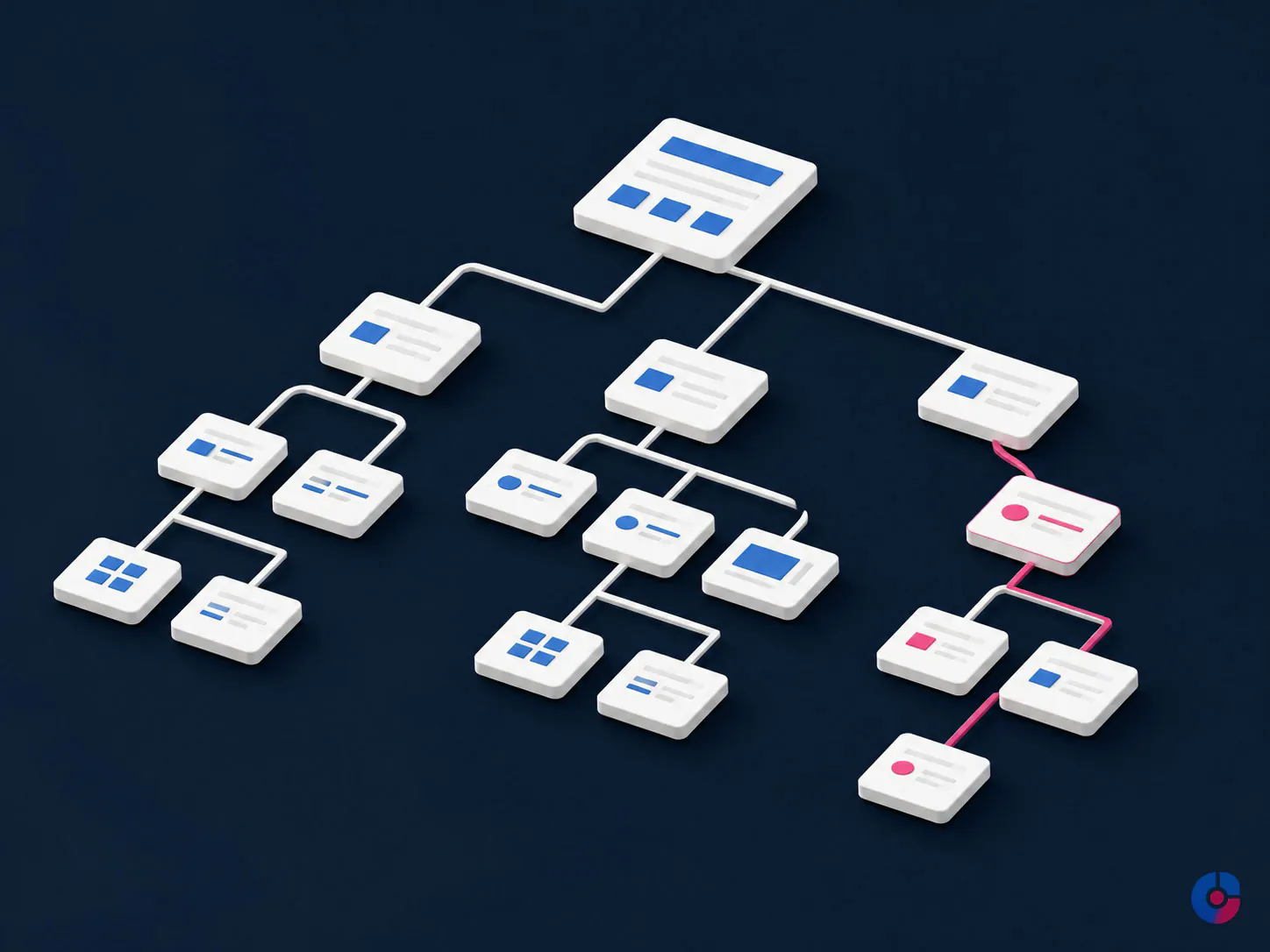
Information architecture maps demand and business capability into a stable URL system. We inventory current material, group real visitor questions, separate distinct search intent and decide which subjects deserve durable pages. Navigation, breadcrumbs, related links and contextual anchors help people and crawlers understand relationships.
This work prevents two common failures: one broad page trying to rank for every service, and dozens of thin pages competing for the same query. It also establishes naming, slug, canonical and redirect rules before content is loaded.
Reversing structure after launch is costly because URLs may have earned links, analytics history and search visibility. The build therefore has a page inventory with owner, purpose, primary action, content status and migration rule. Our digital marketing services can coordinate wider search and campaign planning where the build is one part of acquisition.
How we build
- Discovery and requirements: the client supplies objectives, users, offers, systems, brand, current data, constraints and decision-makers. We turn them into scope and acceptance criteria.
- Information architecture: approve the page inventory, hierarchy, URL rules, navigation, content ownership and migration map.
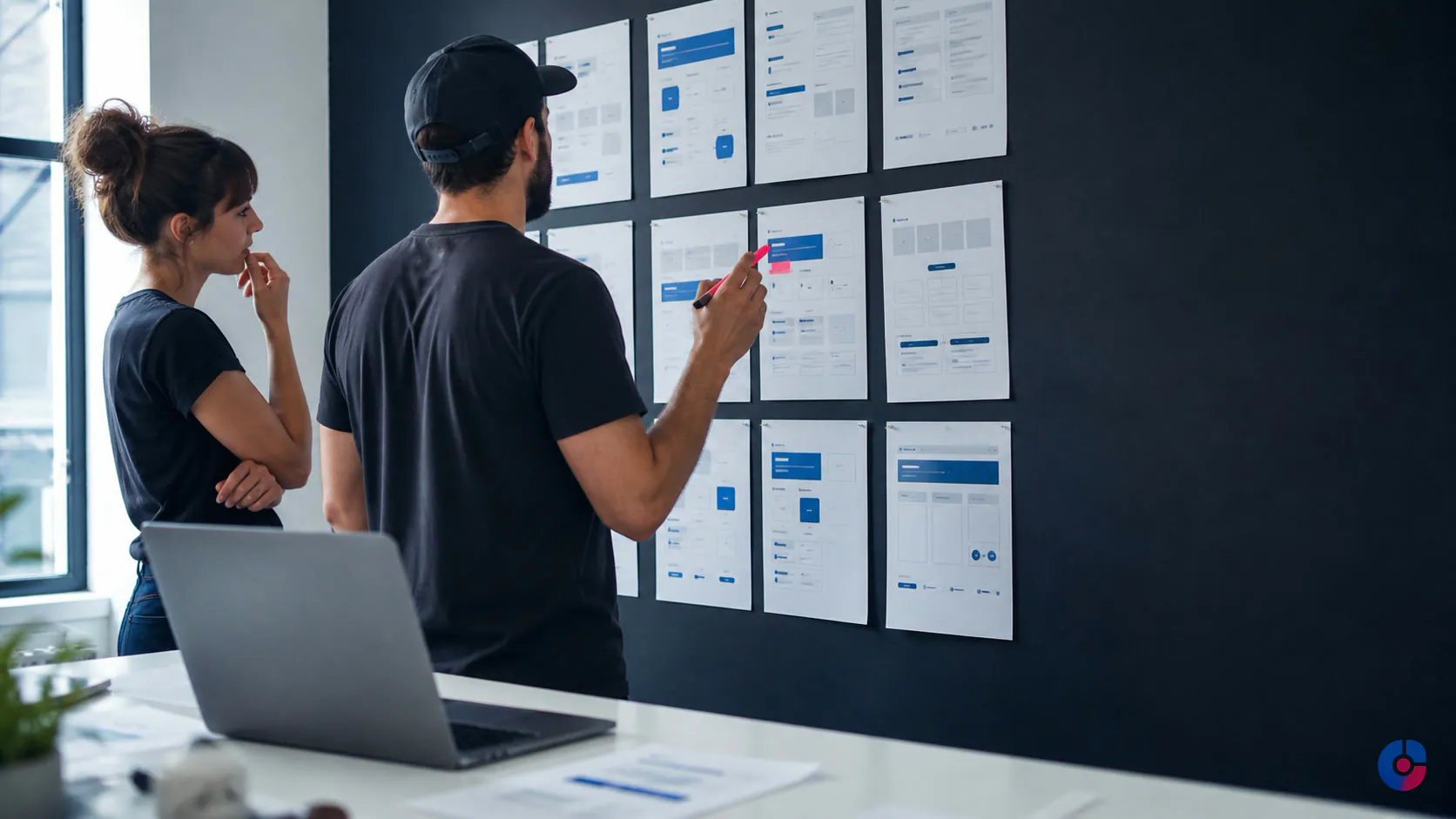
- Wireframes: agree page purpose, content order, interactions and conversion paths before detailed styling.
- Design system: establish type, colour, spacing, components, responsive behaviour and accessible states. The client approves representative pages and the system.
- Build and content population: implement reusable templates, integrations and editorial controls; load approved copy and media without hiding content work behind temporary text.
- Quality assurance: test agreed browsers and devices, functionality, content, accessibility, performance, analytics and security configuration. Defects are tracked to acceptance.
- Launch: freeze the agreed migration set, back up, deploy, verify production, submit discovery signals and monitor high-risk paths.
- Iteration: review field evidence and enquiries during the agreed post-launch period, correct defects and prioritise improvements.
Checkpoints define what is approved and the consequence of a late change. This controls schedule and budget without pretending requirements never evolve.

Platform choice, argued honestly
WordPress suits many content-led business sites that need broad editorial familiarity, mature extensions and portable hosting. It becomes a poor fit when uncontrolled plugins substitute for architecture, updates have no owner or a heavily customised stack exceeds the team’s maintenance capacity.
Headless or custom development can support demanding integrations, multi-channel content and tailored product experiences. It adds build, hosting, preview, deployment and developer dependencies. A brochure site does not become strategically superior because it uses a more complex stack.
Hosted ecommerce can reduce infrastructure responsibility and provide a coherent merchant workflow. It trades some control for platform conventions, subscription and app dependencies. Choose it when those conventions support the operation; do not rebuild standard commerce merely to claim custom code.
We compare total ownership: implementation, content editing, security updates, integration, performance, availability of skills, licence and exit. Readers evaluating content platforms can review WordPress vs custom CMS. Post-launch store operations belong with dedicated Shopify or WooCommerce support services, not an indefinite build project.
Speed and Core Web Vitals as a build constraint
Performance is a budget set during design. Image dimensions and formats, hero treatment, font files, third-party scripts, component code, caching and hosting decisions shape the result before a tuning sprint begins.
Google’s current Core Web Vitals are Largest Contentful Paint, Interaction to Next Paint and Cumulative Layout Shift. Its guidance classifies “good” field performance at the 75th percentile as LCP no more than 2.5 seconds, INP no more than 200 milliseconds and CLS no more than 0.1. These metrics can evolve, so acceptance references the current official definition at delivery. See the current web.dev guidance.
Lab tests make defects reproducible; field data represents real visits, devices and networks. We use both for different questions. A score is not purchased by removing essential content, nor is a heavy visual treatment accepted without acknowledging its cost.
Built to be found
Search foundations include crawlable links, semantic heading structure, descriptive titles and metadata patterns, canonical rules, sitemap generation, meaningful alternative text, structured data that matches visible content and control of accidental indexing.
A redesign adds preservation work: inventory current indexable URLs, record status and evidence, map each retained or replaced page, implement one-step permanent redirects and remove internal references to retired locations. Content parity is checked so a visually condensed redesign does not silently delete the subjects that earned discovery.
Technical readiness does not guarantee ranking. The site still needs useful pages, credible information and ongoing competition assessment. We distinguish what the build controls from what search performance must earn.
Accessibility as a requirement, not an extra
We use the W3C’s Web Content Accessibility Guidelines 2.2 as the current technical reference and define the intended conformance level in scope. WCAG covers perceivable content, operable controls, understandable behaviour and robust implementation; it does not turn one automated scan into a complete accessibility claim. Read the WCAG 2.2 Recommendation.
Checks include keyboard operation, focus visibility and order, semantic landmarks, headings, labels, errors, contrast, zoom and reflow, alternatives for meaningful media, captions where supplied, target behaviour and accessible authentication patterns where relevant. Automated tools find certain defects; manual and assistive-technology checks examine use.
Accessible foundations improve clarity and resilience for a wide audience, but legal duties differ by market, sector and organisation. The client should obtain jurisdiction-specific advice rather than treating a development statement as legal certification.
Migration without losing what you already earned
- crawl and export current URLs, metadata, status, canonicals and internal links;
- identify pages with traffic, links, conversions or operational importance;
- approve keep, consolidate, replace or retire decisions;
- map old URLs directly to the most relevant new destination;
- preserve essential content, media, structured data and downloadable assets;
- carry analytics and consent configuration with annotated launch dates;
- test redirects, canonicals, robots rules, sitemap and priority forms in production;
- monitor crawl errors, indexing, search landing pages and conversions after release.
A migration can still change search performance because design, content and competition change. The controls reduce avoidable loss; they are not a guarantee of unchanged rankings.
After launch, where the value actually accrues
The first production period reveals search queries, device constraints, form errors, customer questions and paths that planning could only predict. We verify analytics events, lead routing and ecommerce signals, then review the highest-traffic and highest-intent journeys.
Iteration has a backlog with evidence, expected effect, owner and release check. Security updates, dependency review, backups and availability monitoring have explicit ownership. Hosting can be scoped through premium web hosting solutions; independent test depth can be provided through QA testing services.
The client is not locked into OVELITHUB. Accounts, repositories, documentation, approved assets and deployment instructions are handed over under the contract. Continued support should be chosen because it creates value, not because access is withheld.
Work we have delivered
Website Development is one of OVELITHUB’s four core service pillars, within a stated portfolio of more than 130 projects. Relevant examples include a real estate website development case study, a medical clinic website design, pet breeding website design and salon website design.
These pages demonstrate sector and interface range. They do not imply that another project will receive the same requirements or commercial result. We use the discovery process to define evidence appropriate to the new business.
How a project starts
- hold a discovery call around audience, offer, operation, current evidence and constraints;
- approve scope, architecture phase, responsibilities, assumptions and commercial proposal;
- work through wireframe, design and build checkpoints with named decision-makers;
- complete production QA, migration controls, training and launch approval;
- measure the agreed paths during the post-launch iteration window.
If the website is part of establishing an entirely new operation, digital business launching can place it inside the wider plan.
Build an asset that can keep improving
Bring the current site, business objectives, required pages, integrations, brand assets and target window. We will propose the planning and delivery stages the project actually needs.
Request a website proposal or explore all digital services.
Keep reading
Related insights

Shopify Store Support Services: A Guide
A Shopify store needs weekly upkeep, not occasional fixes. See the support tasks that protect revenue, who should own each, and what…

Shopify vs WooCommerce: Which to Choose
Shopify and WooCommerce both work. The difference is who carries the maintenance and where the cost lands. Compare both against your team…

How to Choose a Web Development Company
Choosing a web development company in the USA or Europe? Use these nine selection criteria to judge proposals, ownership terms and post-launch…
Next step
Want this done rather than explained?
Tell us what needs doing and by when. You get a scope, a price range and an honest view of whether this is the right work for you at all.
- You send the brief A few lines is enough. No form fields you have to guess at.
- We reply in one business day With questions if we have them, and a range if we do not.
- You decide, not us No retainer to talk. If it is not our work, we say so.
Ask about Website Development
We use what you send to answer you. We do not sell it, and we do not add you to a list.