

Support and sales desks
Customer Support Outsourcing
Move first-line support to a documented, measured team that protects your brand voice and your resolution times. See the transition plan before you commit.
Bought under BPO Services From $350 per agent · live in 1 weeks

The support queue grows a little faster each month. First response stretches from hours into the next day. Three recurring questions consume much of the team’s time, while product specialists are pulled into routine lookups. At 11pm, the founder is still answering tickets because leaving them until morning feels worse.
The cost is not limited to the queue. Senior people postpone product, sales and operational work. Existing support staff carry unpredictable load. Customers repeat context or wait for decisions, which can weaken trust and retention even when the eventual answer is correct.
Customer support outsourcing can create dependable first-line capacity, but only if the transition preserves what the business already knows. OveliTHub documents the work, trains a controlled team, begins with a low-risk queue and increases volume against agreed evidence. A provider willing to start next week without asking for macros, refund rules, escalation owners or the definition of “resolved” is accepting risk on the customer’s behalf.
When outsourcing support works—and when it does not
Work that is repeatable, describable and measurable can usually be transferred. First-line account lookups, known-issue troubleshooting and triage against a documented escalation matrix are suitable starting points. They have observable inputs, approved actions, authority limits and a record of completion.
Some work should remain with the client, at least initially:
- a safety or legal complaint whose outcome depends on a qualified internal decision;
- a strategic relationship account where commercial history and executive judgment shape every reply;
- a product defect the business has not yet diagnosed or decided how to remedy;
- a refund or compensation decision above delegated authority;
- a vulnerable-customer case requiring specialist safeguards; or
- any process for which different internal leaders give incompatible answers.
This is the discouraging test: if the business cannot explain what an authorised internal representative should do, an external representative will not make the uncertainty safe. Outsourcing should not be used to hide an absent policy, an unreliable product or management that avoids customer decisions.
That does not end the conversation. It changes the first project. We can map contact reasons, extract current practice, identify conflicting decisions and create the operating documentation needed for a controlled handover. Production begins after the client approves the rules and supplies owners for the remaining judgment.
Use this readiness check before hiring any provider
A serious supplier should be able to test the following evidence with you. Mark each item ready, partial, missing or not applicable:
- Contact map. We know why customers contact us, the volume and seasonality of each reason, its risk and the current owner.
- Knowledge source. Current policies, product facts and known issues live in an approved, searchable location with named owners and review dates.
- Macro library. Common responses contain approved facts and structure, with rules for adaptation rather than blind copying.
- Refund and exception policy. Representatives know the amount, condition and evidence they can approve, and who decides beyond that limit.
- Escalation matrix. Safety, legal, security, privacy, product, payment, reputation and relationship issues have named destinations, urgency and backup.
- Resolved definition. The team agrees when a ticket is solved, when it is waiting for the customer and when it is waiting internally.
- Brand voice. Good and poor examples show tone, prohibited phrases, promise boundaries and how empathy sounds in this business.
- Access design. Tools support named, restricted users; sensitive fields and destructive actions can be limited; offboarding is understood.
- Performance baseline. Current response, resolution, backlog, reopen, quality and customer-feedback measures are defined well enough to compare.
- Transition owner. One client decision-maker can resolve documentation, access, product and policy questions on schedule.
A low readiness score is not a reason to commission a large support team. It is a reason to scope a smaller transition-design phase. The resulting documents belong to the operation and remain useful whether OveliTHub or another provider handles the queue.
What moves to first-line support, and what stays with you
| OveliTHub first-line scope | Client-owned judgment |
|---|---|
| Receive, identify, categorise, prioritise and acknowledge contacts under the approved triage rules. | Set product, safety, legal, security, privacy and customer-remedy policy. |
| Handle known account, order, service and product questions using approved access and knowledge. | Decide unusual refunds, credits, contract changes and exceptions above delegated limits. |
| Complete standard troubleshooting and known-issue steps, capture evidence and confirm the next state. | Diagnose unresolved defects, set engineering priority and approve incident communication. |
| Apply approved refunds or service recovery within documented authority and preserve the record. | Own strategic or high-risk relationships and materially sensitive public responses. |
| Escalate with customer context, actions taken, evidence, urgency and requested client decision. | Provide reachable escalation owners, accurate answers and policy updates. |
The starting queue is deliberately narrow. Scope expands by contact reason and evidence, not by sending every unresolved ticket to the external team. Channel design across chat, email, phone and social belongs to multichannel customer support; the outsourcing decision focuses on the operating boundary and transition.
Buyers who have already designed the operation and only need people should review customer care representative staffing. Buyers whose central problem is nights and weekends need a separate 24/7 customer support team assessment, including demand and handoff design.
Protect brand voice with examples, controls and review
“Friendly and professional” does not teach someone how to answer a delayed order, denied request or product failure. Tone capture begins with the client’s own past replies. We sample interactions across contact reasons and outcomes, identify recurring structure and language, and distinguish brand style from one employee’s habits.
The working tone guide defines:
- how the brand opens, acknowledges impact, explains uncertainty and closes;
- words and phrases it uses, avoids or reserves for defined circumstances;
- how much detail different customers and channels require;
- which promises a representative can make about action or timing;
- when warmth becomes inappropriate, such as security or safety incidents;
- how to write a firm boundary without blame; and
- approved examples with explanations, not scripts without context.
Macros carry verified facts, required fields and safe sequence. Representatives adapt the response to the actual question while staying within policy. Every macro has an owner, version, effective date and review trigger. A changed return policy or incident instruction must reach the queue before old text is sent again.
During shadowing, draft replies are reviewed before release. Once live, sampled QA scores accuracy, ownership, process, tone, documentation, resolution and escalation. Reviewers calibrate on shared examples so a “pass” does not depend on who opened the ticket.

The transition plan, phase by phase
A timetable depends on queue complexity, access, documentation and client decision speed. The following four-phase model describes the evidence sequence; it is not a promise that every transition completes in four calendar weeks.
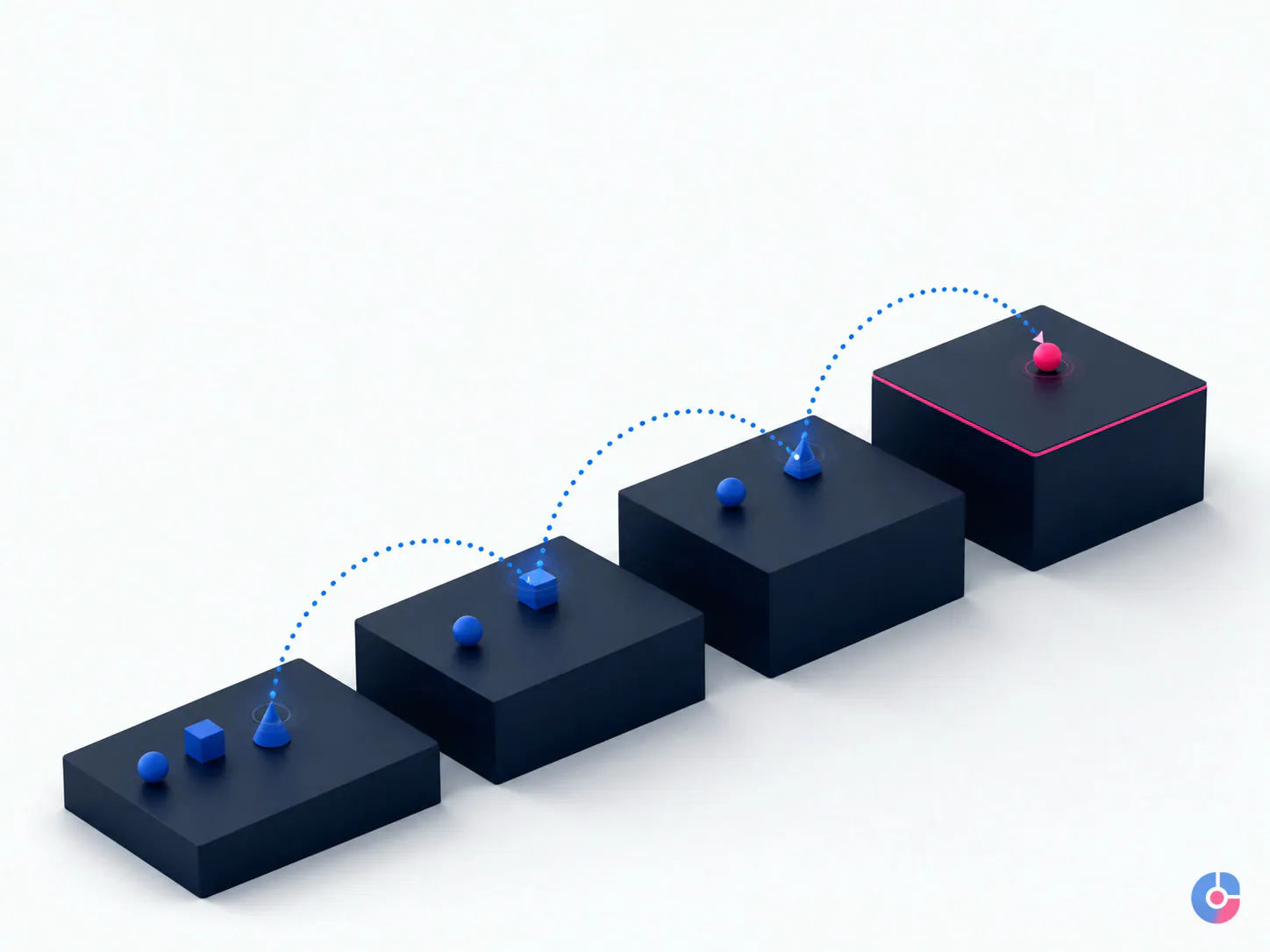
- Phase 1: document and baseline. Analyse contact reasons, volume, backlog, risk, current performance, tools, access, knowledge, macros, authority and escalations. Classify the readiness gaps and select a low-risk pilot queue.
- Phase 2: train and shadow. Train the team on product, customers, policy, data handling, tone, tools and escalation. Operators observe current handling, practise safe cases and pass knowledge and scenario checks.
- Phase 3: supervised live handling. Begin with approved contact reasons and limited volume. Replies use pre-send review or immediate post-send sampling according to risk. Daily calibration closes knowledge and behaviour gaps.
- Phase 4: staged ownership. Increase volume, contact reasons or hours only after the entry criteria are met. Continue QA, client escalation review and knowledge updates at an agreed cadence.
Each phase has entry, acceptance and rollback conditions. A rollback might return a contact reason to draft review, reduce volume or route it back to the internal team after a policy change, quality drop, system problem or unusual incident. This is an operational safety control, not evidence that the provider lacks confidence.
Handover is also two-way. OveliTHub learns the client’s process; the client receives structured evidence about repeat contacts, unclear policies, knowledge gaps and product friction. Continuous improvement after launch turns the support queue into an input for the wider business while one partner maintains the operational record.
Measure speed, resolution, quality and queue health together
No single measure proves good support. A fast reply that misunderstands the question creates rework. A short resolution time can hide premature closure. A high customer score can reflect a small, self-selecting response group. Reporting therefore keeps several signals in context.
| Measure | Definition to agree | Management use |
|---|---|---|
| First response time | From eligible ticket receipt to first qualifying human response, reported by channel and coverage window. | Find capture, staffing, priority and routing delays. |
| Resolution time | Elapsed working or calendar time under the agreed status rules, with internal and customer waiting separated. | Identify knowledge, authority and dependency constraints. |
| One-touch resolution | Eligible contacts resolved in the first representative response without reopen, excluding categories where one touch is unsafe. | Assess knowledge and decision authority without rewarding premature closure. |
| QA score | Sampled performance against weighted accuracy, process, tone, documentation and escalation criteria. | Direct coaching and detect systemic policy or knowledge gaps. |
| Backlog age | Open tickets by age band, reason, owner, status and blocker. | Prevent older risk from disappearing behind daily volume. |
| Customer feedback | The client’s existing satisfaction or effort measure, with response rate and sample context. | Read customer perception alongside operational evidence. |
Daily controls monitor queue and exceptions. A weekly operating review covers volume, SLA, ageing, QA, escalations, repeat contacts, staffing and knowledge changes. A monthly service review addresses trends, root causes, scope, capacity and client decisions. The exact cadence follows the service and risk.
Targets are baselined and agreed rather than copied from another business. We do not promise a retention or satisfaction uplift percentage. Response and resolution matter because delay and repetition affect the customer experience; the client’s own cohort and renewal data must establish the commercial relationship.

Ask for the data contract before the first shift
Support interactions can expose identity, contact details, account records, transaction history, complaints and other personal data. The client and provider must determine their legal roles and applicable markets before access. OveliTHub does not make that legal determination for the client.
As a UK example, when a supplier processes personal data on a controller’s behalf, the UK GDPR requires a binding contract or other legal act. The ICO’s current Article 28 contract guidance, checked 2 September 2026, lists the processing subject, duration, nature, purpose, data types, data-subject categories and controller rights and obligations. Minimum terms cover documented instructions, confidentiality, security, sub-processors, rights assistance, controller assistance, return or deletion, and audits. The ICO notes that this guidance is under review following the Data (Use and Access) Act.
A buyer should also ask for:
- a data and system inventory with purpose, location and retention;
- named access, least-privilege roles and multi-factor authentication where supported;
- approved workspaces and rules for downloads, recordings and screenshots;
- sub-processor identity and authorisation treatment;
- incident identification, notification and evidence responsibilities;
- support for rights requests and deletion or correction instructions;
- international transfer and data-location decisions; and
- offboarding that removes access, returns or deletes data and preserves required service records.
US state, EU, Middle East, sector and other laws may define roles and contract duties differently. The client should obtain qualified privacy and sector advice for its customers and data. A generic confidentiality clause is not a substitute for a reviewed processing arrangement.
What customer support outsourcing costs
Price follows coverage hours, contact volume and variability, channel mix, concurrency, product complexity, language, data sensitivity, required experience, training, supervision, QA, reporting, technology, weekend and holiday patterns, and the level of client escalation. A stable email queue during common working hours has a different cost shape from voice and chat with high concurrency and specialist decisions.
Commercial models can reserve named capacity, price a managed team, or use a carefully defined transaction unit where work is sufficiently consistent. “Per ticket” can reward the wrong behaviour if it encourages short replies or premature closure. The proposal states what consumes capacity, how overflow is handled and which client delay pauses work.
The internal comparison should include recruitment, compensation, equipment, licences, workspace, training, quality, team leadership, absence cover, scheduling, attrition, security and senior escalation—not salary alone. It should also include transition work on either side. We will not invent a universal saving because the current operating model and service risk determine whether outsourcing is commercially sensible.
The three objections worth taking seriously
“We will lose visibility”
The mechanism is client-owned systems where practical, named users, shared queue views, recorded dispositions, QA access, daily exceptions and weekly reviews. Residual risk remains if the client stops reviewing escalations or the provider’s tools hide raw evidence. Reporting rights and system access belong in the service design.
“The provider will damage our brand”
The mechanism is tone capture from real replies, approved macros, authority limits, shadowing, supervised launch, sampled QA and rollback. Residual risk cannot be eliminated; a human can make an error. The operation reduces probability and limits impact through detection, correction and learning.
“Customers will resent outsourced support”
Customers mainly experience whether the representative understands the issue, has truthful authority and owns the next step. The provider should not misrepresent identity or location. Residual risk is highest when outsourcing is used to place distance between the business and difficult decisions; those cases stay with named client owners.
Readers still deciding on timing can use our guide on when to outsource customer support. The consultation turns that decision into a transition plan for the actual queue.
Book a support operations consultation
Bring a recent queue sample, contact-reason view, coverage schedule, current macros, policy and escalation map. OveliTHub will assess readiness, define what should stay with the client and propose a phased pilot with evidence gates and rollback conditions.
Book a support operations consultation, email support@ovelit.com, or call +880 1707-510532. For adjacent capabilities, browse our digital services and helpdesk support services.
Set at the service, not here
The terms every BPO services engagement runs on
The price, the ownership and the renewal terms are the same whichever offering you buy, which is why they are published once rather than restated on every page.
- Starting price
- From $350 per agent per month, in US dollars. 4 hours a day, 5 days a week, one channel, documented SOPs and a monthly QA report. Live in 2 weeks
- Channels
- Email, live chat, phone, social inboxes, CRM and back-office systems
- Coverage
- Hours are stated per desk and written into the agreement, including which of your working days are covered from UTC+6
- Data protection
- UK GDPR Article 28 processor agreement, Standard Contractual Clauses and the UK IDTA where data leaves the UK or EEA
- Quality
- Monthly QA scoring against a rubric you approve, with the sampled tickets attached
- Tooling
- We work inside your helpdesk and your CRM. No forced migration to a platform we own
How quickly can support transition?
Timing depends on readiness, queue complexity, documentation, access, staffing, training, client decisions and pilot evidence. We provide a phased schedule after discovery. A fixed start date before those facts are known transfers risk rather than removing it.
Do we need a complete knowledge base first?
No, but the pilot needs approved knowledge for its contact reasons and a fast path for unknowns. Building the minimum viable knowledge and macro library can be the first transition phase. Missing documents should be visible, not filled by operator guesswork.
Can we keep sensitive or strategic tickets in-house?
Yes. Routing can retain selected accounts, topics, values, risks or channels with client specialists. The external team handles triage and context capture only where appropriate. Boundaries can change after evidence and approval.
Will OveliTHub use our helpdesk?
Usually, client-owned systems give the best continuity and visibility, subject to permissions and licence needs. If another operating tool is proposed, data flow, access, export, audit, integration and exit must be approved before use.
Who manages the outsourced team?
The proposal names operational leadership, QA, scheduling, reporting and escalation responsibilities. The client retains policy, product and relationship decisions. A managed service should not depend on the client assigning tickets to individual representatives all day.
Can we bring support back in-house later?
Yes, if transition-out is designed from the start. Client-owned accounts, current knowledge, exportable ticket history, asset registers, runbooks, access records and documented handoffs reduce lock-in. Return or deletion of personal data follows the approved contract and law.
What if the readiness review says not to outsource?
We will state the reason and the prerequisites. The right next step may be policy clarification, product remediation, internal leadership or a smaller staffing need. A serious consultation does not assume outsourcing is always the answer.
Bought together
Also in support and sales desks
LinkedIn Lead Generation Assistant
A dedicated assistant prepares LinkedIn research, personalised message drafts and daily action queues while the profile owner controls account activity.
What it coversEcommerce Customer Support
Trained ecommerce support handling order queries, returns and marketplace messages inside platform response windows. Book a support review today.
What it coversLive Chat Support Services for Websites
Staffed live chat that answers in seconds, rescues hesitating buyers and hands qualified enquiries to sales. Cover your peak browsing hours.
What it coversNext step
Tell us what you need from Customer Support Outsourcing
Volume, hours and the systems it has to run in. The first reply carries a scope and a figure rather than a request for the basics.
- You send the brief A few lines is enough. No form fields you have to guess at.
- We reply in one business day With questions if we have them, and a range if we do not.
- You decide, not us No retainer to talk. If it is not our work, we say so.
Ask about Customer Support Outsourcing
Priced per agent per month. The written procedure comes before the first agent is hired, so say what the work actually is.
We use what you send to answer you. We do not sell it, and we do not add you to a list.