

Back office and data
Dedicated Offshore Teams
Stand up a dedicated offshore team with a named lead, your tools and your standards, managed day to day. Book a scoping call to shape the team.
Bought under BPO Services From $350 per agent · live in 1 weeks

The work is permanent, but the people doing it keep changing. A new contractor learns the tools, naming conventions and exceptions. Just as the person begins to understand why the team handles one account differently, the engagement ends. Three months later, someone else receives the same folder and the same incomplete explanation.
The hidden cost is not only onboarding time. It is context that never compounds: customer history, operational judgement, reliable handoffs and the small improvements a stable team makes after seeing the same process through several cycles.
OveliTHub builds dedicated offshore teams for sustained multi-person work. The client selects the people, owns priorities and standards, and works with a named team lead. OveliTHub supplies the managed working environment, day-to-day people operations and governance layer. The value should become clearer in month four and month twelve as the team retains knowledge—not depend on a dramatic week-one savings claim.
What a dedicated offshore team actually is
A dedicated team is a stable group assigned to one client, with defined roles, a shared operating rhythm and a lead accountable for the daily line. Team members work in the client’s approved tools and to its documented standards. OveliTHub manages attendance, workplace, local coordination, first-line supervision and the agreed reporting structure; the client continues to direct business priorities and retain visibility of the operation.
That places the model between individual placement and an opaque outcome service:
| Model | What the client receives | What the client manages | What the client gives up |
|---|---|---|---|
| Individual staffing | One or more selected people through offshore staffing services | Daily allocation, supervision, quality, coverage and coordination | A built-in team lead and operating governance unless added separately |
| Dedicated offshore team | A stable multi-person unit, named lead, managed environment and visible governance | Business priorities, standards, access decisions and subject-matter authority | Some direct administrative control in exchange for managed day-to-day operations |
| Fully managed service | An agreed result or service level through managed remote teams | Outcomes, interfaces, approvals and escalations rather than individual work allocation | Some visibility and control over who performs each task and how capacity is deployed |
One continuing role does not need a team structure. A dedicated virtual assistant may be the better fit for a single executive or administrative seat. Employment, contracting and payroll structure are not assumed inside this page; buyers evaluating that arrangement should review offshore staff leasing with qualified legal and tax advice.
When the model fits—and when it does not
It fits sustained, teachable work
A dedicated team is appropriate when several people have a continuing workload, accumulated company context improves decisions, roles can be defined, output can be measured and the client will invest in the first 90 days. Common shapes can combine operations, research, support, content administration, design production or technical support, but the exact functions depend on a documented scope and available leadership.
It also suits businesses that have outgrown coordinating multiple freelancers but still want to know the people doing the work. The team becomes part of the operating model: recurring meetings, shared documentation, client tool access, role progression and continuity planning are expected rather than optional.
It is wrong for short, spiky or unknowable work
A six-week project with a fixed deliverable should normally use a project or managed service. Unpredictable demand that moves from almost nothing to a large same-day queue may need a flexible service with pre-agreed surge capacity. A single steady role may need one dedicated person. Work that nobody on the client side can explain first needs discovery and process design, not immediate hiring.
Dedicated capacity is a continuing commitment. If the workload cannot keep a small group meaningfully occupied or the buyer wants zero involvement in onboarding and governance, this model will create idle time or frustration. OveliTHub will route the need rather than construct a team around temporary volume.
How the team is assembled
- Define work and roles. Map recurring responsibilities, decision boundaries, volumes, systems, working hours, output measures, quality consequences and escalation. Convert them into role scorecards rather than generic job titles.
- Design the team shape. Set the number and seniority of roles, lead capacity, review load, backup needs, overlap, language and specialist dependencies. Separate launch needs from the likely steady-state team.
- Source and screen. OveliTHub assesses relevant experience, written and spoken communication, applied judgement, work sample and role conditions. Screening criteria are shown to the client.
- Run client interviews. The client meets finalists, tests functional fit and makes the final selection. No candidate becomes part of the dedicated team solely because OveliTHub recommends them.
- Prepare workspace and equipment. Approved devices, workplace, connectivity, identity, collaboration tools and access controls are made ready for the role and risk.
- Provision client access. Named accounts receive least privilege through the client’s approval process. Test tasks confirm that the team can use the systems without sharing credentials or bypassing control.
- Launch with a team lead. The lead controls the daily queue, first-line quality, attendance, handover and escalation while the client transfers business context.
Recruitment timing depends on role rarity, interview availability, notice periods, equipment, access and background checks where appropriate. We provide a staged plan after role definition rather than promise an arbitrary start date.
The team lead turns remote individuals into an operating unit
The lead owns daily allocation, readiness checks, workload balance, attendance, leave coordination, first-line questions, quality sampling, coaching, written handover, risk escalation and the weekly performance view. The lead does not invent client policy or make decisions reserved for the client’s authorised owner.
Supervision ratio follows complexity and maturity. A new, judgement-heavy process needs closer observation than a stable transactional queue. Lead capacity is priced and protected; assigning a nominal lead a full production load and expecting management in spare moments is not a credible design.

The first 90 days require visible client investment
Days 1–30: context transfer and controlled practice
The client provides process owners, approved documentation, examples, access decisions and regular answers. OveliTHub builds the team handbook, role checklists, decision log, glossary, exception routes and baseline measures. Operators shadow, practise in a safe environment and complete reviewed work. Output is deliberately constrained while the rules are tested.
Days 31–60: supervised production
The team takes defined queues under lead review. Daily reporting exposes volume, quality, exceptions, access problems and knowledge gaps. The client joins a reliable overlap window, decides policy exceptions and confirms whether accepted examples should change the standard. Capacity increases only when review evidence supports it.
Days 61–90: independent delivery with sampled assurance
Routine work moves without step-by-step client direction. The lead samples quality, handles normal escalation and reports against agreed measures. The parties review role fit, capacity, risks, documentation completeness, backup coverage and next-quarter improvement. Independence does not mean silence; it means predictable decisions happen inside the approved operating model.
If the client cannot provide subject-matter access, timely decisions or system permissions during the ramp, the schedule changes. Pretending the team can absorb undocumented institutional knowledge without client time is one of the fastest ways to create dependency and disappointment.
Communication cadence closes the distance
Capability is wasted when questions wait overnight, work changes without a written record or two managers assign conflicting priorities. The cadence is designed before launch:
- Daily written handover: completed work, current queue, blockers, exceptions, decisions needed, owner and next action in the shared system of record.
- Live overlap window: a defined period for decisions, coaching and collaboration; its time zone and daylight-saving treatment are written explicitly.
- Weekly operating review: the client owner and team lead review output, quality, backlog, attendance, changes and immediate risks.
- Monthly business review: sponsors assess capacity, service trends, retention, cross-training, improvement, upcoming demand and commercial changes.
Work completed before the client’s morning is useful only when the previous handover contained enough information and exception authority. Overnight progress is not a substitute for overlap. Urgent incidents use a named channel, severity definition and escalation path rather than hoping someone notices a chat message.
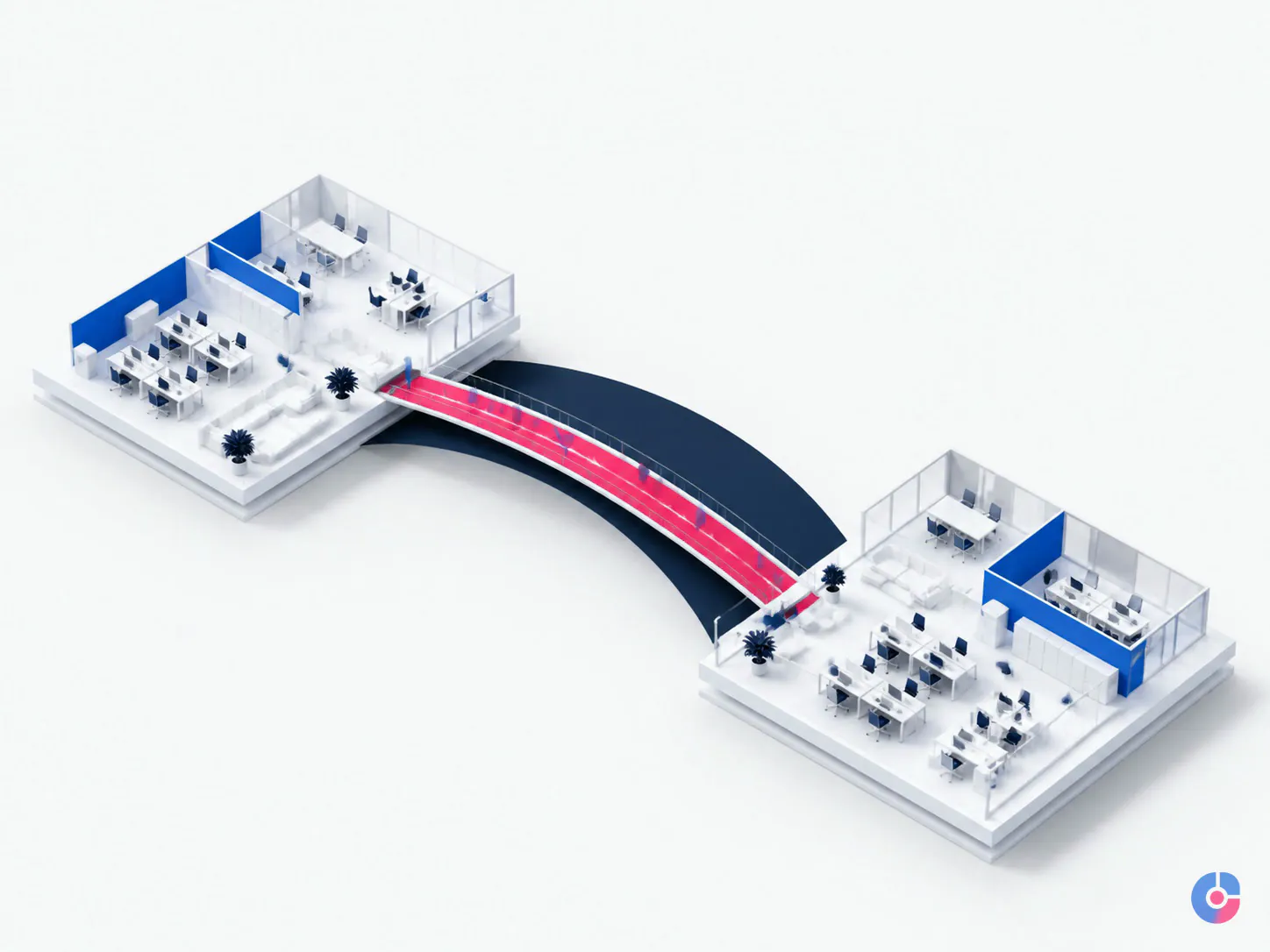
Governance shows control without daily micromanagement
The client receives a view of output against agreed measures, quality sample results, exception age, rework, attendance, leave, coverage, utilisation where meaningful, access or system constraints, training, improvement actions and open risks. Utilisation is interpreted carefully: a lead’s coaching or an operator’s training may protect future capacity even though it is not a completed transaction.
Measures belong to the role. A support team may report response and resolution under client definitions. A processing team may report ready units by cut-off, exception age and quality. A creative-production team may report approved assets, revision cause and cycle time. One generic productivity score would invite the wrong behaviour.
The client has a named team lead for daily operations and an OveliTHub engagement owner for systemic escalation. The governance document states severity, acknowledgement target, update interval and decision authority. Transparent communication means reporting a missed measure with cause, current impact, containment, recovery plan and next update—not editing the target after the fact.
OveliTHub’s experience across more than 130 delivered projects and clients in the USA, Europe and the Middle East informs the operating templates, but each team is governed by its own work and evidence. English-first written handovers create a reviewable record across locations.
Equipment, access and offboarding are operating controls
The setup can include managed devices, approved operating-system and patch standards, endpoint controls, restricted local administration, encrypted storage, protected connectivity, physical workspace controls and asset inventory according to the role and client risk. Client systems use named accounts, least privilege, multi-factor authentication where supported and controlled elevation. Personal accounts and shared production credentials are not substitutes for provisioning.
Where personal data is processed, the parties determine roles and execute the required written terms. The ICO’s current UK GDPR processor-contract guidance, checked 2 September 2026, identifies documented instructions, confidentiality, security, sub-processor, rights-assistance, end-of-contract and audit terms among the Article 28 requirements. It is under review following the Data (Use and Access) Act; clients should obtain current legal advice for their roles, employment, transfers and jurisdiction.
When someone leaves the team, offboarding begins on the authorised effective time. Client access is revoked, active sessions and credentials are addressed, equipment and tokens are recovered, files and queues are reassigned, confidentiality continues, and the access list is reconciled. “Same day” means the same authorised business day under the agreed notification and system availability; high-risk exits can require immediate coordinated revocation.
Retention is the operating metric behind the model
The client buys continuity, so the governance pack should show team stability, tenure distribution, open vacancies, absence coverage, cross-training and replacement progress without publishing a misleading universal attrition promise. Some turnover is unavoidable. The control is to reduce avoidable causes and prevent one person’s departure from taking undocumented knowledge with them.
Sustainable shift design, clear roles, regular coaching, fair workload, progression paths, recognition, team belonging and usable management all matter. So do practical details: repeated late-night overlap, unclear priorities and constant emergency changes can make a theoretically attractive role unsustainable. The monthly review treats these as operating risks.
Every critical role has a living checklist, examples, system map, current queue, exception guide and handover owner. Cross-training is tested through planned cover rather than listed on a spreadsheet. When a person gives notice, the lead records in-flight work, client context, recurring deadlines, access and open decisions; replacement recruitment and client interview follow the agreed process.

Cost and scaling follow the team design
Price drivers include role and seniority, team size, lead and quality capacity, coverage hours, shift premiums, language or specialist knowledge, recruitment difficulty, workspace, equipment, security controls, software, training, backup coverage and governance. Employment and tax treatment depend on the chosen structure and require appropriate advice. We do not quote a generic offshore savings percentage.
The commercial schedule should distinguish recurring capacity from one-time recruitment, equipment, setup or specialist screening. It should state included working hours, holidays, leave cover, replacement process, overtime approval, tool responsibility, review cadence and change notice. A lower seat price without supervision, coverage or equipment is not an equivalent team.
Scaling up requires refreshed workload evidence, role scorecards, sourcing, client interviews, access, training and lead capacity. Adding several people at once may temporarily reduce experienced output because current members train them. Scaling down also needs reasonable notice, knowledge transfer, access revocation and commercial treatment. Exact notice is agreed in the contract; capacity cannot responsibly appear and disappear with no lead time.
Book a team scoping call
Bring the functions, recurring volume, current team, coverage hours, client decision-makers, tools, quality consequences and next 12 months of expected demand. OveliTHub will return a recommended model, initial role scorecards, lead and governance shape, 90-day ramp, access dependencies and pricing drivers.
Book a team scoping call, email support@ovelit.com, or call +880 1707-510532. Explore the wider digital services portfolio.
Set at the service, not here
The terms every BPO services engagement runs on
The price, the ownership and the renewal terms are the same whichever offering you buy, which is why they are published once rather than restated on every page.
- Starting price
- From $350 per agent per month, in US dollars. 4 hours a day, 5 days a week, one channel, documented SOPs and a monthly QA report. Live in 2 weeks
- Channels
- Email, live chat, phone, social inboxes, CRM and back-office systems
- Coverage
- Hours are stated per desk and written into the agreement, including which of your working days are covered from UTC+6
- Data protection
- UK GDPR Article 28 processor agreement, Standard Contractual Clauses and the UK IDTA where data leaves the UK or EEA
- Quality
- Monthly QA scoring against a rubric you approve, with the sampled tickets attached
- Tooling
- We work inside your helpdesk and your CRM. No forced migration to a platform we own
Do we lose control of the work?
No. The client selects finalists, sets business priorities and standards, approves system access and receives governance reporting. OveliTHub manages daily allocation, attendance, first-line quality and escalation through the lead. The responsibility matrix makes the boundary explicit.
Will time zones slow decisions?
They will if overlap and handover are undefined. The design sets a live decision window, written daily handover, urgent escalation and named client owners. Asynchronous work can progress before the client morning, but unresolved authority still needs available decision-makers.
What happens if a team member leaves?
Access is revoked on the approved schedule, work and documentation transfer to a named owner, cross-trained cover protects critical queues and replacement follows the role scorecard and client interview process. Timing depends on role availability and notice; it is reported, not hidden.
Can we start with one person?
Yes, but that is individual staffing or a dedicated-assistant model until the workload justifies a led team. We will not add a management structure merely to fit the service name.
How quickly can a team start?
Role complexity, candidate availability, client interviews, notice periods, equipment, access and training determine the schedule. The scoping output provides stages and dependencies after the roles are defined.
Can the team support only one function?
Yes. A function-specific team can be appropriate when the workload is sustained. For a dedicated administrative operation, an offshore back office team may provide more precise scope. This page owns the cross-functional team model.
Where can we learn more before a call?
Read how to build a dedicated offshore team for the informational framework, then bring the real workload and coverage requirements to scoping.
Bought together
Also in back office and data
Data Verification Services
Verify contact, company and transactional records against authoritative sources, with a confidence flag and date on every check. Request a free sample.
What it coversPayroll Support Services for Employers
Payroll support that collects timesheets, checks starters, leavers and variances and prepares a clean input pack, so your pay run needs no…
What it coversHelpdesk Support Services Outsourcing
Outsourced tier one and tier two helpdesk support with runbooks, SLAs and a falling escalation rate, so your engineers stop repeating the…
What it coversNext step
Tell us what you need from Dedicated Offshore Teams
Volume, hours and the systems it has to run in. The first reply carries a scope and a figure rather than a request for the basics.
- You send the brief A few lines is enough. No form fields you have to guess at.
- We reply in one business day With questions if we have them, and a range if we do not.
- You decide, not us No retainer to talk. If it is not our work, we say so.
Ask about Dedicated Offshore Teams
Priced per agent per month. The written procedure comes before the first agent is hired, so say what the work actually is.
We use what you send to answer you. We do not sell it, and we do not add you to a list.