

Healthcare and regulated work
Healthcare BPO Services for Practices
Healthcare BPO for front desk, records, verification and revenue cycle admin, built on signed data agreements and least-privilege system access.
Bought under BPO Services From $350 per agent · live in 1 weeks

Two questions should decide whether a healthcare function can be outsourced. What contract governs the handling of patient data? What can each individual actually see and do?
Cost is the third question. Staffing should not be quoted before the organisation knows the data flow, the legal roles, the permitted purposes, the systems, the access boundary and the work that must remain with clinical or authorised internal staff.
OveliTHub’s healthcare BPO services begin with that sequence. We map a narrow administrative function, document the applicable agreement and instructions, design named least-privilege access, run it in parallel and expand only when the control evidence supports expansion. We do not use “HIPAA certified” as a substitute for a business associate agreement, risk analysis, safeguards and daily operating controls.
The contract layer, in plain terms
Under the U.S. HIPAA Rules, a service provider can be a business associate when it performs functions or services for a covered entity that involve protected health information. The parties must determine their actual status and obligations for the proposed work; a marketing label does not decide it.
The U.S. Department of Health and Human Services’ current business associate guidance, checked 2 September 2026, explains that a covered entity may disclose protected health information to a business associate when it obtains satisfactory assurances through a contract or other written arrangement that the business associate will appropriately safeguard it, among other obligations. HHS identifies 45 CFR 164.504(e) as the Privacy Rule provision governing required agreement elements.
HHS’s current business associate contract guidance states that the written contract must address permitted and required uses and disclosures, prevent other use or disclosure except as allowed by contract or law, require safeguards, require reporting of impermissible use or disclosure including breaches, support specified individual-rights obligations, make relevant records available to HHS, require appropriate subcontractor restrictions, and address return or destruction at termination where feasible. The contract also needs to support termination for a material violation.

Patient data leaving the country is a risk question, not a slogan
Working inside the client’s EHR or practice-management system can reduce exports, but it does not make remote access legally or operationally irrelevant. An authorised person in another country may be able to view, use or create regulated information. The data map must show where people, systems, support, storage, backups and subprocessors are located.
For HIPAA-regulated ePHI, HHS’s current offshore storage guidance, checked 2 September 2026, says the HIPAA Rules do not include requirements specific to ePHI processed or stored outside the United States, provided applicable HIPAA requirements are otherwise met. HHS also warns that geographic location may create different risks and vulnerabilities, including enforceability considerations, which must be considered in Security Rule risk analysis and risk management under 45 CFR 164.308(a)(1)(ii)(A) and (B).
That is not permission to treat location casually. The covered entity and business associate must assess the specific countries, legal environment, threat conditions, contract enforceability, incident response, support access and technical controls, along with state law, payer terms and other obligations.
For UK personal data, the ICO’s current international-transfer guidance, updated 15 January 2026 and checked 2 September 2026, says making personal information accessible to a separate organisation outside the UK can be a restricted transfer. It describes adequacy regulations, appropriate safeguards or an applicable exception as the routes for a restricted transfer. The initiating organisation and its advisers must determine the actual roles, transfer, mechanism and wider UK GDPR obligations before access.
Minimum necessary becomes a permission map
HHS’s current minimum necessary guidance, checked 2 September 2026, explains that covered entities generally must take reasonable steps to limit uses, disclosures and requests for PHI to the minimum necessary for the intended purpose, subject to stated exceptions. It expects policies and procedures to identify the people or classes needing access, the categories of information needed and the conditions of access. The covered entity makes that assessment.
OveliTHub turns the approved assessment into a function-to-access matrix:
| Function element | Access design question | Control evidence |
|---|---|---|
| Identity and demographics | Which fields are required to identify the patient and complete the administrative action? | Role permissions, screen or field test and procedure |
| Clinical information | Is any diagnosis, note, result or order necessary for this specific task, or can it remain hidden? | Excluded modules/fields and approved exception route |
| Financial and coverage information | Does the operator need view, create, edit or export, and can approval remain separate? | Permission record and sampled activity |
| Documents | Which document types can be viewed, indexed, uploaded, disclosed or downloaded? | Document-class rule, audit event and exception log |
| Communication | Which contacts, purposes, verification steps and message templates are authorised? | Contact record, identity check and reviewed sample |
Operators use named individual accounts inside the client’s approved EHR, practice-management, clearinghouse, payer, document or communication systems. Shared clinician or administrator accounts are not an acceptable shortcut. Role-based permissions are tested before live work; access to unrelated facilities, patients, notes, billing modules or export functions is removed where the system allows.
The workstation and environment follow the approved security design: managed devices, multi-factor authentication where supported, encrypted connections, screen and session controls, approved network conditions, restricted local storage, no personal printing, and no uncontrolled copy into notes, chat or spreadsheets. “No local download” is enforced through configuration and monitoring where technically possible, not only written in a policy.
Audit logs must be enabled and retained where available for relevant logins, views, creation, changes, exports and disclosures. The client and OveliTHub agree what is reviewed, by whom, on what cadence and which patterns escalate. Logs are evidence; they do not prevent misuse on their own.
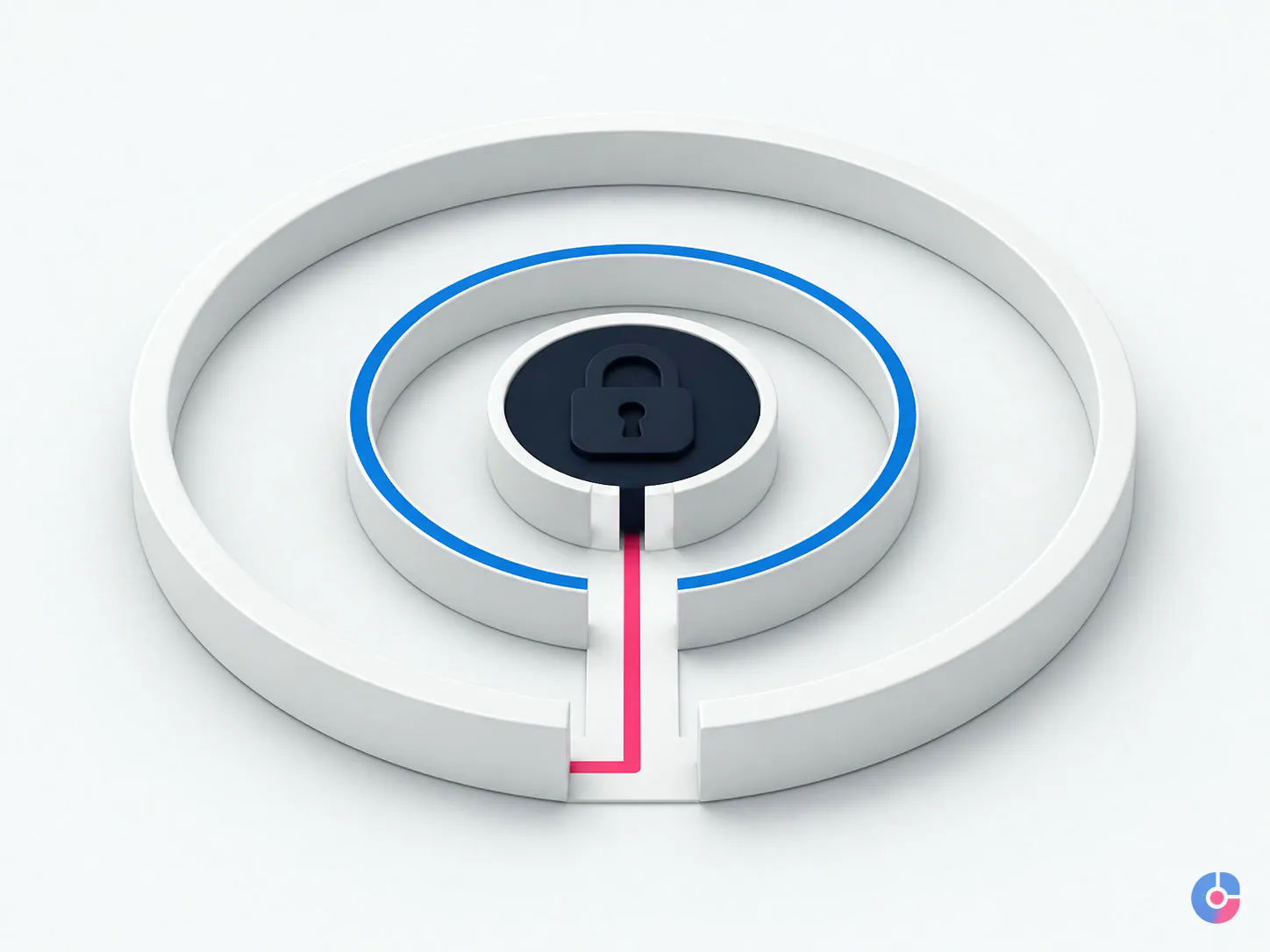
Offboarding revokes every system, identity provider, password vault, storage and communication permission within the contractually defined window; closes active sessions where supported; transfers open work; recovers or secures devices; and completes the agreed return or destruction process. Discuss the access model before any patient record is shared.
Healthcare administration moves by risk tier
These tiers are an OveliTHub operating model, not legal classifications. “Lower risk” does not mean unregulated or harmless; scheduling and coverage work can still expose PHI and affect care access. The tiers help decide what moves first, what needs stronger review and what remains inside the practice.

Tier 1: bounded administrative coordination
Examples include scheduling coordination under approved rules, reminder administration, document intake and indexing, demographic completeness checks and insurance eligibility requests. The task has a narrow purpose, limited fields, defined scripts and immediate escalation for ambiguity, symptoms, safety or clinical questions.
Tier 1 is the preferred starting point because permission and quality can be observed without transferring broad decision authority. It still requires the applicable agreement, privacy and security controls, training and audit evidence.
Tier 2: sensitive records and revenue-cycle preparation
Examples can include authorised record handling, clinical data entry from signed or approved source documents, charge-entry preparation, prior-authorisation status follow-up, billing support, denial administrative follow-up and accounts-receivable contact under defined payer and patient rules.
These functions can expose more clinical, coverage and financial context and can affect reimbursement or record integrity. They need function-specific training, tighter permissions, source verification, quality review, value or risk thresholds and client sign-off where applicable. They move only after the Tier 1 or parallel-run evidence supports the operator and control model.
Tier 3: work that does not leave the authorised practice function
OveliTHub does not provide clinical advice, assess symptoms, perform clinical triage, determine diagnosis or treatment, author or sign clinical notes, approve medical necessity, make prescribing decisions, select a code based on clinical judgement, sign off coding, make coverage guarantees, or replace a licensed or credentialed professional.
Safeguarding, emergency, complex complaint, legal, compliance, privacy, coding, clinical and reimbursement judgements route to named client owners. The provider should never expand into Tier 3 because an operator has become familiar with the workflow.
The functions we run for healthcare organisations
Patient scheduling and reminders
Teams can coordinate appointments, waitlists, routine reminders and approved rescheduling rules inside the client system, with symptom, urgency, accommodation and clinical questions escalated. Dedicated workflow detail belongs to patient scheduling support.
Insurance eligibility verification
Operators can request and record current payer responses for approved fields and flag conflicts before the visit. Eligibility information is not a guarantee of payment or benefit. See insurance verification support for the controlled verification workflow.
Prior-authorisation follow-up
Support can prepare the administrative packet from authorised sources, check status, record payer requests and route clinical or medical-necessity questions. The service does not make the clinical case or guarantee authorisation.
Medical records handling
The team can index authorised records, manage approved request queues, check completeness, apply disclosure procedures and maintain logs. Identity, authority, scope, fees, timing and legal exceptions remain governed by the client’s current policy and applicable law.
Clinical data entry
Operators can enter or migrate approved information from designated source documents under field-level rules and independent quality review. They do not infer a diagnosis or amend clinical meaning. See healthcare data entry services for accuracy controls.
Billing and accounts-receivable support
Support can prepare administrative claim data from approved records, check non-clinical completeness, record payer status and follow assigned balances under written steps. Claim coding, final submission authority, appeals judgement, adjustments and accounting treatment remain with authorised owners. Use medical billing support services or revenue cycle support services for the specific operating model.
Patient-facing front desk overflow
Trained operators can answer defined administrative calls or messages, verify identity, provide approved information and route clinical or urgent content immediately. They do not interpret symptoms or present themselves as clinicians. A broader role can be scoped through a healthcare virtual assistant.
After-hours capacity is a continuity decision
Healthcare coverage is not primarily a labour-arbitrage story. An administrative call can concern tomorrow’s appointment, a record needed by another authorised provider, a coverage question before a planned service or a referral waiting for one document. The operating design must distinguish routine work from content that requires the practice, clinician or emergency route.
OveliTHub can schedule extended coverage across agreed USA and Middle East hours. “Extended” means a defined window with trained operators, supervisors, handovers and client contacts. Overnight or round-the-clock service requires its own staffing, backup and escalation design; one remote assistant does not constitute 24-hour coverage.
Scripts include emergency and clinical disclaimers approved by the client, but scripts do not create clinical competence. Any symptom, deterioration, medication, test-result, self-harm, safety or other urgent signal follows the practice’s immediate route. The service does not instruct a patient beyond the authorised emergency communication.
A healthcare engagement starts narrow
- Map the function and data. Document purpose, people, record types, systems, locations, flows, subprocessors, outputs, retention and non-negotiable clinical boundaries.
- Assess risk and legal roles. The client’s privacy, security and legal owners determine covered-entity/business-associate status, other jurisdictions, transfer questions and required controls.
- Execute the agreement. Complete the BAA and other required contracts or schedules before PHI is disclosed to OveliTHub for applicable work.
- Write the operating procedure. The practice manager and subject owners define sources, steps, quality, identity, scripts, exceptions, clinical escalation and completion evidence.
- Provision named least-privilege access. Test required and prohibited actions, workstation controls, logs and revocation.
- Train on representative scenarios. Use privacy-approved examples, knowledge checks and redacted or test records where practical.
- Run one function in parallel. OveliTHub prepares or completes the bounded work while authorised staff review every output and escalation.
- Measure and correct. Review accuracy, timeliness, access events, escalation, patient communication and documentation before granting autonomy.
- Expand by tier. Add categories or hours only through a documented change, updated risk/access assessment and client approval.
Staff turnover does not trigger informal credential transfer. The client-owned procedure, training record, access matrix and queue handover support continuity. A replacement receives a new identity, approved training and supervised access. The former operator is revoked within the agreed window.
Integration starts with the existing EHR and practice systems
OveliTHub works through the client’s approved EHR, practice-management system, payer portals, clearinghouse, document platform, phone or messaging tools where the task and access allow. We do not build a parallel patient record in an unmanaged spreadsheet.
If a platform cannot restrict access to the required minimum or cannot provide adequate activity evidence, the function may need a narrower workflow, different queue, compensating control or may remain in-house. Staffing does not override a system control gap.
Measures are chosen per function
The scope defines numerator, denominator, timing clock, exclusions, source and review owner. Potential operational measures include:
- scheduling request age, booked outcome, waitlist action and authorised slot utilisation;
- administrative call answer, abandon and callback performance within defined coverage;
- eligibility requests completed before the scheduled visit with payer response and unresolved exceptions;
- prior-authorisation cases by status, age, requested information and next payer or client action;
- records requests acknowledged, complete, disclosed or escalated within the applicable process;
- data-entry field accuracy and material-error findings against source;
- administratively complete claim preparation, rejection reason and client-sign-off status where billing is in scope;
- accounts-receivable follow-ups completed and outcomes recorded; and
- privacy, security, access, identity, escalation and quality exceptions.
Schedule fill, answer time, verification completion, record turnaround and clean-claim measures can be agreed as targets after baseline and workflow review. OveliTHub does not promise them in advance or imply a guaranteed reimbursement or patient outcome.
Experience is not a substitute for this organisation’s controls
OveliTHub’s approved experience record includes work with Allegheny Health Network, and its wider delivery record includes 130+ projects. Those facts do not establish a specific healthcare result, certification or automatic suitability; this engagement must stand on its agreement, due diligence, access test, parallel run and evidence.
Honest limits
- OveliTHub does not provide clinical advice, diagnosis, treatment, triage or emergency services.
- It does not claim medical coding certification, clinical licensure, healthcare accreditation or a blanket “HIPAA certification” not held.
- It does not guarantee insurance eligibility, prior authorisation, claim acceptance, reimbursement, collection, appointment attendance or clinical outcome.
- It does not decide medical necessity, coding, clinical documentation sufficiency, disclosure law or patient consent.
- It does not replace the covered entity’s security risk analysis, privacy programme, compliance officer, legal counsel or clinical leadership.
- It does not introduce subcontractors, new locations or broader access without the contractually required notice and approval.
Home-care-specific scheduling and visit administration belong to home healthcare back office support. Readers comparing the umbrella model can review healthcare BPO services for medical practices.
Start with the data agreement
OveliTHub will map one function, its PHI, systems, locations, parties, access and escalation boundaries. The first recommendation will identify the agreement and control questions that must close before a staffing plan is proposed.
Book a compliance-first scoping call, email support@ovelit.com, or call +880 1707-510532. Browse all digital services.
Set at the service, not here
The terms every BPO services engagement runs on
The price, the ownership and the renewal terms are the same whichever offering you buy, which is why they are published once rather than restated on every page.
- Starting price
- From $350 per agent per month, in US dollars. 4 hours a day, 5 days a week, one channel, documented SOPs and a monthly QA report. Live in 2 weeks
- Channels
- Email, live chat, phone, social inboxes, CRM and back-office systems
- Coverage
- Hours are stated per desk and written into the agreement, including which of your working days are covered from UTC+6
- Data protection
- UK GDPR Article 28 processor agreement, Standard Contractual Clauses and the UK IDTA where data leaves the UK or EEA
- Quality
- Monthly QA scoring against a rubric you approve, with the sampled tickets attached
- Tooling
- We work inside your helpdesk and your CRM. No forced migration to a platform we own
Can patient data be accessed from outside the United States?
HIPAA does not create a special blanket ban, but HHS says geographic risks must be considered in Security Rule risk analysis and management, and all applicable HIPAA requirements still apply. State law, contracts and other jurisdictions can add requirements. The client approves the specific arrangement after review.
Does working inside our EHR keep the data from leaving?
It can reduce downloads and extra copies, but a separate overseas organisation viewing records may still create legal, contractual and security considerations. We map access location, systems, support, storage and subprocessors instead of equating “no export” with “no transfer.”
What happens when an assigned operator leaves?
Access is revoked within the agreed window, sessions and devices are addressed, open work is transferred and files are returned or deleted under the agreement. A replacement receives a new named account, training and supervised approval before live work.
Can you integrate with our practice-management system?
We first use the system’s approved roles and workflows. Any connector, export or automation requires data-flow, vendor, permission and logging review. If the system cannot provide a safe role, the function may need to remain narrower or in-house.
Will you sign a business associate agreement?
Where OveliTHub is acting as a business associate, the applicable written agreement must be completed before PHI is handled. The proposed scope, systems, locations, subprocessors and responsibilities must be reviewed rather than assuming one template covers every engagement.
What should we bring to the scoping call?
Bring one proposed function, current workflow, systems, data types, locations, roles, existing vendor requirements, access limitations and named privacy, security, clinical and operational owners. Do not send patient records for the first conversation.
Bought together
Also in healthcare and regulated work
Revenue Cycle Support Services (RCM)
Offshore RCM support across eligibility, charge entry, claim follow-up and denials, with weekly AR reporting. Request a revenue cycle review.
What it coversInsurance Verification Support Services
Outsourced eligibility and benefits verification completed before every appointment, with copay, deductible and plan status documented in your system.
What it coversMedical Records Management Support
Records support that indexes charts, prepares them for clinic and releases them inside the legal window, with an audit trail on every…
What it coversNext step
Tell us what you need from Healthcare BPO Services for Practices
Volume, hours and the systems it has to run in. The first reply carries a scope and a figure rather than a request for the basics.
- You send the brief A few lines is enough. No form fields you have to guess at.
- We reply in one business day With questions if we have them, and a range if we do not.
- You decide, not us No retainer to talk. If it is not our work, we say so.
Ask about Healthcare BPO Services for Practices
Priced per agent per month. The written procedure comes before the first agent is hired, so say what the work actually is.
We use what you send to answer you. We do not sell it, and we do not add you to a list.