

Healthcare and regulated work
Healthcare Data Entry Services for Clinics
Accurate medical data entry for demographics, charges, lab results and chart backlogs, with double-key verification on the fields where errors cost most.
Bought under BPO Services From $350 per agent · live in 1 weeks

One mistyped date of birth can stop a registration or claim and create rework. One patient identifier assigned to the wrong chart can fragment history. One lab document indexed to the wrong encounter can be present in the system but absent from the workflow where staff expect to find it.
A single “accuracy rate” hides those differences. Misspelling a non-clinical note label and mislinking a patient do not carry the same consequence. Quality has to be designed field by field, then reported by the kind of error and the decision it can affect.
OveliTHub provides healthcare data entry services for patient administration, charge preparation, clinical document indexing, chart abstraction and referral or order support. High-risk fields can be independently double-keyed and compared. Lower-risk fields use validation and sampled review. If the source is ambiguous, the operator stops and flags it; nobody guesses to keep the queue moving.
What a single mistyped field actually costs
A registration error may cause the payer or practice system to reject the record, forcing staff to find the source, contact the patient or payer, correct the field and resubmit the administrative work. The direct problem is not the keystroke; it is the downstream reconciliation it creates.
A duplicate patient record can separate demographics, coverage, documents, appointments or other history across two identifiers. Merging or correcting that record requires authorised review because similar names and dates do not prove identity. The entry process must search and match according to the client’s approved rule before creating a new chart.
A scanned referral, lab result or imaging report may contain the right information but become operationally difficult to find when it is assigned to the wrong patient, encounter, date or document type. Indexing therefore needs identity and encounter checks as well as a file upload.
OveliTHub does not publish a denial share, duplicate-record prevalence or implied harm rate. The paid pilot measures the practice’s own source quality, error pattern and control requirements.
The healthcare data entry work we handle
Patient demographics and registration
Operators can prepare or enter new patient records and approved updates for name, date of birth, contact details, address, sex or gender fields as configured by the client, guarantor, emergency contact, payer, plan, member identifier, group and other registration information required by the workflow.
The process begins with patient-search and matching rules. Potential duplicates are not merged automatically. Conflicting identity, guardian, guarantor or coverage information enters the exception queue with source references for an authorised records or registration owner.
Charge and encounter entry
OveliTHub can enter supplied charges, dates, provider, location and approved administrative fields from encounter forms, superbills or other designated source records into the practice-management workflow. Codes are entered exactly from the authorised source or approved mapping.
The team does not select a code, infer one from a note, add a modifier, determine medical necessity or decide what should be billed. Missing, contradictory or illegible coding information is returned as an exception to the named coding or clinical owner. Claim creation, final submission and reimbursement work belong to medical billing support services under their own controls.
Clinical document indexing
Incoming faxes, referrals, laboratory and imaging reports, consultation notes and other approved documents can be matched to the correct patient, encounter or order; assigned the approved document type and service or received date; uploaded; and routed to the authorised work queue.
Matching uses the fields specified by the practice and the system’s current record. A similar name is not sufficient. A result that lacks stable identity or does not clearly match an encounter is quarantined for decision. OveliTHub indexes and routes; it does not interpret the result, assess urgency or confirm clinical review.

Chart abstraction and backlog digitisation
The practice defines an abstraction sheet stating each field, source location, permitted values, date logic, precedence, required evidence and non-inference rule. Operators move only the named information from historical paper or scanned charts into structured records.
A checkbox, crossed-out value, handwritten correction, abbreviation, conflicting page or missing date can change meaning. The operator records an approved literal value or flags the source. They do not summarise clinical meaning, reconcile diagnoses or convert an implied statement into a clinical fact.
Referral and order entry support
The team can enter referral and order data from authorised sources, attach supporting documents, confirm administrative completeness against the practice checklist, route the item and maintain the tracking log. Missing signatures, clinical indications, provider details, authorisation or other required content go to the named owner.
Closing the administrative loop means the item reached the defined status with evidence. It does not mean OveliTHub approves the order, makes a referral decision or confirms clinical appropriateness.
Accuracy is engineered field by field
At setup, every in-scope field is assigned a risk class based on identity, clinical routing, billing or coverage consequence; allowed values; source quality; system validation; and detectability after entry. The practice approves the classification and target method.
| Field group | Example risk | Illustrative control |
|---|---|---|
| Patient identity and linkage | Wrong chart, duplicate record or mislinked document | Required-source match, system search, independent double key for selected fields and no-match exception |
| Encounter, order and document routing | Information assigned to the wrong visit, provider, order or queue | Cross-field consistency check, approved type list, independent comparison or full review for designated categories |
| Coverage and charge identifiers | Rejected or misdirected administrative transaction | Format validation, source comparison, check digit where the identifier provides one, and double key for selected fields |
| Structured clinical abstraction fields | Clinical meaning altered by transcription or unsupported inference | Approved abstraction sheet, literal-source rule, specialist exception and risk-weighted audit |
| Lower-risk administrative labels | Search, reporting or workflow inconsistency | Dropdowns, controlled vocabulary, field validation and sampled audit |
Double-key verification for the fields where a mismatch matters most
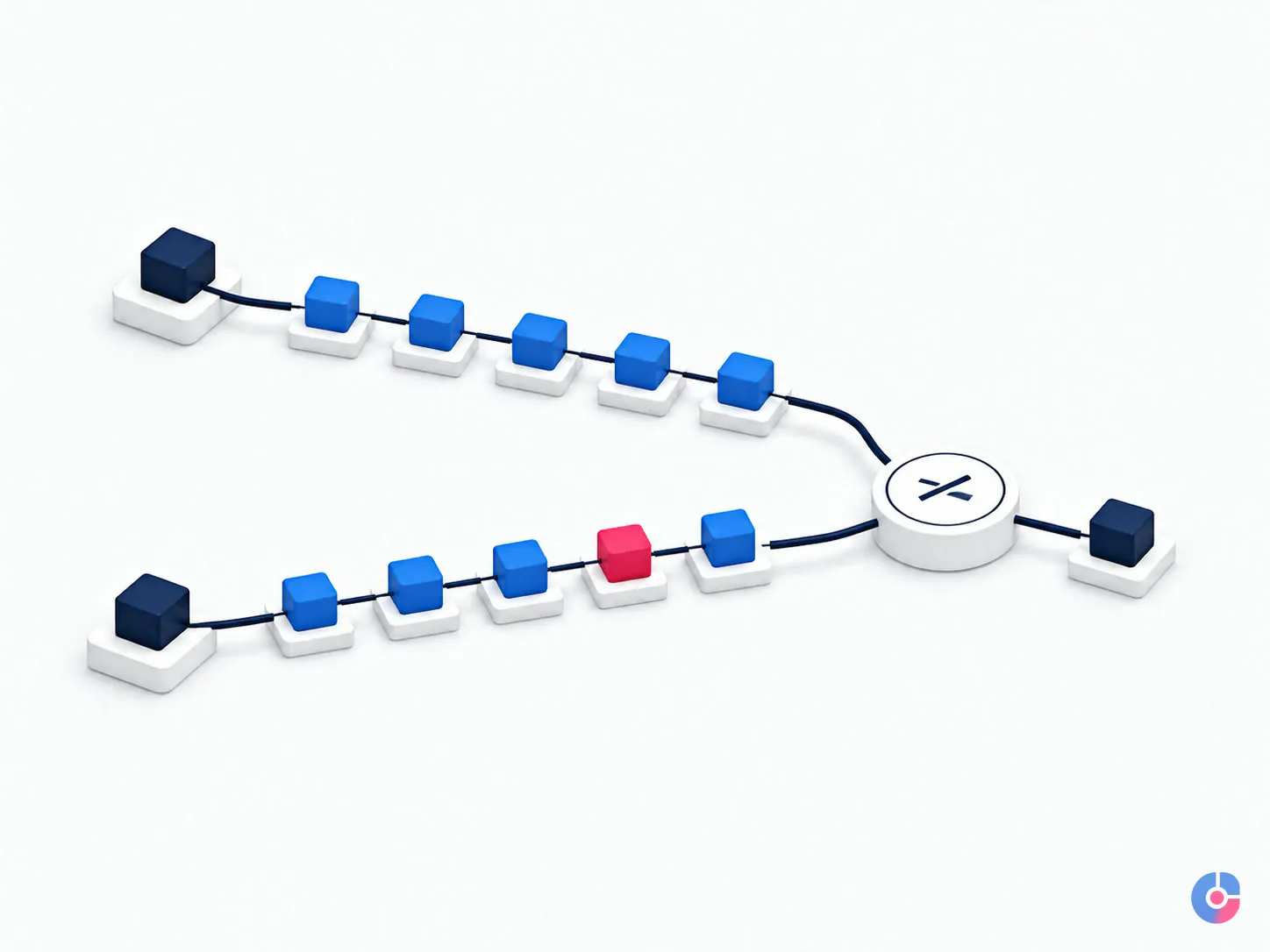
Double key means two trained operators independently enter the selected values from the same approved source without seeing or copying the other person’s entry. A comparison routine identifies any difference. Matching entries can progress; mismatches return to the source for resolution or enter the exception queue.
The second entry is not a visual review of the first. Independence matters because a reviewer can overlook a plausible value already on screen. The comparison also needs normalisation rules so harmless presentation differences—such as approved punctuation—do not conceal meaningful differences or create noise.
Candidate high-risk fields can include patient identifiers, date of birth, payer member number, encounter or order identifier, selected dates and document-to-chart linkage. The practice chooses the final list. Double key is not applied indiscriminately to every field because it adds time and cost without equal benefit.
Validation at the point of entry
Controls can include required fields, date ranges, future-date rules, permitted formats, controlled lists, identifier length, cross-field relationships, duplicate search, encounter status, document type and completeness. System validation is used when available; additional pre-entry or post-entry checks cover gaps.
A valid format is not proof of a correct value. A date can be syntactically valid and belong to the wrong patient. Validation and source comparison therefore work together.
Sampled audit for lower-risk fields
Lower-risk fields can use single entry with an independent, risk-weighted sample. Sampling covers operators, source types, shifts, new fields, difficult handwriting or scans, new workflows and prior error categories. Material errors trigger correction, cause analysis and expanded review under the agreed plan.
Sample design, acceptance threshold and escalation are part of the pilot scope. OveliTHub does not claim one accuracy percentage across all fields or customers.
The exception queue makes “never guess” operational
An exception stops the affected record or field without necessarily stopping the entire batch. The queue records patient or source reference using only the identifiers necessary for authorised review, work type, field, source location, issue, attempted check, consequence, priority, named decision owner, due time and resolution.
Reasons can include illegible source, conflicting identifiers, potential duplicate, missing page, ambiguous date, unapproved abbreviation, absent signature, invalid code supplied, encounter mismatch, unknown document type, incomplete referral or system restriction. “Blank” is not used to hide uncertainty when blank has a clinical or administrative meaning.
The authorised practice owner can correct the source, select the valid record, supply a rule, reject the item or direct another action. The decision is captured so a recurring issue can become a validated rule or an upstream document change. The operator never changes the source document to make it fit the entry requirement.
Quality is reported by field group and failure mode
The weekly or batch report can show source records received, eligible, completed and held; fields keyed; designated fields double-keyed; mismatches by field; sampled records and fields; errors by severity and group; corrections; exception volume and age; source-quality issues; system validation failures; and rework.
An error requires a defined denominator. A field-level rate uses audited fields; a record-level rate uses records with one or more error; a critical-field rate uses the designated risk group. These measures should not be blended. Source defects, operator errors, system configuration problems and client-decision delays are also separated.
Recurring exceptions reveal upstream fixes: a referral form may omit a stable identifier, a scanner may reduce legibility, a fax queue may strip pages, or a dropdown may not reflect the practice’s document taxonomy. The report gives the responsible owner representative references and the proposed capture or workflow correction.
A pilot target is contractual only when the field population, method, sample, severity, exclusions and acceptance rule are written. OveliTHub does not state an owned historical accuracy rate without that definition.
Reading U.S. clinical documents requires context and restraint
Operators are trained on the client’s document types, layouts, field locations, approved abbreviations, provider and location list, date conventions and EHR taxonomy. Training uses privacy-approved examples and includes difficult scans, handwriting, corrections, stamps, multipart faxes and conflicting identifiers.
Competency testing asks the operator to locate and transcribe specified information, link the document under the rule and recognise when the source is unsafe to interpret. Familiarity with common U.S. administrative forms helps, but it is not permission to infer clinical meaning.
If a word cannot be read confidently, the correct answer is an exception. If an abbreviation is not in the approved list, it is not expanded. If a scanned page appears incomplete, the item is held. This is how an offshore team demonstrates accuracy: through constrained source use and visible uncertainty, not confidence claims.
Work inside the client’s system under a named restricted account
The preferred workflow uses individual access to the client’s EHR, practice-management, document or referral system with the minimum role needed. The practice retains administrator rights and approves creation, edit, upload, export and restricted-record permissions.
Licence cost and user availability are discovered during scoping. If the system requires another seat, the quote states whether the client or OveliTHub supplies it and who owns the account. A shared clinician login is not used to avoid licence cost. If the platform cannot provide an appropriate role, the task is narrowed, a controlled staging route is agreed or the work stays in-house.
Data is not intentionally downloaded to local storage or maintained in an unofficial parallel record. Managed devices, approved network controls, multi-factor authentication where supported, screen and session safeguards, and client audit logs support the design. Remote viewing can still be regulated processing and potentially an international access question; the contract, jurisdiction and access framework is covered under healthcare BPO services.
System logs are reviewed for relevant creation, changes, views, exports and unusual activity where the system provides them. Offboarding revokes the named identity, closes sessions where supported, transfers open records and completes agreed return or deletion procedures.
Backlog clearance and daily entry are different engagements
One-off backlog
A backlog project has a defined source population, eligibility rule, field set, starting count, completion definition and end date. Discovery estimates source quality and exception rate from a representative sample. The burn-down plan shows daily or weekly completed, held, rejected and remaining records without calling unresolved items complete.
Capacity can be added for a bounded period after training and access are ready. The plan protects current-day work so the organisation does not clear historical files while creating a new backlog.

Ongoing daily queue
A steady-state service is staffed to arrival patterns, cut-offs, system availability and coverage hours. Same-day or next-business-day targets can be agreed by work type after a baseline; they are not guaranteed before volume, source quality, double-key load and clinical dependencies are known.
The queue needs primary and trained backup operators, daily reconciliation, aged-exception review, quality sampling and planned leave coverage. A sudden surge uses an agreed overflow plan rather than silently lowering the accuracy method.
The paid pilot makes the method auditable
- Define the batch. Select representative document types, clean and difficult sources, fields, systems, expected records and exclusions.
- Approve the risk matrix. Identify high-risk fields for independent double key, validation rules, lower-risk sample and material-error definitions.
- Complete the data and access framework. Execute applicable agreements, provision named roles and test both required and prohibited access.
- Train and test operators. Use approved examples, source hierarchy, taxonomy, exception criteria and system workflow.
- Key and compare. Enter records, independently double-key designated fields, resolve mismatches from source and quarantine ambiguity.
- Audit the output. Review the agreed risk-weighted sample and every critical mismatch or exception category.
- Return the evidence. Provide reconciliation, field-group quality, exceptions, source issues, corrections and recommended steady-state controls.
- Let the practice verify. The client audits the batch against its own standard before deciding whether to continue.
The pilot is paid because it requires real procedure, trained work, controls and reporting. It should be large and varied enough to reveal the method, but small enough to contain risk and review thoroughly.
What we do not do
- We do not choose diagnosis, procedure or billing codes, modifiers or medical-necessity support.
- We do not interpret symptoms, laboratory values, images, clinical findings or treatment plans.
- We do not sign clinical notes, orders, referrals, coding or claims.
- We do not change a source document, infer a missing fact or force an ambiguous record through validation.
- We do not fulfil release-of-information requests or decide retention and disclosure; those belong to medical records management support.
- We do not answer phones or coordinate the wider patient journey under this data-entry scope; use a healthcare virtual assistant for that role.
General non-clinical keying belongs to data entry services. Readers comparing the method can review healthcare data entry services for clinics.
Run a paid pilot batch
OveliTHub will classify the fields by risk, double-key the approved high-risk group, validate and audit the remaining scope, and return a full reconciliation, quality report and exception analysis for the practice to test.
Scope a paid pilot batch, email support@ovelit.com, or call +880 1707-510532. Browse all digital services.
Set at the service, not here
The terms every BPO services engagement runs on
The price, the ownership and the renewal terms are the same whichever offering you buy, which is why they are published once rather than restated on every page.
- Starting price
- From $350 per agent per month, in US dollars. 4 hours a day, 5 days a week, one channel, documented SOPs and a monthly QA report. Live in 2 weeks
- Channels
- Email, live chat, phone, social inboxes, CRM and back-office systems
- Coverage
- Hours are stated per desk and written into the agreement, including which of your working days are covered from UTC+6
- Data protection
- UK GDPR Article 28 processor agreement, Standard Contractual Clauses and the UK IDTA where data leaves the UK or EEA
- Quality
- Monthly QA scoring against a rubric you approve, with the sampled tickets attached
- Tooling
- We work inside your helpdesk and your CRM. No forced migration to a platform we own
How is patient confidentiality handled?
The applicable agreement, permitted purpose, named least-privilege access, managed environment, logging, incident route, retention and offboarding are set before live work. The healthcare BPO framework contains the full compliance and international-access discussion.
Do we need to buy another EHR licence?
Possibly. We map the task to the system’s available role and seat model, then state who provisions and pays for the named account. Shared credentials are not used as a cheaper substitute.
Can an offshore operator read our clinical documents accurately?
The pilot tests that question directly using representative approved documents, terminology, layouts and exception cases. Operators transcribe defined fields and flag uncertainty; they do not rely on general familiarity or infer clinical meaning.
Why not double-key every field?
It adds time and cost without equal risk reduction. The practice designates the identity, linkage, coverage or other fields where independent entry is justified, while lower-risk fields use validation and sampled audit.
Can you guarantee an accuracy percentage?
A pilot or contract can set a target only after defining fields, risk groups, denominator, sample, severity, source defects and exclusions. OveliTHub does not publish one blanket percentage across different work.
What should we provide for the pilot?
Provide a representative source batch, field or abstraction specification, current system workflow, document taxonomy, approved abbreviations, matching and duplicate rules, exception owners, quality standard and access requirements. Do not send PHI before the agreement and secure route are complete.
Bought together
Also in healthcare and regulated work
Medical Billing Support Services
Medical billing support that works your claim queues from charge entry to rejections and posting, tracked by clean claim rate and days…
What it coversHealthcare Virtual Assistant Services
A trained medical virtual assistant to answer patient calls, confirm appointments, chase referrals and clear the front desk backlog your staff never…
What it coversInsurance Verification Support Services
Outsourced eligibility and benefits verification completed before every appointment, with copay, deductible and plan status documented in your system.
What it coversNext step
Tell us what you need from Healthcare Data Entry Services for Clinics
Volume, hours and the systems it has to run in. The first reply carries a scope and a figure rather than a request for the basics.
- You send the brief A few lines is enough. No form fields you have to guess at.
- We reply in one business day With questions if we have them, and a range if we do not.
- You decide, not us No retainer to talk. If it is not our work, we say so.
Ask about Healthcare Data Entry Services for Clinics
Priced per agent per month. The written procedure comes before the first agent is hired, so say what the work actually is.
We use what you send to answer you. We do not sell it, and we do not add you to a list.