

Support & sales
Live Chat Support Services for eCommerce
Live chat lifts conversion only where buyers hesitate. See which pages to staff, what response times to hold, and when a widget costs more than it earns.

A shopper has one sizing question at 9 p.m. The product is in the cart, but the answer determines whether it will fit. The store’s chat widget says an agent is available, accepts the message, then sends an automated promise of a response within one business day. The buyer did not open chat to create an email ticket. They opened it because the purchase decision was happening now.
An unanswered “live” chat can be worse than no chat because it creates an expectation and breaks it. Live chat support services for ecommerce earn their place when they resolve a specific hesitation while the shopper is ready to buy. A widget installed on every page without staffing, system access or page-level intent is simply another support queue.
The right decision is not “should this store have chat?” It is: on which pages, at which moments, during which hours, for which question types, with what response standard and authority should chat be available?
An unanswered chat is worse than no chat
“Live” describes an operating promise, not the appearance of a speech bubble. If a human is unavailable, the interface should say so before the shopper starts, offer an honest expected response through an asynchronous channel, and preserve the message without pretending the conversation is immediate.
Queue behavior is part of the product. Show whether an agent is available, acknowledge the question, state an honest wait when capacity is constrained and allow the shopper to continue browsing without losing the conversation. When the queue exceeds the service threshold, close new live starts or offer a callback or email path instead of collecting more ignored requests.
Do not infer demand from chats alone. An always-open widget can generate password questions, policy requests, spam and order-status traffic that says little about purchase hesitation. Classify each conversation by page, intent, outcome and order relationship before deciding whether it deserves live capacity.
Where chat can change a purchase decision
Chat is most defensible when an immediate, accurate answer can remove a blocker:
- Suitability and compatibility: whether a component works with a specific device, room, system, model year or existing product. Agents need an approved compatibility source, not memory.
- Sizing and fit: interpretation of the store’s published measurements, fit guidance and exchange options. Avoid unsupported personal or medical claims.
- Delivery timing: whether available stock, location, cutoff and shipping method can meet a stated date. The answer must come from current fulfillment data and clearly distinguish estimate from guarantee.
- Returns confidence: whether the published return conditions apply to the item, region and situation. Exceptions go to an authorized decision maker.
- Payment or checkout friction: helping the shopper understand a displayed error, available payment method or next troubleshooting step without collecting sensitive payment data in chat.
- Bulk or trade enquiries: capturing quantity, destination, timing and organization details, then handing the opportunity to the commercial owner.
Cart abandonment is real but not synonymous with a fixable chat problem. Baymard Institute’s current 2026 cart-abandonment compilation reports a 70.22% average across 50 studies. The same page cautions that much abandonment is ordinary browsing and says 42% of surveyed US shoppers had abandoned because they were browsing or not ready to buy. The statistic establishes that carts often do not become orders; it does not prove that chat would recover them.
Place chat where conversation data shows an answer can alter the decision, then test. A low-priced familiar item may need none. A technical, made-to-order or high-consideration product may justify targeted coverage.
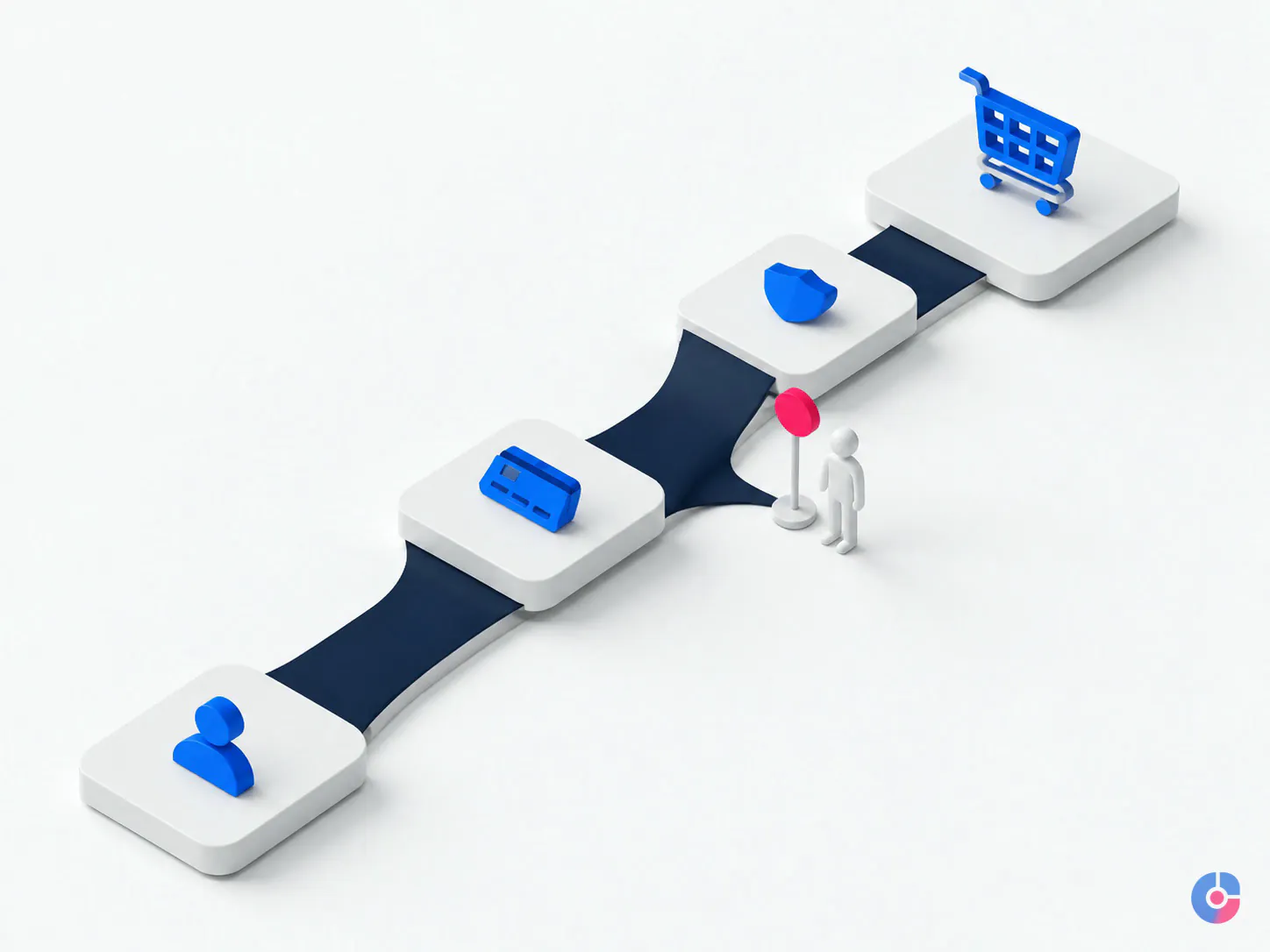
Where chat costs more than it earns
Order-status requests often belong in authenticated self-service with a clear tracking link and exception route. General delivery, warranty and return questions belong first on concise policy pages placed near the decision. Repeated “is this in stock?” questions may reveal stale availability or unclear product content. Treat those chats as diagnostic evidence, not permanent demand to staff.
Remove or limit the widget where the page attracts research traffic with little purchase intent, where the same answer is clearer on-page, or where no agent has authority to do more than take a message. Redirect without creating a dead end: show the relevant policy, tracking tool, email form or scheduled consultation, and let the shopper request a person when the standard path fails.
Chat volume is not a success measure. A rising count can mean the store removed friction, or it can mean product information became worse. Track avoidable contacts per hundred orders and fix the page or process generating them.
Response time is the whole product
HubSpot’s 2025 article reports a survey of 100 US consumers in which 66% expected a live-chat or direct-message response within five minutes. That sample is small and should not be treated as a universal retail threshold. It supports the broader point that customers enter a live channel expecting a materially faster response than email.
For a genuinely staffed pre-purchase queue, design for the first human response in seconds, not several minutes. A starting internal target might be a median under 60 seconds and a high proportion within two minutes, but those are operating choices—not research-backed standards for every store. Define the percentile as well as the average: a good average can hide a group that waits too long.
The first response must be useful. A greeting sent instantly followed by five minutes of silence should not satisfy the standard. Measure time to first human response, time to a substantive answer, resolution time and abandonment before response.
When capacity is exceeded:
- show the current expected wait before the conversation begins;
- prioritize active checkout, payment and high-intent product questions under documented rules;
- offer an honest asynchronous option that preserves context;
- pause proactive invitations so the queue does not create its own demand;
- open overflow coverage or close new live chats when the limit is reached.

Staff the hours that matter
Office hours are an organizational convenience, not a demand forecast. Export sessions, product views, checkout starts, orders and revenue by hour and day, segmented by the markets the store serves. Overlay chat starts, question type, queue wait, abandonment and conversion. Look for high-intent traffic that arrives when coverage is absent or thin.
Build a half-hour forecast from arrivals and handling work. A practical staffing model is:
Required agent workload = forecast chats × average active handling minutes.
Compare that workload with available agent minutes after breaks, review and unavoidable gaps. Do not divide elapsed conversation time by a copied concurrency ratio; a shopper may spend part of the session reading or retrieving information, while a complex order exception may need exclusive focus. Measure active handling and safe concurrency by reason code.
For illustration only, if a peak hour forecasts 18 chats and observed active handling averages six minutes, demand is 108 agent-minutes. One person supplies only 60 clock minutes before allowances, so the interval needs at least two agents and probably additional buffer to hold a fast response. This is planning arithmetic, not a universal productivity rate.
Start with the hours where uncovered hesitation traffic and order value justify the cost—often selected evenings or weekends—then compare incremental outcomes. Do not promise 24/7 availability if overnight demand cannot support trained coverage.
Chatbot, staffed chat or both
A bot is useful for narrow, deterministic tasks: showing an authenticated tracking result, locating a published policy, gathering a few routing fields, identifying language or handing the conversation to the correct queue. It should say it is automated, state what it can do and allow a human route where one is offered.
A person is needed when the answer requires judgment about a specific order, an exception, conflicting information, product nuance, customer emotion or commercial authority. Agents still use approved sources and limits; “human” is not permission to improvise.
The worst configuration is a bot that cannot answer and cannot escalate. It asks the shopper to choose several options, repeats a policy and then begins the journey again in email. A hybrid model should transfer the transcript, customer-provided context and authentication state where security permits, so the human does not restart the interview.
Evaluate automation by completed outcomes, containment accuracy and escalation quality—not by the percentage of conversations prevented from reaching staff. A high containment rate can hide customers who simply gave up.
Use proactive chat without irritating shoppers
Proactive invitations should respond to evidence of hesitation, not mere presence. Candidate triggers include meaningful time on a complex product page, repeated movement between a sizing guide and product, a return to the same considered item, cart dwell after delivery options appear, or a recoverable checkout error.
Apply restraint:
- show at most one proactive invitation per session unless the shopper initiates;
- make dismissal immediate and remember it for the session;
- do not cover content, trap keyboard focus or interrupt payment-data entry;
- suppress invitations when the staffed queue is beyond its response threshold;
- write the invitation for the page’s likely question rather than “How can I help?”;
- review accessibility, consent and analytics requirements for the implementation.
Test each trigger against a control or staged rollout. If it creates many chats without improving completion or customer outcomes, remove it. The shopper owes the widget no engagement.
What an agent needs to be useful
A response library is only the beginning. Give the agent:
- current product specifications, compatibility sources, sizing guidance and known exceptions;
- location-aware stock visibility and rules for what “available” means;
- authenticated, least-privilege order lookup with identity-verification steps;
- delivery, cancellation, warranty and returns decision maps with authority limits;
- approved troubleshooting that never asks for full payment credentials in chat;
- named internal owners for product, fulfillment, fraud, technical and refund exceptions;
- an escalation promise the internal team can actually meet;
- a single ticket record and disposition scheme across support channels.
An agent without order access is a receptionist for post-purchase questions. If the model is intentionally pre-sales only, route order support elsewhere before the widget accepts it. If agents can alter orders or issue concessions, use named accounts, approval thresholds, activity logs and sampled review.

Measure chat against revenue without fooling yourself
Track channel operation and commercial outcomes together:
- first human response at median and agreed percentile;
- abandonment before response and queue wait;
- resolution in chat, transfer and repeat-contact rates;
- conversion and average order value for defined exposed cohorts;
- contacts per hundred orders by reason;
- refund, cancellation or recontact after advice was given;
- quality accuracy and compliance from sampled conversations.
The common conversion comparison is biased. Visitors who choose chat may have a product in the cart, a detailed question and higher purchase intent before the agent replies. Their conversion rate can exceed that of non-chat visitors even if chat adds no value. Conversely, people with serious friction may select into chat and convert less despite being helped.
Prefer experiments based on availability or invitation rather than engagement: randomly expose eligible sessions to a staffed invitation versus no invitation, or stage the same coverage across comparable hours and pages. Analyze by device, traffic source, product type, prior customer status and intent. Ensure the test is long enough for operational variation and complies with privacy requirements.
When randomization is impractical, use matched cohorts and state the limitation. Attribute an order only under a documented window and check whether a coupon, campaign or repeat-customer difference explains it. Chat transcripts also provide qualitative evidence about missing content and policy friction, even when a revenue effect cannot be isolated.
Connect chat to the rest of customer support
Chat should create or update the same customer and ticket history used by email and other approved channels. Store the transcript or structured summary according to the privacy and retention policy, associate the order when authenticated, record commitments and assign the next owner. The customer should not need to repeat a product code, promised exception or troubleshooting history.
A silo creates duplicate work and risk. One team may refund while another reships; two agents may promise different return outcomes; a follow-up email may ignore a resolution already agreed in chat. A multichannel support strategy should define the source of truth, not merely list available channels.
Route asynchronous questions to email support with the context attached. Keep live capacity for problems whose timing changes the commercial or service outcome.
Outsource chat without losing the store’s voice
Begin with a response library grounded in actual product and policy sources, then add tone rules with examples. Define words the brand uses, claims it never makes, how uncertainty is expressed and when a short answer is preferable. Give named agents access to the minimum systems required and require questions when the source conflicts with the customer’s situation.
Sample conversations by risk and reason, not only at random. Review product accuracy, identity checks, tone, policy application, commitments, escalation and record quality. Calibrate client and provider reviewers on the same transcript. Feed repeated questions back to product content and self-service owners.
A low-risk rollout might cover selected evening and weekend pre-purchase pages first, then add authenticated order support only after access, verification and decision maps pass testing. Establish rollback conditions for material misinformation, missed security steps, unauthorized concessions or sustained response failure.
To build the coverage model from real traffic rather than a generic seat count, get a staffed live chat proposal with hourly sessions, chat arrivals, top question types, systems and target pages.
Put a person where timing changes the decision
Live chat pays when it removes an immediate, answerable hesitation and the agent has the context and authority to help. It annoys people when every page invites a conversation that the store cannot staff, when a bot traps an exception, or when agents can only promise an email later.
OveliTHub’s live chat support services can be scoped by page, hour and question type, with queue standards and quality review. Get a staffed live chat proposal based on the moments your buyers actually hesitate.
Keep reading
Related insights

How to Triage Support Tickets
Backlogs are a queue design problem, not an effort problem. See how ticket triage, priority rules and SLA discipline keep customer support…

Sales Admin Tasks to Hand Off First
Reps lose selling hours to quotes, CRM updates and scheduling. See which sales admin tasks to hand off, in what order, and…

Outsourced SDR vs In-House Hiring
Outbound stalls when nobody owns it full time. Compare outsourced sales development with hiring an SDR, and see what each option really…