

Marketing & creative
What a Social Media Assistant Owns
Posting is the easy part. See which social media tasks a virtual assistant can own, which need your voice, and how to keep brand risk under control.

The familiar pattern is three posts in a productive week, silence for a fortnight, then a rushed burst when somebody notices the feed. This rarely means the business has no ideas. It means publishing has no protected deadline, monitoring has no named owner, and both lose to work that appears more urgent.
A social media virtual assistant should fix that operating gap. Their product is not a promise of virality. It is a dependable publishing cadence, a monitored inbox, reusable content assets and reporting that helps the business make the next decision. The business still owns its position, promises and judgment.
That distinction matters because an inconsistent profile is not merely an untidy marketing asset. A prospective customer, candidate or partner can encounter old information, unanswered questions and months of inactivity while checking whether the company appears active and attentive. Delegation should make the channel reliably maintained without giving an assistant authority to improvise on matters that can create legal, commercial or reputational risk.
The channel that loses every week
Social work is unusually easy to defer. A post has no customer waiting on a call and no invoice blocked by its absence. Drafting, asset selection, review and scheduling get scattered across calendars. Comments are checked when somebody remembers. Reporting arrives as screenshots without a decision attached.
The cure is ownership, not a frantic search for more creative concepts. Set a modest calendar the team can sustain, define a daily monitoring window and give one person responsibility for moving every item from idea to approved publication. A strong assistant makes the process visible: what is planned, what is blocked, who must approve it and what happened after publication.
Start by separating four kinds of work: direction, production, engagement and governance. The business leads direction and governance. The assistant can own most production and first-line engagement. Sensitive cases return to a named internal decision-maker.
What the assistant is actually hired to produce
The operating brief should specify outputs rather than vague instructions to “manage our socials.” A useful monthly scope contains:
- a maintained content calendar with owners, statuses, channels and deadlines;
- a realistic number of approved and scheduled posts for each selected platform;
- an inbox and comment queue checked within agreed working windows;
- first-line replies drawn from approved guidance, with exceptions escalated;
- a labelled library of source files, edited assets and evergreen material;
- a short report comparing delivery with plan and recommending specific changes; and
- an issues log showing complaints, sensitive enquiries and unresolved access or content risks.
Reach and follower growth may follow, but they are not controllable deliverables. The assistant can control whether work is ready, correct, published, monitored and reported. A business should evaluate that discipline before judging outcomes that depend on audience, offer, timing, platform distribution and creative strength.
Tasks a social media virtual assistant can own
Once the rules are documented, an assistant can run the repetitive coordination around the channel:
- Calendar maintenance: capture ideas, map themes, assign formats, record approvals and move or retire stale items.
- Caption drafting: turn an approved premise into channel-appropriate copy using the voice guide, claim library and call-to-action rules.
- Asset coordination: find approved source material, brief a graphic design assistant, resize exports and keep accessible alt-text notes with the post.
- Scheduling: load approved content into native or authorised tools, check links, tags, crops and publication settings, then record the live URL.
- Publishing conventions: apply agreed mentions, hashtags, campaign codes, disclosure wording and location or product tags.
- Community monitoring: check comments and messages, hide or report obvious spam under policy, acknowledge routine questions and route qualified enquiries.
- DM triage: label sales, support, recruitment, partnership, press and complaint messages, then assign them to the right internal owner.
- Listening: track named competitors, customer questions and relevant platform trends without copying competitors or chasing every trend.
- User-generated content handling: collect candidate posts, record permission status and publish only where the business has the necessary consent and usage basis.
- Reporting assembly: export platform data, reconcile it with the calendar and website analytics, explain anomalies and prepare decisions for review.
The list is intentionally operational. Broader positioning, campaign direction and cross-channel coordination belong with the marketing lead; the distinction is explored in what a remote marketing assistant does. Paid campaign setup also needs a separate brief, budget authority and measurement plan.
Repurposing is where the hours actually are
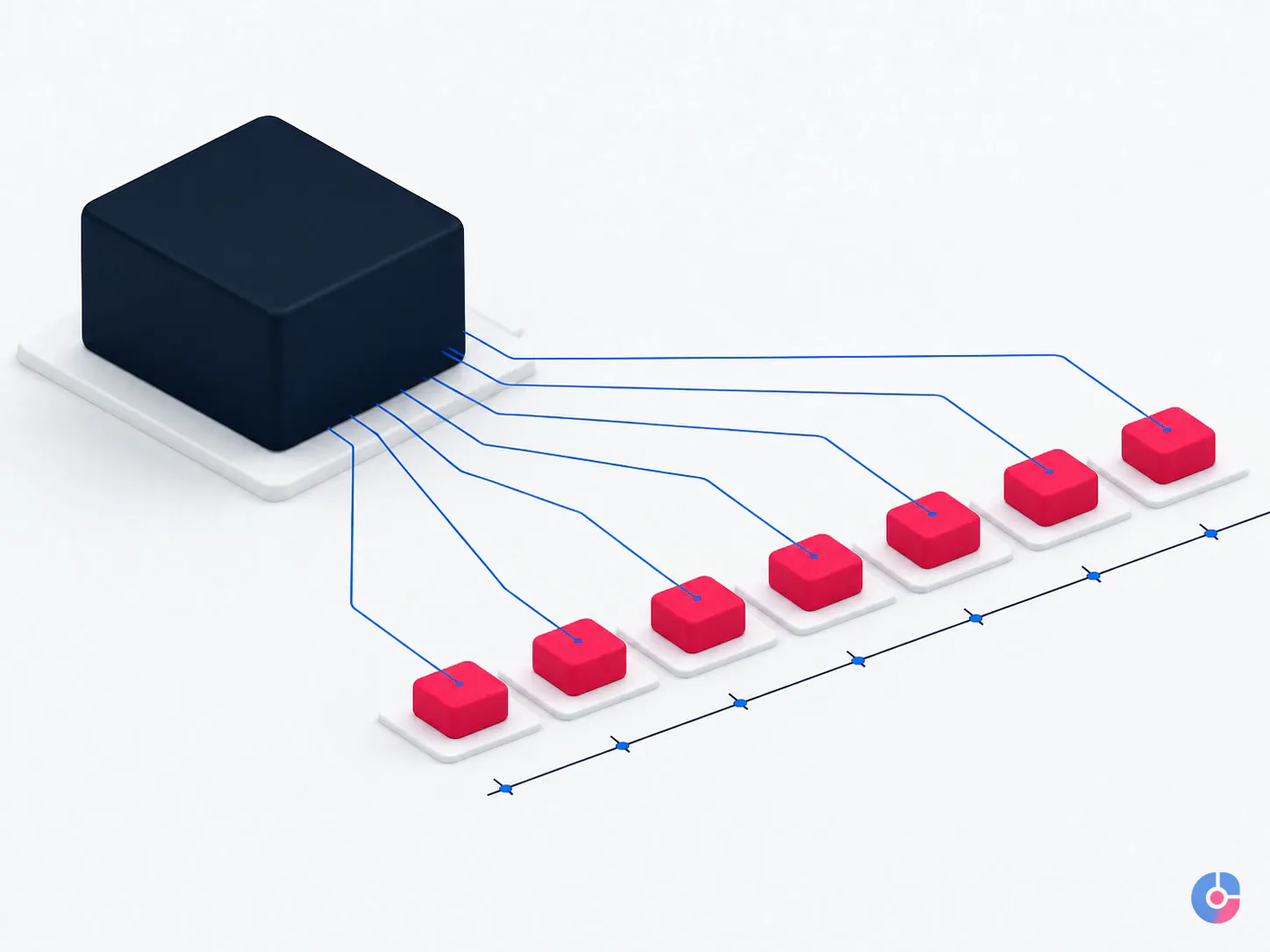
One useful source can become several platform-specific assets: a webinar can yield a short insight video, a quotation card, a practical checklist, a founder observation, a question for the audience and a link to the full recording. A case study can yield a problem statement, process lesson, proof point and behind-the-scenes post.
The assistant is well placed to run this loop because the work depends on retrieval and adaptation. They maintain the source library, extract candidate ideas, match each to a format, request missing context, draft variations and preserve the relationship to the authoritative source. They should not invent customer outcomes or strip qualifications from a claim to make it more dramatic.
Give every substantial source an expiry or review date. Product features, prices, team details, event dates and regulatory topics become stale. Evergreen does not mean permanently accurate.
Tasks that must stay with the business
Delegating execution is not delegating accountability. Keep these decisions with a qualified internal owner:
- Strategy and positioning. The business decides the audience, market position, editorial priorities and what it will not say. An assistant can present evidence, but should not redefine the company because last month’s post underperformed.
- Product and performance claims. Claims about capability, results, safety, compliance, sustainability or customer outcomes require an approved source and appropriate review. A fluent caption is not substantiation.
- Price, availability and contractual statements. Promotions, stock promises, delivery dates and service terms can create customer expectations. The accountable commercial owner approves them.
- Complaints beyond acknowledgement. The assistant can confirm receipt and move a conversation to a protected support route. They should not admit liability, promise compensation, debate facts publicly or disclose account information.
- Legal, medical, financial or safety questions. These move to the designated qualified person without an improvised answer.
- Press enquiries and crises. Public incidents need one coordinated source of truth, an authorised spokesperson and legal or leadership review where appropriate.
- Paid-media budget. Organic scheduling permission does not confer authority to spend, boost or change campaign budgets. Direct readers who need that work to the relevant paid-social guide rather than blending it into the assistant role.
A good boundary does not make the assistant passive. It tells them what evidence to collect, what holding response is allowed, who receives the escalation and when to follow up.
The three artefacts that make delegation safe
If the business will not write a voice guide, approval rule and escalation policy, it is not ready to delegate social media. These documents can be concise, but they must be usable under time pressure.
1. A voice guide built from examples
Describe the brand in behaviours, not adjectives. “Clear, calm and direct” becomes: lead with the answer, use ordinary words, qualify uncertain information and never mock a customer. Include six to ten approved examples and several rejected examples with the reason for rejection. Record preferred terminology, banned phrases, spelling convention, pronouns, punctuation, humour boundary and rules for responding to praise, criticism and errors.
Add an approved claim library. For each recurring product or company claim, link to the current source, show acceptable wording, note required qualifications and name the person who can update it. This is how the assistant sounds informed without being invited to invent.
2. An approval rule with clear thresholds
Use three lanes. Green content may publish without item-level review after template approval: evergreen educational posts based on current approved material, routine event reminders and previously approved recurring formats. Amber content needs review: new product explanations, customer stories, executive opinions, partnerships, promotions and posts reacting to external news. Red content is reserved for authorised leadership: crises, disputes, regulated claims, material corporate announcements and responses that could accept fault or commit money.
The rule also names the reviewer and deadline. “Needs approval” is not a process if nobody is accountable for answering. If the deadline passes, the assistant reschedules; silence is never approval.

3. An escalation policy that works during a bad hour
Create a table with the trigger, permitted first response, primary contact, backup contact, response deadline, approved communication route and record location. Include at least: complaint, service interruption, privacy request, threatened legal action, medical or safety question, press enquiry, discriminatory or abusive content, account compromise and sensitive news event.
A holding reply should acknowledge receipt, avoid conclusions, move personal information out of public view and state when the customer will hear back. It must not be used to make a public thread disappear. Preserve relevant records and follow the company’s privacy, complaint and incident procedures.
If you want these controls operated by a named person rather than an anonymous queue, review OveliTHub’s social media virtual assistant model. The scope should include onboarding, supervision, reporting and a recurring client review—not just a monthly post count. Book a free consultation once the internal decision-maker and channels are known.
Account access without handing over the keys
Do not send personal passwords through chat or place them in a shared spreadsheet. Use platform roles or approved business tools, grant the minimum access needed, require multi-factor authentication where available and keep at least two controlled internal administrators for continuity.
Meta’s current Facebook Page access documentation distinguishes Facebook access from task access. Task access can cover content, messages and community activity, ads or insights through tools such as Meta Business Suite without allowing the person to switch into and control the Page directly. Full control can include changing settings, managing other people’s access and deleting the Page, so it should not be the default for a publishing assistant.
LinkedIn’s current Page admin permission table separates super admin, content admin and analyst roles. A content admin can create and manage Page content and engage as the Page; an analyst is limited to analytics; only the super admin can manage Page and paid-media admins. LinkedIn also encourages two-factor authentication and requires it for Campaign Manager users.
Apply the same principle to scheduling, design, storage and analytics tools. Use named accounts, not one generic login. Record owner, purpose, role, date granted and review date in an access register. At offboarding, revoke platform and third-party access, transfer owned files, rotate any shared credential that could not be avoided, confirm scheduled posts and integrations, and retain the activity record under company policy.
Response time is the service measure customers experience
A business does not need to promise constant monitoring. It needs an honest service window and a dependable handoff. Define working days, coverage hours, which channels are monitored, the target for first acknowledgement and the target for internal assignment. Publish customer-facing expectations where appropriate and measure actual performance.
Response behaviour also matters. In Sprout Social’s named Q4 2025 Pulse Survey, 51% of surveyed users said that when they contact a company publicly through a mention or comment, they expect an initial response in the same public setting before the conversation moves to private messages. That supports a practical rule: acknowledge the public question without exposing personal details, then move account-specific resolution to the correct private channel.

Report the median first-response time and the share handled within the agreed target, but also report aged unresolved items. A fast acknowledgement followed by three days of silence is not good service. Review outliers so coverage, routing or approval problems can be fixed.
What to measure, and what to ignore
Use a compact scorecard tied to the channel’s job:
- Publishing reliability: planned posts published correctly and on time, with cancellations explained.
- Community handling: first-response time, target compliance, unresolved age and escalations by type.
- Content intent: saves, meaningful shares, qualified comments and completion behaviour where relevant, interpreted by format and audience.
- Owned-channel movement: profile or post clicks to the website, campaign landing-page sessions and email sign-ups.
- Commercial signals: enquiries and opportunities attributed to or assisted by social, using documented attribution rules rather than guesswork.
- Learning: two or three observations and the next test, each linked to evidence.
Follower count alone is a weak management target. It does not show whether the audience is relevant, whether posts create action or whether enquiries receive answers. Report it as context, with gains and losses, but do not let it replace service and business outcomes. Likewise, impressions without reach quality, frequency or action can reward activity that contributes little.
Freelancer, agency or dedicated assistant
| Model | Strength | Constraint to plan for |
|---|---|---|
| Freelancer | Direct specialist relationship and flexible project scope | Capacity and absence cover depend on one person; supervision and tool governance remain with the client |
| Agency | Broader creative skills, campaign capacity and potential cover | More handoffs can produce generic work unless a named lead learns the business; retainers may bundle work you do not need |
| Dedicated assistant | Recurring hours, process familiarity and close integration with the internal team | Needs structured onboarding, a supervisor, specialist support for work outside the role and a weekly client review |
Compare the same scope: available hours, channels, community volume, asset production, absence cover, approval handling, reporting, security, management and termination. The cheapest quoted post is not the lowest operating cost if internal staff must rewrite every caption. For a wider comparison of staffing structures, see the guide to a dedicated virtual assistant versus a freelancer.
The first thirty days
- Week one: listen and document. Audit accounts and access, review recent posts and comments, gather source material, define objectives and complete the voice guide, approval rule and escalation policy. Do not rush to publish.
- Week two: draft under full review. Create a small representative batch across the selected formats. The internal owner reviews every item and explains edits so rules improve, rather than merely returning rewritten copy.
- Week three: publish with spot checks. Approve a short calendar, allow green-lane posts to move under the rule, monitor comments and test escalation contacts. Check live formatting, links and accessibility.
- Week four: report and set cadence. Reconcile plan with delivery, review response handling, identify missing sources and agree the sustainable production, approval and meeting rhythm for the next two months.
The internal owner should reserve a short weekly review. A dedicated assistant removes coordination load; they do not eliminate the need for decisions only the business can make.
Consistency beats brilliance you cannot sustain
The right social media assistant gives routine work a dependable owner and gives sensitive work a dependable route back to the business. Judge the arrangement by cadence, accuracy, response handling, asset reuse and useful reporting—not viral promises.
Keep reading
Related insights

WordPress vs Custom CMS Development
A custom CMS buys control and a permanent maintenance bill. Compare both against your content model, team and five-year plan before you…

BPO Services for Digital Marketing: Benefits
Marketing teams stall on execution, not ideas. See which marketing functions a BPO model absorbs, what it returns in hours, and where…

What SEO Services Actually Deliver
SEO is four separate disciplines sold as one word. See what each part does, what results it can produce, and how to…